China is the world’s largest center for printed circuit board production, making its manufacturers important partners for electronics brands and contract manufacturers. Prismark’s published 2023 PCB industry estimates show mainland China contributing more than half of global PCB production value. That scale matters. It supports extensive supplier networks, high-volume production, and a broad mix of technologies, from standard multilayer boards to high-density interconnect designs.
But size alone does not identify the right supplier. The China Printed Circuit Association’s industry statistics offer useful context on the domestic sector, while company disclosures and factory audits help assess individual capabilities. These sources do not always measure companies in the same way. Some report revenue; others emphasize production capacity, product mix, or customer markets. A ranking should therefore be read as a practical comparison, not a definitive audit.
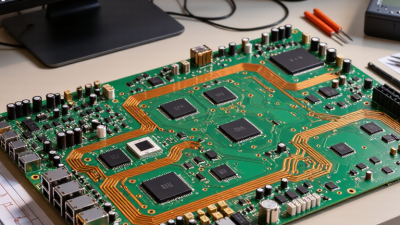
This guide examines ten notable companies involved in pcb manufacturing in China. It considers factors buyers can verify: board types, manufacturing scale, quality systems, engineering support, and experience serving sectors such as automotive, communications, and consumer electronics. A sample multilayer board may look simple on a desk. Its performance depends on precise layer alignment, controlled impedance, and consistent inspection. Those details matter. Public information can be incomplete, too, so the comparison flags where claims deserve closer review. Use the list as a starting point, then confirm certifications, lead times, and technical fit directly with each manufacturer.

Understanding PCB Manufacturing and Its Role in China
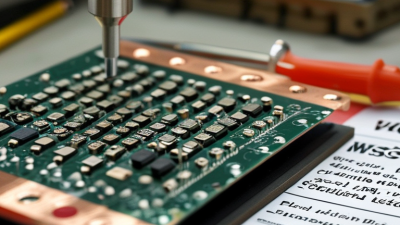
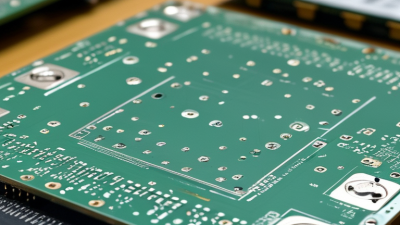
A printed circuit board connects electronic components through precisely formed copper pathways. Manufacturing turns a design file into a physical board through imaging, etching, lamination, drilling, plating, and electrical testing. Each stage matters. A tiny misalignment between layers can interrupt a signal or weaken a connection. On a factory floor, technicians inspect drilled holes and copper surfaces before boards move to the next process.
China is central to this supply chain, supporting production for consumer electronics, vehicles, communications equipment, and industrial controls. Prismark’s 2024 industry analysis estimated global PCB production value at about US$69.5 billion in 2023, following a marked annual decline as demand softened and inventories were reduced. The figure shows both the scale of the sector and its sensitivity to market cycles. It does not mean every factory or product segment followed the same trend.
Manufacturing capability also involves more than volume. Suppliers must manage material consistency, layer registration, trace widths, and inspection records. For example, a multilayer board may require careful alignment across several copper layers before pressing. That is demanding work. Yet process quality can vary, and low prices alone do not prove reliability. Buyers should assess documented quality controls, testing methods, and delivery performance against the needs of the intended application.

Copper foil weight is commonly specified in ounces per square foot (oz/ft²). The chart shows the approximate nominal thickness of common copper foil weights used in PCB fabrication.
Thickness values are approximate; finished copper thickness can vary with the PCB fabrication process.
Choosing a leading PCB manufacturer in China requires more than comparing prices or factory size. Start with technical fit: confirm the supplier can produce your required layer count, copper weight, board thickness, and minimum trace spacing. Ask how it controls impedance, drilling, plating, and solder-mask registration. These details affect whether a design performs consistently, not just whether a sample looks clean.
Review quality records, process traceability, defect handling, and delivery performance. Request recent inspection data and ask how the factory manages engineering changes. A capable team should explain its process clearly, including limits. A polished brochure is not proof. If possible, assess sample boards under your own inspection plan and speak directly with engineering staff. Even a strong manufacturer may be a poor fit for a product with unusual tolerances or low-volume needs.
Tips: Compare like with like. Send each candidate the same files and specifications, then check the quotation for tooling, testing, and lead-time assumptions. Ask for evidence. A site visit can help, but it cannot replace ongoing quality monitoring. Small gaps in a supplier’s answers deserve a second look.
China’s leading PCB manufacturers are better understood through their production strengths than through rankings alone. Prismark’s 2023 industry review estimated global PCB production value at about US$68.9 billion, down roughly 15% year on year. That contraction makes capacity use, customer mix, and investment discipline useful measures alongside factory size. Details matter.
An anonymized ten-company profile set would include firms focused on high-layer-count boards, HDI designs, flexible circuits, rigid-flex products, and high-volume multilayer production. Other profiles center on automotive electronics, communications equipment, computing hardware, industrial controls, and small-batch engineering support. These are distinct operating models, not interchangeable labels. A high-layer-count producer may manage tight registration tolerances, while a flexible-board specialist must control material handling and bend reliability. Yet public disclosures often reveal less about yield than about installed capacity. That gap deserves scrutiny.
When comparing profiles, look for measurable evidence: monthly output, layer range, certification scope, process control, and customer-service response times. IPC’s market reporting tracks industry conditions, while company filings and technical documents can help verify individual capabilities. Ask whether stated capacity refers to finished boards or panel area; the distinction can change the picture. Certifications are useful, but they do not guarantee consistent delivery. A plant tour, sample evaluation, and transparent corrective-action records provide stronger evidence of day-to-day execution. I would not treat any single ranking as definitive.
A useful comparison of ten major PCB manufacturers in China should look beyond production volume. Some facilities focus on quick-turn prototypes, while others are equipped for high-layer-count boards, fine-pitch components, or large production runs. These differences affect lead time, engineering support, and the amount of inspection a buyer may need. The trade-off is real. A factory suited to a compact consumer device may not be the best fit for industrial controls or communications equipment.
Product range matters, too. Compare rigid, flexible, and rigid-flex boards, then check whether assembly, component sourcing, and testing are handled in-house. Ask for sample inspection records, process controls, traceability details, and recent yield data. Details matter. For automotive, medical, and other demanding markets, confirm relevant certifications and customer-specific quality requirements rather than relying on a broad capability list. A polished website is not proof of consistent output. Visits or independent audits can reveal practical details, such as how operators manage solder-mask defects or separate lots during production. Rankings can shift with order size and technical needs, so even a strong shortlist deserves careful verification. I would not treat any comparison as final without reviewing a real sample.
A capable PCB manufacturer is more than a low quote. Prismark’s 2024 industry forecast valued global PCB production at about US$68 billion in 2023 and projected roughly 5.8% annual growth through 2028. That expanding market makes capacity and process control important selection factors. Ask whether the factory regularly produces your exact stack-up, copper weight, board thickness, and minimum drill size. A supplier experienced with simple two-layer boards may not be ready for dense, controlled-impedance designs. Ask for recent test records, defect trends, and documented controls aligned with IPC-6012 and IPC-A-600. Numbers matter.
Check delivery performance against your own schedule, not just a sales promise. Request a sample production plan showing material lead times, engineering review, fabrication, electrical testing, and shipping. For example, clarify whether a six-layer prototype can be built without displacing scheduled volume orders. Review how the supplier handles engineering changes, nonconforming boards, and lot traceability. A clear corrective-action report is more useful than a broad quality claim. Compare total cost, too: tooling, testing, packaging, and expedited freight can change the apparent bargain. No spreadsheet catches everything. I would still ask for a small pilot order; inspection may reveal gaps that polished documents miss. A factory’s response to those findings is part of the evaluation.
Use these ten criteria to compare manufacturers. Capabilities and certification scopes vary by facility and product; request current documentation and confirm that it applies to your specific order.
| No. | Evaluation Factor | What to Compare | Evidence to Request |
|---|---|---|---|
| 1 | Product and process fit | Confirm the manufacturer routinely produces your board type, such as rigid, flexible, rigid-flex, HDI, or high-frequency boards. | A capability statement for the relevant facility and examples of comparable board types, with customer-sensitive details removed where necessary. |
| 2 | Layer count and construction | Check supported layer counts, stack-up options, board thickness, copper weights, and material availability against your design requirements. | A proposed stack-up and written confirmation that the specified materials, thicknesses, and copper weights are supported for your order. |
| 3 | Design-rule capability | Compare published minimum trace width and spacing, drill sizes, annular-ring limits, and via options with your fabrication data. | A current capability table and a design-for-manufacturing (DFM) review identifying any constraints before production. |
| 4 | Quality system and standards | Check whether the quality system and applicable product standards match your industry and the required acceptance criteria. | Current certificates with the issuing body, validity dates, covered site, and scope. Relevant examples include ISO 9001, IATF 16949, ISO 13485, IPC-6012, and IPC-A-600; applicability depends on the product and order. |
| 5 | Inspection and electrical testing | Ask how the supplier verifies the bare board, including visual inspection, automated optical inspection (AOI), and electrical testing where applicable. | The inspection and test plan, test coverage, acceptance criteria, and sample inspection or electrical-test reports for a comparable job. |
| 6 | Materials and traceability | Verify laminate and finish options, material control, lot traceability, and the handling of material substitutions. | Material specifications, lot-identification procedures, and written approval controls for any proposed substitution. |
| 7 | Regulatory and environmental requirements | Confirm that materials and processes meet the requirements applicable to your destination market and end use. | Relevant, current declarations or test documentation for requirements such as RoHS or REACH, plus confirmation of the covered products and site. |
| 8 | Lead time and production capacity | Compare quoted lead times for prototypes and production orders, available capacity, order-size limits, and how schedule changes are managed. | A written quotation showing the assumed order quantity, production schedule, shipping terms, and the process for notifying you of delays. |
| 9 | Cost and quotation clarity | Compare total landed cost, not only the board price. Review tooling, testing, finishing, packaging, shipping, and any minimum-order charges. | An itemized quotation with currency, quote validity, specifications assumed, payment terms, and charges for engineering changes or expedited work. |
| 10 | Communication and data protection | Assess technical response times, engineering support, revision control, secure transfer of design files, and confidentiality practices. | A named technical contact, documented file-handling and revision procedures, and a confidentiality agreement where required. |