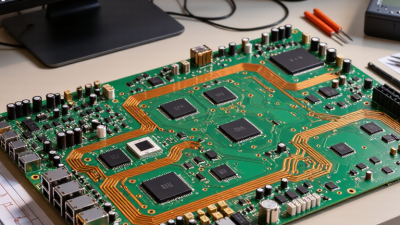
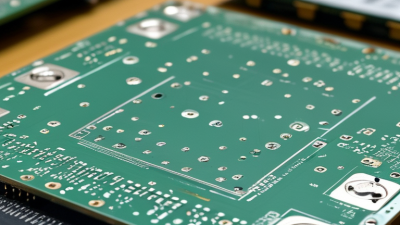
Choosing a pcb printing service is not just a price comparison. It is a decision about whether your design will become a dependable board, on schedule, and with fewer surprises. A thin trace, a misaligned drill hole, or an unclear solder mask can affect assembly and performance. Ask how the supplier checks these details, not only how quickly it can ship.
PCB fabrication specialist Michael Carano is known for work in the field, but I cannot verify a verbatim quotation from him on choosing a service. Rather than invent one, here is an editorial paraphrase of a practical manufacturing principle: “Reliable boards come from controlled processes, clear specifications, and careful verification.” Treat that as a paraphrase, not his exact words. Then compare suppliers using concrete evidence: sample inspection records, material options, design-for-manufacturing feedback, and communication about tolerances. Request a quote using the same files and specifications from each provider. Check whether the stated lead time includes fabrication, testing, and shipping. Small details matter. A low quote can still cost more if unclear requirements cause a remake. No checklist removes every risk, and supplier claims deserve verification. The best choice is the service that explains its process plainly, flags design concerns early, and can show how it checks finished boards.

Before requesting quotes, turn the circuit into a measurable build brief. Record board length and width, layer count, copper weight, finished thickness, and required material properties. If the design needs controlled impedance, state the target values and tolerances, not merely “high speed.” Include the smallest trace, spacing, drill size, and any blind or buried vias. These details affect manufacturability, price, and yield. Small details matter. Add the expected quantity, prototype schedule, repeat-order volume, and delivery destination. A five-board prototype and a thousand-board production run are different purchasing problems.
Project constraints deserve equal care. Set a realistic budget and delivery date, then identify which requirements can flex if a quote exceeds either limit. Specify the surface finish, solder-mask color, panelization needs, and inspection documents. Check that the fabrication files match the latest schematic and revision; a mismatch can waste days. The Semiconductor Industry Association reported 2024 worldwide semiconductor sales of $627.6 billion, up 19% from 2023, based on WSTS data. That broader growth is not a PCB demand forecast, but it underscores why clear capacity and lead-time questions matter. Ask the service to flag design-rule conflicts before production. I still find one assumption easy to miss: a fast prototype does not guarantee the same turnaround at scale. Articulating the limits early makes supplier comparisons more meaningful.

Compare a service’s stated capabilities with your board’s actual requirements, not a generic “fast and cheap” promise. Ask whether it regularly handles your layer count, board thickness, copper weight, and minimum trace and spacing. Those limits affect yield. Request a sample fabrication drawing or capability table, then check whether tolerances are clearly stated. For controlled impedance, confirm that the manufacturer can review the stack-up and provide test data when requested. Ask about materials, surface finishes, and panelization options; substitutions may affect assembly behavior.
Manufacturing processes matter just as much. A typical flow includes imaging, etching, lamination, drilling, copper plating, solder-mask application, and electrical testing. Ask which steps happen in-house and how defects are detected, such as with automated optical inspection or flying-probe tests. A process chart helps expose gaps. Compare quoted lead times, inspection records, and the handling of design questions—not just the price. No checklist catches everything, and delivery estimates can still slip. A useful service explains its limits and flags manufacturability issues before production begins.
Compare service capabilities and manufacturing processes
These representative minimum feature sizes illustrate common process capabilities: finer traces and smaller holes require more advanced fabrication. Actual limits vary by manufacturer, material, layer count, and design rules, so confirm the specifications for your board before ordering.
Choosing a PCB printing service starts with matching materials to the board’s actual job. For a standard control board, FR-4 may be suitable; high-speed signals or elevated temperatures can call for different laminate properties. Ask for the glass-transition temperature, dielectric data, and available copper weights. These numbers affect heat tolerance, signal behavior, and current capacity. A vague answer is worth questioning.
Quality standards need context. Ask whether inspection and acceptance follow relevant IPC criteria, such as IPC-6012 for rigid printed boards, and request sample inspection records. Check how the service handles drill accuracy, copper thickness, solder-mask coverage, and electrical testing. Small details matter. A photograph of a board can look convincing while hiding weak plating or poor trace spacing.
Review certificates by scope, not by logo. ISO 9001 describes a quality-management system; it does not certify every board as defect-free. If flame performance matters, verify that the specified laminate rating applies to the exact material being quoted. Request current certificates and a written material specification. Even a tidy document set can leave gaps, so I would still compare the paperwork with the finished board. That extra check is easy to skip.
| Assessment area | What to check | Useful evidence or questions | How it affects your choice |
|---|---|---|---|
| Base material | Confirm the laminate type and grade, such as FR-4, high-Tg FR-4, polyimide, or a material intended for high-frequency designs. | Ask for the material manufacturer and exact grade, datasheet, glass-transition temperature (Tg), and dielectric information relevant to your design. | The material should suit the operating temperature, electrical requirements, and construction of the board. FR-4 properties vary by grade. |
| Copper weight and stack-up | Check layer count, finished copper thickness, board thickness, and whether the proposed stack-up matches your fabrication data. | Request a stack-up drawing and clarify whether copper weight refers to starting foil or finished copper. As a common approximation, 1 oz/ft² copper is about 35 µm before process-related variation. | A suitable stack-up supports current capacity, impedance control, and mechanical requirements. Verify finished values against your design specification. |
| Design-rule capability | Compare the supplier’s supported minimum trace/space, drill sizes, via types, aspect ratio, and layer registration with your board files. | Ask for current capability limits and a design-for-manufacturing (DFM) review before production. Confirm any limits are guaranteed for your chosen material and layer count. | Published limits are not necessarily available for every construction. A DFM review can identify features that need adjustment before fabrication. |
| Quality acceptance criteria | Determine which workmanship and performance requirements will apply to the order. | Ask whether the supplier can build to the relevant IPC standard and class specified in your purchase documents. IPC-A-600 provides visual acceptability criteria; IPC-6012 covers qualification and performance for rigid printed boards, while IPC-6013 covers flexible and rigid-flex boards. | State the required standard and class explicitly. IPC standards are technical standards, not a substitute for checking the supplier’s actual process controls or order-specific acceptance plan. |
| Inspection and electrical testing | Check inspection methods for shorts, opens, dimensional features, solder mask, and plated-through holes. | Ask whether each board receives electrical continuity/isolation testing, what inspection is included, and whether test reports or inspection records are available. | Testing should match the board’s risk and specification. Confirm the test coverage and acceptance criteria rather than relying on a general claim of “100% inspection.” |
| Quality management certification | Check whether the manufacturing site has a current quality management system certification, such as ISO 9001. | Request the certificate and verify its validity, certified site, scope, and issuing certification body. Confirm that the scope covers the relevant PCB manufacturing activities. | ISO 9001 addresses a quality management system; it does not certify that every board meets your design or performance requirements. |
| Product safety and compliance | Determine whether your application requires a recognized safety listing or restricted-substance compliance documentation. | Where relevant, ask for applicable UL 796 documentation for printed-wiring boards and verify the specific material or construction. For RoHS requirements, request a declaration or supporting material documentation for the supplied product. | Applicability depends on the end product and market. Verify the exact product, material, or facility covered; RoHS is a substance-restriction requirement, not a general quality certification. |
| Traceability and corrective action | Assess how the supplier identifies production lots and handles nonconforming boards or recurring defects. | Ask whether lot-level records, material traceability, a documented nonconformance process, and corrective-action reports are available. | Traceability and a clear corrective-action process are especially valuable for repeat production and applications with strict reliability or audit needs. |
| Quotation and production control | Compare lead time, order quantity, panelization, finish options, tolerances, and how engineering changes are controlled. | Request a written quotation that lists the agreed material, stack-up, finish, tolerances, inspection requirements, and delivery schedule. | A clear specification helps prevent substitutions and misunderstandings. Evaluate total suitability and documented requirements, not price or lead time alone. |
How to Choose the Best PCB Printing Service?
A low quote can hide setup fees, shipping costs, or charges for design checks. Compare the full cost for the same board specifications: dimensions, layer count, copper weight, finish, and quantity. Ask whether the quote includes electrical testing and how revisions affect the price. A small prototype order may cost more per board, yet spending less upfront can make sense when the design still needs testing.
Turnaround time needs careful reading. Check whether the estimate starts after file approval or order placement, and ask how weekends, holidays, and production queues affect delivery. A fast estimate is not a guarantee. Salesforce’s 2023 State of the Connected Customer report found that 88% of customers consider a company’s experience as important as its products or services. For PCB buyers, that experience often means clear updates when a file needs correction or a shipment slips.
Test support before committing. Send a specific question about a drill tolerance or panel layout, then note how quickly and clearly the team responds. McKinsey’s 2022 B2B Pulse reported that buyers use an average of ten interaction channels during their purchasing journey. A responsive service should make it easy to reach a knowledgeable person, not just offer more channels. Keep your comparison sheet simple. One missed detail can change the whole decision.
Before comparing prices, check whether your files are ready for fabrication. Export the Gerber layers, drill data, and board outline from the same design revision. Open each file in a viewer and inspect copper clearances, solder mask openings, and silkscreen text. A tiny label can disappear near a pad. Confirm the layer count, finished thickness, copper weight, and minimum trace spacing match your intended build. Ask the service to flag missing or conflicting data before production. This step is easy to rush.
Place a small test order before committing to a larger batch. Use a representative board, including fine-pitch parts, narrow traces, and mounting holes if your design has them. When the boards arrive, measure the outline and hole positions with calipers. Check registration, solder mask coverage, and whether silkscreen remains readable. Then assemble at least one board. A visual check alone can miss weak solder joints or poor fit. Keep notes, even if the result looks good; my first review checklist once missed a reversed connector footprint.
Tips: Send a fabrication drawing with dimensions and tolerances. State whether you want electrical testing, and ask for the test method. Save the approved file set and order details together. One revision number can prevent a costly mix-up.