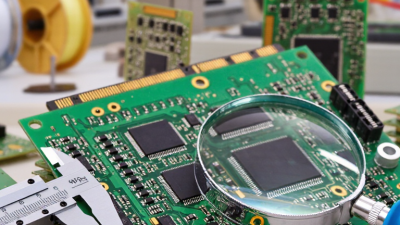
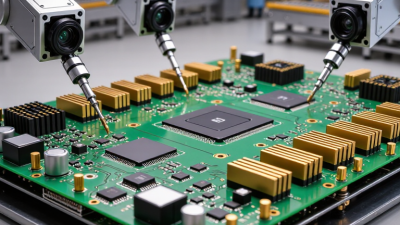
Choosing among the 2026 best printed circuit board suppliers requires more than comparing unit prices. A low quotation can hide longer lead times, weak traceability, or limited engineering support. Buyers should examine layer capability, copper thickness, impedance control, automated optical inspection, and documented defect rates. Factory audits matter. So do sample builds.
Market estimates show why supplier selection deserves closer attention. Fortune Business Insights valued the global PCB market at approximately USD 89.7 billion in 2023. Its forecast expects substantial growth through 2032. Grand View Research reports different market boundaries and projections. This difference is important. Reports do not always measure identical product categories or regions.
IPC President and CEO John W. Mitchell has described electronics as “the backbone of the global economy.” That statement puts supplier reliability into practical perspective. A delayed board can stop an assembly line, postpone certification, and damage customer confidence. The strongest manufacturers combine engineering experience with controlled production. Look for ISO 9001 systems, IATF 16949 capability where relevant, UL recognition, RoHS documentation, and verifiable material records.
No ranking is perfect.
This guide compares suppliers through measurable evidence, not impressive brochures. It considers prototype speed, high-volume consistency, technical communication, factory location, and support for HDI, rigid-flex, and multilayer designs. Some data remains difficult to verify publicly. That limitation should be acknowledged. Supplier performance can change after ownership changes, equipment upgrades, or regional disruptions. The best choice is therefore not always the largest supplier. It is the partner that can repeatedly manufacture your specific design, at the required quality, volume, and risk level.
A leading printed circuit board supplier in 2026 must prove more than production capacity. It should show repeatable quality through inspection records, process controls, and traceable materials. Experienced buyers will examine solder mask adhesion, copper thickness, hole quality, and impedance results. Small details matter.
Reliable suppliers also support complex requirements, including HDI structures, fine-pitch components, rigid-flex designs, and low-loss materials. Their engineering teams should review stackups before production begins. Clear design-for-manufacturing feedback can prevent expensive revisions. Fast replies help, but accurate replies matter more.
Independent testing strengthens supplier credibility. Good partners provide electrical test reports, dimensional records, and certificates for relevant materials. They explain corrective actions when defects appear, rather than hiding them behind replacement promises. A clean factory floor is useful evidence, but it cannot replace process data.
I have found that communication often reveals operational maturity. Does the supplier confirm unclear tolerances? Does it warn about material shortages early? Does it protect revision control across prototypes and mass production? These questions expose weaknesses quickly. No supplier is flawless. A polished audit file can still conceal unstable yields or weak subcontractor oversight. Buyers should therefore compare samples with later production, not trust the first shipment alone.
Environmental responsibility is also becoming part of supplier evaluation. Responsible facilities should manage chemical handling, waste treatment, worker safety, and energy use under applicable regulations. Cost remains important, yet the lowest quotation may create delays, rework, or field failures. The strongest supplier combines technical discipline, honest reporting, and measurable consistency.
PCB suppliers differ by production role, not only by price. Prototype suppliers support early designs with quick fabrication, design-for-manufacturing feedback, and small batch control. Their engineers may flag narrow traces, crowded vias, or unclear drill files before production begins. This practical review can prevent expensive redesigns. However, speed sometimes reduces communication quality. That weakness deserves attention.
High-volume manufacturers focus on repeatability, automated inspection, process control, and stable material sourcing. They suit consumer electronics, industrial controls, and other products requiring thousands of identical boards. Reliable suppliers provide lot records, impedance data, solderability results, and clear change-control procedures. A low unit price means little if deliveries arrive with warped panels or inconsistent plating. Purchasing teams should inspect sample reports, not just presentation documents.
Specialized suppliers handle advanced needs, including flexible circuits, rigid-flex boards, high-density interconnects, radio-frequency laminates, and metal-core designs. Their expertise covers thermal paths, controlled impedance, bend radius, and signal loss. Turnkey suppliers add component sourcing, assembly, testing, and packaging. This reduces handoffs but increases the need for transparent inspection standards. One useful question is simple: can the supplier explain a failure without hiding behind technical language? A capable partner should show measured evidence, qualified staff, and traceable corrective actions. Mistakes still happen. The difference lies in how openly they are found, documented, and corrected.
A practical comparison of PCB supplier categories, manufacturing strengths, and typical use cases
| PCB Supplier Type | Primary Capabilities | Common Board Structures | Typical Materials | Typical Production Profile | Specialized Strengths | Best-Fit Applications | Key Selection Criteria |
|---|---|---|---|---|---|---|---|
| Prototype and Quick-Turn Supplier | Rapid fabrication of design-validation and engineering samples; online quotation and design-rule checks. | Single-sided, double-sided, and standard multilayer boards, commonly from 2 to 8 layers. | FR-4 epoxy laminate, lead-free compatible surface finishes, and standard copper foils. | Small quantities, engineering lots, and early product iterations; delivery often prioritized over unit cost. | Short cycle times, low minimum order quantities, design feedback, and fast revision support. | Proof-of-concept electronics, laboratory equipment, educational hardware, and early-stage product development. | Actual turnaround, minimum order quantity, engineering review process, stack-up control, and shipping reliability. |
| High-Volume Standard PCB Manufacturer | Repeatable fabrication for stable designs with automated drilling, imaging, plating, inspection, and electrical testing. | Double-sided and multilayer rigid boards, generally from 4 to 16 layers. | Standard FR-4, high-Tg FR-4 for elevated operating temperatures, and halogen-free laminate options. | Medium to very large production volumes with strong emphasis on yield, consistency, and cost efficiency. | Competitive pricing, process automation, capacity planning, and stable quality for repeat orders. | Consumer electronics, industrial controllers, appliances, power-management products, and general embedded systems. | Cost per unit, manufacturing yield, capacity commitment, change-control discipline, and lot-to-lot consistency. |
| High-Density Interconnect Supplier | Microvia formation, sequential build-up, fine-line imaging, laser drilling, and high-density component escape routing. | Any-layer or sequential-build HDI boards, including stacked and staggered microvia structures. | Low-loss or high-Tg laminate systems, thin dielectric materials, and controlled copper foil constructions. | Low to high volumes, depending on product complexity; requires tightly controlled registration and process capability. | Compact form factors, fine pitch routing, higher wiring density, and reduced via-pad requirements. | Mobile devices, compact computing systems, wearable electronics, imaging equipment, and miniaturized medical products. | Laser-drill capability, microvia reliability data, registration control, dielectric thickness control, and assembly compatibility. |
| High-Frequency and High-Speed PCB Supplier | Impedance-controlled fabrication, low-loss material processing, controlled surface roughness, and signal-integrity support. | Multilayer rigid boards with controlled-impedance stripline or microstrip structures. | PTFE-based laminates, hydrocarbon-ceramic materials, low-loss FR-4 alternatives, and high-speed bonding systems. | Specialized production from prototypes to volume manufacturing; material availability can affect lead time and cost. | Low dielectric loss, predictable impedance, controlled insertion loss, and support for high data rates or RF frequencies. | Wireless infrastructure, radar systems, networking hardware, test instruments, satellite electronics, and high-speed computing. | Material qualification, impedance coupons, dielectric data, copper roughness control, and RF/high-speed test capability. |
| Flexible and Rigid-Flex PCB Supplier | Flexible-circuit fabrication, bend-zone engineering, coverlay processing, stiffener bonding, and rigid-flex lamination. | Single-layer and multilayer flex circuits, rigid-flex boards, and dynamic-bend assemblies. | Polyimide film, rolled-annealed copper, flexible adhesives, coverlay, and rigid FR-4 sections where required. | Prototype through medium and high volume; yields depend strongly on bend geometry and assembly handling. | Weight reduction, three-dimensional interconnection, vibration tolerance, and elimination of some wire harnesses. | Cameras, medical instruments, automotive controls, aerospace equipment, displays, and compact consumer products. | Bend-radius validation, flex-life testing, copper type, stiffener accuracy, coverlay registration, and assembly expertise. |
| Metal-Core and Thermal PCB Supplier | Thermal-management board fabrication using insulated metal substrates, heavy copper, or specialized heat-spreading structures. | Single-layer metal-core boards, two-layer metal-core boards, and selected multilayer thermal constructions. | Aluminum or copper base plates, thermally conductive dielectric layers, and standard or heavy copper circuitry. | Small to high volumes; thermal performance, metal thickness, and machining requirements influence cost. | Improved heat transfer, lower thermal resistance, mechanical rigidity, and support for high-power components. | LED lighting, motor drives, power converters, battery systems, automotive electronics, and industrial power equipment. | Thermal-resistance data, dielectric breakdown strength, base-metal flatness, heavy-copper capability, and mechanical tolerances. |
| Heavy-Copper and Power PCB Supplier | Heavy copper plating, thick internal and external copper layers, high-current routing, and thermal-current-cycle support. | Two-layer and multilayer rigid boards with selected copper weights designed for high current and heat dissipation. | High-Tg FR-4, copper-inlay constructions, heavy copper foil, and thermally enhanced dielectric materials. | Low to medium volume is common, although qualified suppliers can support larger programs. | High current capacity, improved thermal durability, robust mechanical performance, and reduced conductor heating. | Electric vehicles, renewable-energy inverters, industrial power supplies, welding equipment, and battery-management systems. | Copper-thickness range, plating uniformity, thermal cycling results, current-carrying calculations, and hole reliability. |
| Automotive-Qualified PCB Supplier | Traceable manufacturing, automotive process controls, reliability testing, defect prevention, and long-term supply management. | Rigid, flex, rigid-flex, HDI, and power boards selected according to vehicle-system requirements. | Automotive-grade FR-4, high-Tg laminates, low-loss materials, metal-core structures, and lead-free compatible finishes. | Stable medium to high volumes with strict change control, traceability, and continuous process monitoring. | Resistance to vibration, temperature cycling, humidity, electrical stress, and extended service-life requirements. | Advanced driver-assistance systems, body electronics, infotainment, battery systems, powertrain, and charging equipment. | Automotive quality-system certification, product traceability, reliability data, warranty support, and business-continuity planning. |
| Aerospace, Defense, and High-Reliability Supplier | Controlled manufacturing, extensive inspection, documentation, specialty materials, and rigorous reliability qualification. | Complex multilayer, HDI, rigid-flex, RF, and high-reliability rigid boards. | High-Tg and low-loss laminates, polyimide, PTFE-based materials, and other qualified high-reliability systems. | Prototype, low-rate initial production, and controlled long-life programs; documentation and qualification can extend schedules. | High reliability, configuration control, environmental testing, counterfeit-risk reduction, and long product support. | Avionics, satellites, radar, secure communications, navigation systems, and mission-critical instrumentation. | Applicable industry standards, lot traceability, qualification testing, material control, secure data handling, and audit readiness. |
| PCB Assembly and Turnkey Manufacturing Partner | PCB fabrication combined with component sourcing, surface-mount assembly, through-hole assembly, inspection, testing, and box build. | Rigid, flex, rigid-flex, HDI, and specialty boards supplied as assembled electronic products. | Board materials selected according to the electrical, mechanical, thermal, and assembly requirements of the finished product. | Prototype, pilot, and medium-to-high volume production with a focus on reducing supplier coordination. | Single-point accountability, design-for-manufacturing feedback, supply-chain coordination, and integrated testing. | Industrial controls, medical devices, instrumentation, connected products, automation equipment, and commercial electronics. | Assembly yield, component sourcing controls, test coverage, product traceability, engineering support, and lifecycle management. |

Choosing among the best printed circuit board suppliers in 2026 requires more than comparing quotations. Quality begins with controlled materials, stable dimensions, and traceable process records. IPC-6012 defines performance requirements for rigid boards, while IPC-A-600 describes acceptable visual conditions. Ask for cross-section reports, solderability results, impedance data, and finished-copper measurements. A polished sample can still hide weak inner-layer bonding.
Technology capability should match the product’s real demands. Check minimum line width, laser-drilled microvias, sequential lamination, high-frequency materials, and thermal management. The 2024 IPC International Technology Roadmap for Printed Circuit Boards identifies advanced packaging, high-density interconnects, and supply-chain resilience as major development areas. These trends matter when a design may require tighter routing or higher signal speeds. Do not accept vague claims such as “advanced technology.” Request capability studies and recent yield data.
Manufacturing reliability also depends on measurable discipline. Review first-pass yield, defect-per-million opportunities, rework rates, and corrective-action history. ISO 9001 certification supports process control, but it does not prove excellent PCB performance. Supplier audits should examine humidity storage, drilling cleanliness, automatic optical inspection, and lot traceability. Numbers matter. A 2024 Prismark industry forecast also shows continued expansion in advanced PCB demand, increasing pressure on capacity and delivery control. I would still challenge every forecast; market reports can age quickly. Require a pilot run, compare actual results with the supplier’s claims, and document every deviation before approving production.
2026 Best Printed Circuit Board Suppliers?
Regional strength is reshaping the PCB supply market. Prismark’s 2024 PCB Industry Report valued global sales at roughly US$70 billion in 2023, after a sharp cyclical decline. Its outlook also indicated renewed growth through 2024 and beyond. East Asia remains dominant in volume, process depth, and supplier density. China supports large-scale multilayer production, while Taiwan, Japan, and South Korea are strong in high-density interconnect, rigid-flex, and advanced materials. Southeast Asia is expanding through new assembly capacity and supply-chain diversification.
Regional balance matters more now.
IPC’s 2024 Electronics Industry Impact report estimated the global electronics industry at approximately US$5 trillion, increasing pressure for resilient board supply. North America offers advantages in engineering communication, aerospace-grade documentation, and shorter design-feedback cycles. Europe remains valuable for automotive, industrial, and regulated applications. However, capacity can be tighter, and unit prices may rise. A low quotation is not always a low-cost decision.
Emerging demand is moving toward high-layer-count boards, chip packaging substrates, thermal management, and low-loss materials. IPC standards help buyers compare workmanship, but certification alone cannot prove stable production. Factory audits should examine drill wear, copper thickness records, traceability, and corrective-action speed. The data also has limits; market reports use different definitions and regional boundaries. That weakness deserves attention. Suppliers should be evaluated by application, delivery risk, engineering support, and verified process capability—not geography alone.
Estimated PCB production share in 2024 compared with projected regional market growth for 2024–2029.
East Asia remains the dominant PCB manufacturing base, supported by mature supply chains, high-volume electronics production, and advanced substrate capabilities. Southeast Asia and North America show stronger expected growth as manufacturers diversify capacity, strengthen regional supply resilience, and expand production for automotive electronics, industrial systems, and advanced computing. Figures are rounded composite estimates based on publicly reported PCB industry market outlooks.
Choosing among the best printed circuit board suppliers in 2026 requires more than comparing quotations. IPC’s 2024 Electronics Industry Demand Forecast projected 5.8% global electronics production growth for 2025. That pressure can expose weak capacity planning. Ask suppliers for realistic monthly output, equipment lists, lead-time history, and evidence from similar board projects.
Technical fit matters. Check layer count, controlled impedance, copper weight, via structures, surface finish, and minimum trace spacing. Request a DFM review before production. A capable supplier should explain risks clearly, not simply accept every drawing. IPC’s 2024 technology guidance emphasizes tighter integration, higher density, and stronger process control across advanced electronics. Verify inspection methods, including automated optical inspection, X-ray inspection, and electrical testing.
Quality evidence should be measurable. Review yield data, corrective-action records, material traceability, and calibration schedules. Certifications help, but they are not proof of daily discipline. Visit the facility if possible. Look at material labels, humidity control, and how rejected boards are isolated. Total cost includes tooling, freight, rework, and delays. The lowest quotation may become expensive quickly. I would also test communication with a small pilot order. That reveals more than a polished presentation. My own caution is simple: supplier selection can still feel subjective when data is incomplete. Record every assumption, then challenge it before signing.