Top PCB Board Manufacturers Worldwide?
Choosing the top PCB board manufacturers worldwide requires more than comparing factory size or website claims. A dependable manufacturer combines controlled engineering, stable materials, accurate production, and transparent communication. This review examines companies through practical indicators, including layer capability, fine-line fabrication, impedance control, surface finishes, and inspection systems. It also considers certifications, delivery performance, prototype support, and experience with demanding industries.
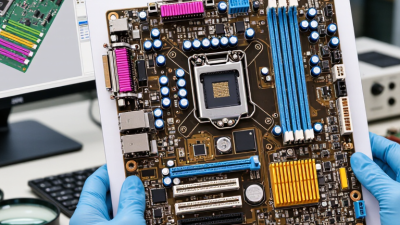
A polished factory tour proves little alone. Real confidence comes from traceable test records, clear corrective actions, and consistent samples across different production runs. Engineers should examine drill accuracy, solder-mask alignment, copper thickness, and finished boards under magnification. Small details matter. A misaligned via or rough edge can create expensive trouble later.
The word “top” remains contextual. One manufacturer may excel at quick prototypes, while another supports high-volume automotive or medical production. Cost can also mislead when tooling, testing, freight, or redesigns appear later. This guide therefore avoids treating a single ranking as absolute. It compares capabilities with real purchasing needs, recognizing that public information is sometimes incomplete or outdated. That limitation deserves attention.
Manufacturers with strong technical teams usually explain their process clearly, document quality controls, and respond with useful engineering questions. Their expertise should be visible in design-for-manufacturing feedback, material recommendations, and failure analysis. Reliability is built over repeated orders, not promised in one quotation. The following overview offers a practical starting point for evaluating global suppliers, while encouraging independent audits, sample testing, and careful contract review before production begins.
What Defines a Leading PCB Board Manufacturer
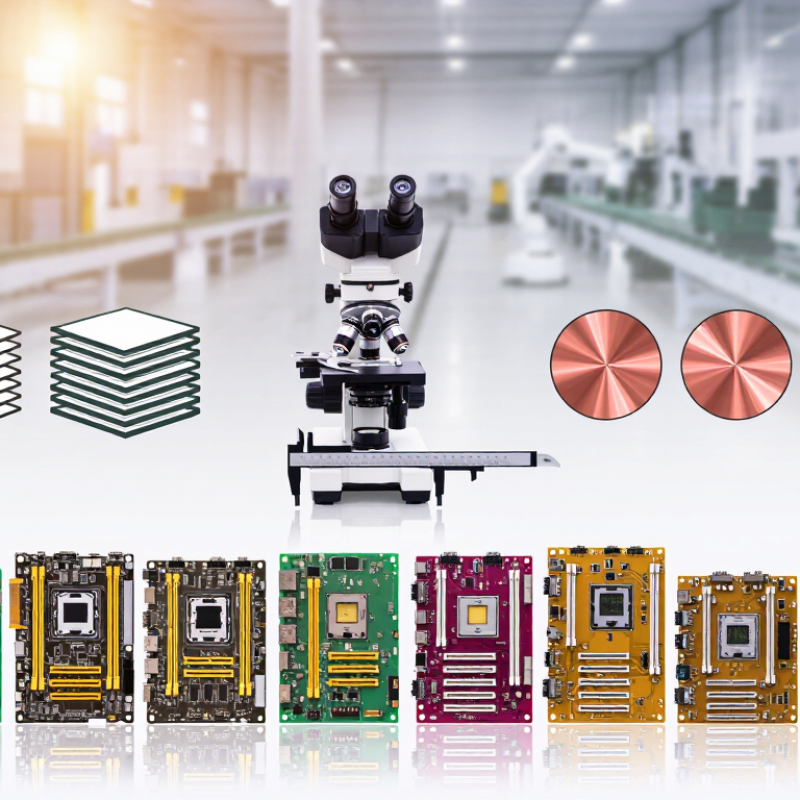
A leading PCB board manufacturer is defined by controlled performance, not factory size alone. Prismark’s 2024 industry review estimated the global PCB market at roughly 74 billion US dollars in 2023. That scale increases pressure on quality, delivery, and technical support. A capable manufacturer should provide complete material traceability, stable impedance control, and documented process capability. Operators should measure drill accuracy, copper thickness, registration, and solderability on every production lot. Numbers matter.
Independent verification strengthens credibility. IPC standards, including IPC-6012 and IPC-A-600, provide practical benchmarks for rigid board qualification and visual acceptability. A reliable supplier also uses automated optical inspection, electrical testing, and cross-section analysis. These tools expose hidden defects, such as barrel cracks or uneven plating, before assembly. According to Grand View Research, the global PCB market is projected to grow at a compound annual rate of about 5.6% from 2024 to 2030. Manufacturers must therefore scale without weakening process discipline.
Experience appears in the difficult details. Can the engineering team redesign a crowded six-layer board for manufacturability? Can it explain a failed test without hiding behind vague language? A strong factory shares corrective-action reports, yield trends, and realistic lead times. Sustainability also deserves evidence, including chemical management, waste tracking, and energy monitoring. No manufacturer is flawless. A missed tolerance or delayed prototype can still reveal whether communication is honest. That imperfect response often separates a dependable partner from a merely impressive brochure.
What Defines a Leading PCB Board Manufacturer?
This non-brand-specific evaluation framework highlights the practical factors commonly used when comparing PCB manufacturers. Quality consistency, manufacturing capability, delivery performance, engineering support, compliance, and cost competitiveness are key dimensions for assessing a reliable global supplier. The percentages represent an industry-oriented assessment model rather than data from any individual company.
Key Regions in the Global PCB Manufacturing Industry
Top PCB Board Manufacturers Worldwide?
The global PCB industry is concentrated in East Asia, but regional strengths differ sharply. Prismark’s 2023 industry data placed mainland China above 50% of global PCB production value. Taiwan, South Korea, and Japan remained important for advanced substrates, high-density interconnects, and automotive boards. These regions combine dense supplier networks with nearby semiconductor and electronics assembly capacity.
Southeast Asia is gaining practical importance. A 2024 report from the Semiconductor Industry Association identified the region as an expanding electronics manufacturing base, supported by investment diversification. Thailand, Vietnam, Malaysia, and Indonesia offer industrial parks, improving logistics, and lower concentration risk. Their capabilities are not identical. Some factories excel at multilayer boards, while others still depend on imported materials and engineering expertise.
Europe and North America contribute smaller production shares, yet they remain strategically valuable. IPC industry research has repeatedly highlighted regional demand for reliable, traceable, and shorter supply chains. Aerospace, medical, defense, and industrial customers often prioritize qualification records over the lowest unit price. That changes factory selection. Engineers examine copper thickness, impedance control, thermal cycling, and defect data, not just monthly capacity.
The numbers require caution. Report boundaries differ.
A supplier’s stated capacity may include outsourced processes or unfinished panels. Buyers should verify audited production records, certification scope, yield rates, and delivery performance. This is where regional comparisons become less perfect, but more useful.
Major PCB Board Manufacturers and Their Specialties
Top PCB Board Manufacturers Worldwide?
Major PCB Board Manufacturers and Their Specialties
The strongest PCB manufacturers specialize rather than serve every application equally. High-volume Asian producers often focus on multilayer boards, HDI designs, and mobile electronics. IPC’s World PCB Production Report shows that Asia continues to dominate global PCB output. Its scale supports competitive pricing, dense supply networks, and rapid capacity expansion.
Specialty manufacturers target different technical demands. Some concentrate on rigid-flex boards for medical devices, aerospace systems, and compact industrial equipment. Others build high-frequency boards for radar, telecommunications, and advanced automotive platforms. Automotive-focused facilities commonly follow IATF 16949 practices, while aerospace suppliers emphasize traceability, material control, and process validation. Prismark’s 2024 market outlook estimated the global PCB market near US$90 billion, reflecting strong demand for advanced substrates and high-density interconnects.
Tips: Match the factory to the board’s real risks. Check layer registration, impedance control, copper thickness, and solder-mask accuracy. Request recent capability data, not only a sales presentation. A supplier may claim fine-line expertise, yet struggle with larger panels or unusual laminates. That gap deserves attention. Certifications help, but they do not replace sample testing, cross-section analysis, and production audits. No manufacturer excels at everything.
How PCB Manufacturers Compare in Quality, Capacity, and Technology
Top PCB Board Manufacturers Worldwide? Quality, capacity, and technology reveal more than production volume. A reliable manufacturer controls copper thickness, dielectric spacing, drilling accuracy, and solder mask coverage. Inspectors should review cross-section reports, electrical test records, and material certificates. These documents show whether quality remains stable across repeated orders. Strong manufacturers also maintain traceability from incoming laminate to final shipment. A clean facility helps, but it does not prove process control. Test the evidence.
Capacity matters when prototypes become regular production. Ask about monthly output, machine availability, staffing, and backup equipment. A supplier may advertise large capacity but struggle with sudden design changes. This is where communication becomes important. Engineering teams should confirm stack-up rules, impedance targets, thermal needs, and inspection standards before purchasing. Technology also separates capable factories from ordinary ones. HDI, rigid-flex, fine-pitch assembly, laser drilling, and automated optical inspection can support demanding products. Yet advanced equipment is not enough. Skilled operators and disciplined maintenance still matter.
Tips: Compare sample data, not promises. Request recent yield figures, delivery performance, and corrective-action reports. Check whether prototypes and mass production use the same process controls. Ask for a realistic capacity range, not an impressive maximum. Leave room for uncertainty. No manufacturer performs perfectly. A thoughtful buyer should examine weaknesses, response speed, and improvement habits. That deeper review often reveals more than a polished presentation.
Factors to Consider When Selecting a PCB Board Manufacturer
Selecting a PCB board manufacturer requires more than comparing unit prices. In its 2024 Global Sentiment of the Electronics Manufacturing Industry report, IPC found that material costs and supply-chain uncertainty remained major industry concerns. Ask suppliers for documented lead times, approved material lists, and capacity evidence. A factory tour, even through a live video call, can reveal more than a polished quotation.
Technical control matters. Check whether the manufacturer works to IPC-6012 requirements and can provide test records for impedance, solderability, microsections, and electrical continuity. The 2024 Global PCB Market report by Prismark estimated that advanced boards, including high-density interconnect and rigid-flex designs, continued gaining importance in electronics production. This makes engineering support essential. Can the supplier review stackups, thermal demands, and drill limitations before production?
Do not ignore traceability. Request lot numbers, certificate records, and a clear process for handling nonconforming boards. The International Trade Centre’s 2023 trade data shows substantial cross-border movement in printed circuits, so logistics planning deserves the same attention as fabrication quality. A cheaper supplier may create expensive delays. I have seen teams focus heavily on price and overlook panel utilization or replacement timing. That is a useful warning, but not a universal rule. Evaluate sample quality, communication speed, corrective-action discipline, and total landed cost before choosing a long-term partner.