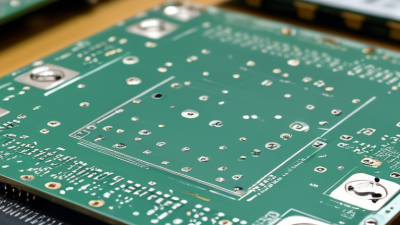
Choosing a pcb fabrication supplier is not simply a pricing exercise. It is a decision about yield, reliability, communication, and production risk. A supplier may offer an attractive quote, yet struggle with tight impedance control or consistent solder-mask registration. The right partner should prove capability with measurable evidence, not polished promises.
As PCB industry expert Happy Holden has often emphasized, “The printed circuit board is the foundation of the electronics industry.” That foundation must match your product’s demands. Review the supplier’s experience with your layer count, copper weight, material system, hole sizes, and surface finish. Ask for sample inspection reports, cross-section images, and certificates covering relevant quality systems. Check how the factory manages engineering changes, nonconforming material, and urgent questions.
Factory visibility matters.
A reliable evaluation also includes practical details. Can the supplier support controlled impedance testing? Does it use automated optical inspection and electrical testing? Are fabrication notes reviewed by an experienced engineer before release? Confirm lead times with actual production examples. A promised five-day build may exclude engineering review, shipping, or rework. That detail can disrupt an entire launch.
No supplier is perfect. Even strong manufacturers can make communication mistakes or miss an unusual design constraint. The important question is how openly they identify problems and correct them. Compare at least three candidates, speak with their technical teams, and request a small qualification order before committing to volume. Your final choice should balance cost, capability, documented quality, and trust. Sometimes the cheapest board becomes the most expensive lesson.
How to Choose a PCB Fabrication Supplier?
Define the board before comparing quotations. Start with layer count, finished copper thickness, minimum trace width, via structure, and board dimensions. A six-layer board needs more than six signal layers. It needs controlled return paths and a practical power distribution plan. Specify the material by Tg, Dk, and Df, not only “FR-4.” High-speed links may require a stable, low-loss laminate. Otherwise, the calculated impedance can drift after fabrication.
State the target impedance clearly, such as 50 ohms with a ±10% tolerance. Include the operating frequency, dielectric thickness, solder mask assumptions, and test coupon requirement. A supplier should provide the stackup before production. IPC-2221 and IPC-6012 offer useful design and performance guidance, while IPC-A-600 defines visual acceptance criteria. Class 2 suits many general products. Class 3 demands stricter inspection and reliability controls. Choose it for critical equipment, not automatically.
The IPC Global Economic Impact of the Electronics Industry report estimates that electronics manufacturing supports more than 29 million jobs worldwide. WSTS reported global semiconductor sales of about 611 billion dollars in 2024. These figures reflect growing circuit complexity and tighter signal margins. Ask for impedance test data, material certificates, microsection records, and a documented change-control process. Do not guess. I have seen projects specify Class 3, then overlook copper balance and thermal stress. That omission hurts. Even a perfect quotation cannot repair an incomplete requirement.
Choosing a PCB fabrication supplier starts with matching documented capabilities to your board’s real requirements. IPC-6012 defines performance expectations for rigid printed boards, including materials, construction, testing, and reliability. IPC-A-600 provides visual acceptance criteria for features such as pads, holes, solder mask, and conductor edges. These standards are related, but they are not interchangeable.
Ask the supplier for process evidence, not general promises. Review material certifications, impedance reports, electrical test records, and recent microsection images. Check whether their inspection methods can detect barrel cracks, resin voids, annular ring loss, and inner-layer registration errors. Small details matter. Request sample reports from a board with similar layer count and copper thickness. A supplier may claim IPC compliance, yet provide weak traceability or incomplete inspection records.
HDI designs require a deeper capability review. Confirm whether the factory controls laser-drilled microvias, stacked or staggered structures, sequential lamination, fine lines, and tight registration tolerances. Discuss via filling, pad design, dielectric thickness, and thermal reliability before releasing production data. Ask how they qualify new materials and monitor press cycles. Some suppliers can build one impressive prototype but struggle with repeatability. That gap is easy to miss. I would also compare first-article data with later lots, because stable production matters more than a single successful sample.
| Evaluation Dimension | Applicable Standard or Reference | What the Requirement Covers | Supplier Capability to Confirm | Objective Evidence to Request | Selection Priority |
|---|---|---|---|---|---|
| Product Classification | IPC-6012 | Qualification and performance requirements for rigid printed boards, including materials, construction, electrical performance, mechanical features, and testing. | The supplier can quote and manufacture to the required board type, performance class, revision, and customer-specific specification. | Completed capability questionnaire; controlled manufacturing specification; sample build review; documented interpretation of the required IPC class. | High |
| Acceptability Inspection | IPC-A-600 | Visual acceptability criteria for printed boards, including conductor condition, solderability-related features, holes, laminate, markings, and surface conditions. | Inspectors are trained to apply the specified IPC-A-600 revision and distinguish acceptable, nonconforming, and defect conditions. | Inspection plan; inspector training records; representative inspection photographs; nonconformance classification procedure. | High |
| HDI Design Translation | IPC-2226 and customer design rules | HDI design concepts such as microvias, sequential lamination, build-up structures, via-in-pad, stacked or staggered vias, and fine-pitch escape routing. | The supplier performs design-for-manufacturing reviews for HDI features and identifies risks before tooling release. | HDI capability matrix; DFM checklist; anonymized cross-section examples; engineering review records. | High |
| HDI Qualification and Performance | IPC-6016, where applicable | Qualification and performance considerations specific to high-density interconnect printed boards. | The supplier has controlled processes for microvia formation, dielectric build-up, sequential lamination, via reliability, and registration control. | Process qualification data; microvia reliability results; cross-section reports; sequential-lamination process flow. | High |
| Layer Count and Sequential Lamination | IPC-6012, IPC-2226, and approved fabrication drawing | Multilayer construction, dielectric sequence, registration, lamination cycles, buried vias, and HDI build-up stages. | The supplier can control the specified stack-up and repeat the required lamination sequence without introducing registration or resin-fill defects. | Approved stack-up drawing; lamination recipes; registration capability data; completed cross-sections from comparable builds. | High |
| Microvia Formation | IPC-2226 and applicable performance specification | Small laser-formed or other microvias used to connect build-up layers, including geometry, capture, fill, and interconnection reliability. | The supplier has suitable laser drilling, desmear, plating, and inspection processes for the specified microvia size and aspect ratio. | Laser-drilling capability range; microsection images; void and fill inspection data; process-control records. | High |
| Via-in-Pad Processing | Customer drawing and HDI design rules | Microvias placed in component pads, including filling, planarization, surface finish, and solderability control. | The supplier can fill and planarize via-in-pad structures when required and can prevent solder wicking or uneven pad surfaces. | Via-fill process specification; planarization inspection results; solderability data; cross-section evidence. | High |
| Trace, Space, and Registration | IPC-6012 and fabrication drawing | Conductor width, spacing, annular features, layer-to-layer registration, and dimensional tolerances defined by the design. | The supplier’s controlled process capability is appropriate for the design’s minimum trace, space, pad, and registration requirements. | Capability study; optical inspection reports; registration measurements; first-article dimensional report. | High |
| Copper Plating and Hole Quality | IPC-6012 and applicable acceptance criteria | Plated-through-hole integrity, copper continuity, plating uniformity, hole wall condition, and resistance to thermal or mechanical stress. | The supplier controls electroless copper, electrolytic plating, drilling, desmear, and hole-quality inspection processes. | Plating thickness records; microsection reports; thermal-stress test results; hole-wall defect analysis. | High |
| Material and Laminate Control | IPC-6012 and approved material specification | Base material type, dielectric thickness, copper weight, thermal performance, moisture handling, and compatibility with the assembly process. | The supplier can source, identify, store, and process the specified laminate and prepreg materials with full lot traceability. | Material certificates; incoming inspection records; storage-condition logs; material traceability documentation. | High |
| Surface Finish | IPC-6012 and customer specification | Surface finish type, thickness, uniformity, solderability, corrosion resistance, wire-bond compatibility, and shelf-life considerations. | The supplier offers the required finish and controls thickness, contamination, appearance, and solderability within the agreed specification. | Finish thickness reports; solderability test results; chemical-analysis records; process-control charts. | High |
| Electrical Testing | IPC-6012 and customer test requirements | Continuity, isolation, netlist conformity, and additional high-voltage or impedance-related tests when specified. | The supplier can test every required net, maintain calibrated equipment, and handle test-point limitations on dense HDI designs. | Electrical-test coverage report; fixture or flying-probe capability details; calibration certificates; test yield records. | High |
| Controlled Impedance | Fabrication drawing and stack-up specification | Characteristic impedance targets for high-speed signal structures based on trace geometry, dielectric properties, copper thickness, and stack-up. | The supplier can model, manufacture, and verify impedance structures using the approved stack-up and test coupon design. | Impedance calculation report; approved test-coupon design; impedance test results; stack-up measurement data. | High |
| Automated Optical Inspection | IPC-A-600 and internal inspection procedure | Detection of opens, shorts, conductor anomalies, pad defects, registration issues, and other visible manufacturing conditions. | AOI is integrated with manual review and defect classification rather than being used as the sole acceptance method. | AOI program controls; defect library; false-call management records; inspection sampling and escalation procedure. | Medium |
| Automated X-Ray Inspection | Process-control requirement for HDI, when applicable | Inspection of hidden structures such as buried vias, microvia arrays, internal registration, and selected plated features. | The supplier has in-house or qualified external X-ray capability suitable for the design’s concealed features. | X-ray inspection capability statement; sample images; measurement accuracy information; external-laboratory qualification if outsourced. | Medium |
| Reliability Testing | IPC-6012, IPC-6016, and customer qualification plan | Thermal stress, solderability, moisture resistance, insulation resistance, microvia reliability, and other tests defined by the product risk level. | The supplier can execute or manage the required qualification tests and link results to material, process, and lot information. | Qualification plan; laboratory accreditation or qualification evidence; test reports; failure-analysis records. | High |
| Nonconformance Management | IPC-A-600 and quality-system procedure | Identification, segregation, disposition, corrective action, and customer notification for boards that do not meet requirements. | The supplier has a documented process preventing unauthorized use or shipment of nonconforming product. | Nonconformance reports; corrective-action examples; quarantine records; change-control and concession procedures. | High |
| Traceability and Change Control | IPC-6012 documentation expectations and customer requirements | Traceability of materials, process lots, operators, equipment, inspection results, and approved manufacturing changes. | The supplier can trace finished boards back to material and process records and obtain approval before changing critical inputs. | Lot-traceability example; engineering-change procedure; approved supplier list; production traveler or digital history record. | High |
| Supplier Capacity and Lead Time | Project requirement rather than an IPC acceptance criterion | Ability to support prototype, pilot, and production volumes while maintaining the same qualified process window. | The supplier has realistic capacity for layer count, HDI cycles, material type, panel size, and required delivery schedule. | Capacity statement; manufacturing lead-time assumptions; bottleneck analysis; production-versus-prototype process comparison. | Medium |
| Final Supplier Match | Approved drawing, purchase specification, and applicable IPC revisions | Alignment between the product’s required performance, the applicable IPC standards, the design rules, and the supplier’s actual process capability. | The supplier provides a written capability review identifying compliance, exceptions, assumptions, and required customer approvals before order release. | Signed capability matrix; quotation assumptions; risk register; pre-production review minutes; approved first-article plan. | High |

| Important selection note: IPC standards define requirements and acceptance criteria, but they do not automatically guarantee that every supplier can manufacture a specific design. Confirm the applicable standard revision, product class, HDI structure, material system, tolerances, testing plan, and customer-specific requirements in the fabrication drawing and purchase specification. | |||||
Look closely at the details. I have seen impressive dashboards hide unstable drilling results. That experience made me question averages more often. Ask for anonymized lot records, corrective-action examples, and gauge calibration evidence.
Compare reported yield with customer returns and rework levels. Those figures should not contradict each other. A capable supplier can explain weak results without becoming defensive. Their answers should be specific, traceable, and supported by records. Fancy charts are not enough.
How to Choose a PCB Fabrication Supplier?
A capable supplier should review your files before quoting. Ask for documented DFM feedback, not vague approval emails. Their engineers should identify narrow traces, weak annular rings, and crowded component areas. Request a marked-up sample report. It reveals how carefully they work. My early supplier comparisons focused too heavily on price. That mistake caused avoidable redesigns and schedule pressure.
Capacity needs more than a monthly board count. Ask about available layer counts, panel sizes, copper weights, and surface finishes. Confirm whether production equipment is shared during peak periods. A supplier may promise volume, yet struggle with your actual board mix. Check the evidence. Review recent delivery records and inspect process-control documents when possible. Practical experience often exposes gaps that sales presentations hide.
Lead time should include engineering review, material purchasing, fabrication, inspection, and shipping. Separate standard timing from rush timing. Then calculate total landed cost. Include tooling, freight, customs charges, taxes, testing, packaging, and possible rework. A cheaper quote may become expensive after delays or rejected panels. Compare payment terms too. They affect cash flow. I still leave a small schedule buffer because even strong suppliers face material shortages or equipment maintenance. That is not pessimism; it is responsible planning. Ask how they communicate changes, document nonconformities, and protect revision control. Small details matter.
Recommended evaluation weighting for comparing DFM support, manufacturing capacity, lead times, and total landed cost.
DFM support and capacity reduce technical and supply risks, while lead time and total landed cost directly affect delivery performance and project economics. Adjust the weighting according to product complexity, demand volume, and schedule sensitivity.
Audit traceability before you trust delivery promises. Ask for lot-level records linking copper foil, laminate, operators, equipment, and inspection results. IPC-1782 provides a recognized framework for manufacturing traceability. A serious supplier should show how records are retained, corrected, and retrieved. Screenshots are not enough. Request a sample traveler.
Process controls reveal daily discipline. Review solderability testing, impedance checks, drill inspection, and chemical bath monitoring. Ask for control plans, calibration dates, and corrective-action reports. Deloitte’s 2024 Smart Manufacturing Survey, covering 816 manufacturers, found that 86% viewed smart manufacturing as important for competitiveness. Digital tools help, but they do not replace skilled review. I have seen attractive dashboards hide weak reaction plans.
Delivery data needs evidence. Request the last six months of promised dates, actual shipment dates, order quantities, and delay reasons. Separate standard orders from urgent exceptions. IPC’s 2024 electronics industry outlook continued to identify material availability and labor capacity as major operating pressures. A supplier reporting 100% on-time delivery deserves closer examination. That number may reflect easy orders only.
Check escalation speed, too. Ask who contacts you after a failed test, and within how many hours. Verify whether engineering changes trigger fresh approvals and updated records. A small pilot order can expose gaps that an audit misses. It may also reveal your own unclear specifications. That part is uncomfortable, but useful.