Why Is PCB Board Quality Important for Global Buyers?
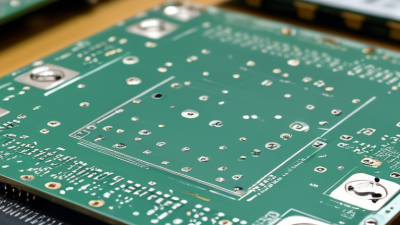
Global electronics demand is rising, and quality failures are becoming more expensive. The World Semiconductor Trade Statistics (WSTS) Autumn 2024 forecast valued the semiconductor market at approximately US$627 billion in 2024. It also projected 11.2% growth in 2025. That growth increases pressure on suppliers, assemblers, and purchasing teams. A weak pcb board can interrupt production when demand is already moving quickly.
Quality affects more than electrical performance. It influences assembly yield, product safety, delivery stability, and warranty exposure. IPC-6012 defines qualification and performance requirements for rigid printed boards. IPC-A-600 also provides visual acceptance criteria for finished boards. These standards help buyers examine copper thickness, plating, conductor spacing, solderability, and surface defects. Reliable suppliers should support these checks with inspection records, test reports, and traceability data.
The details matter. A lifted pad under a fine-pitch component may stop an automated line. A poorly plated via can fail after thermal cycling. A few hidden defects can become thousands of rejected assemblies. A low quote can still be expensive.
However, standards do not remove every risk. Buyer audits, sample testing, and supplier communication remain necessary. This is where many purchasing plans become too optimistic. IPC’s electronics industry research repeatedly highlights supply-chain resilience, regional capacity, and manufacturing risk as important business concerns. Global buyers should therefore assess pcb board quality as a long-term capability, not merely a pass-or-fail inspection. Better evidence usually means fewer surprises, although no supplier relationship is completely risk-free.
Why Is PCB Board Quality Important for Global Buyers?
For global buyers, PCB board quality means more than a clean surface and accurate dimensions. It begins with material control, copper thickness, dielectric stability, and dependable layer alignment. A board may look excellent yet fail after repeated thermal cycling. That hidden weakness becomes costly in industrial, communication, or control equipment. Warpage after reflow can also disrupt assembly, even when the bare board passes visual inspection.
Reliable suppliers document laminate grades, lot numbers, process conditions, and inspection results. They verify drilling, plating, solder mask coverage, and surface finish through measurable checks. Electrical testing should confirm continuity and isolation on every required circuit. Automated optical inspection can identify small spacing or solder mask defects. Still, inspection is not enough. Buyers need evidence that production remains stable between sample approval and mass delivery.
Quality also includes packaging, moisture protection, labeling, and traceable shipping records. These details protect boards during long international transport and warehouse storage. Conformance documents should match the actual production lot, not a generic template. A capable supplier welcomes audits, explains deviations, and responds with corrective action. No inspection plan is flawless. Teams sometimes focus on price and overlook connector fit or assembly yield. That mistake can appear months later. A practical evaluation combines samples, test data, process records, and feedback from real assembly conditions.

PCB quality directly shapes product performance and long-term reliability. A poorly manufactured board may cause unstable signals, overheating, or intermittent power loss. These problems often appear only after weeks of field use. That makes them expensive and difficult to trace.
In practical production, controlled impedance supports clean high-speed signals. Accurate drilling helps vias carry current without unwanted resistance. Proper copper thickness improves heat distribution around power components. Reliable solder mask coverage also reduces moisture-related corrosion.
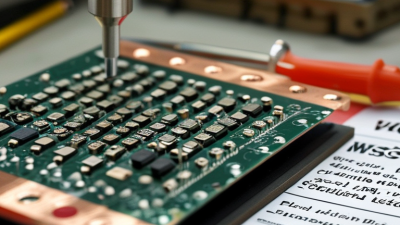
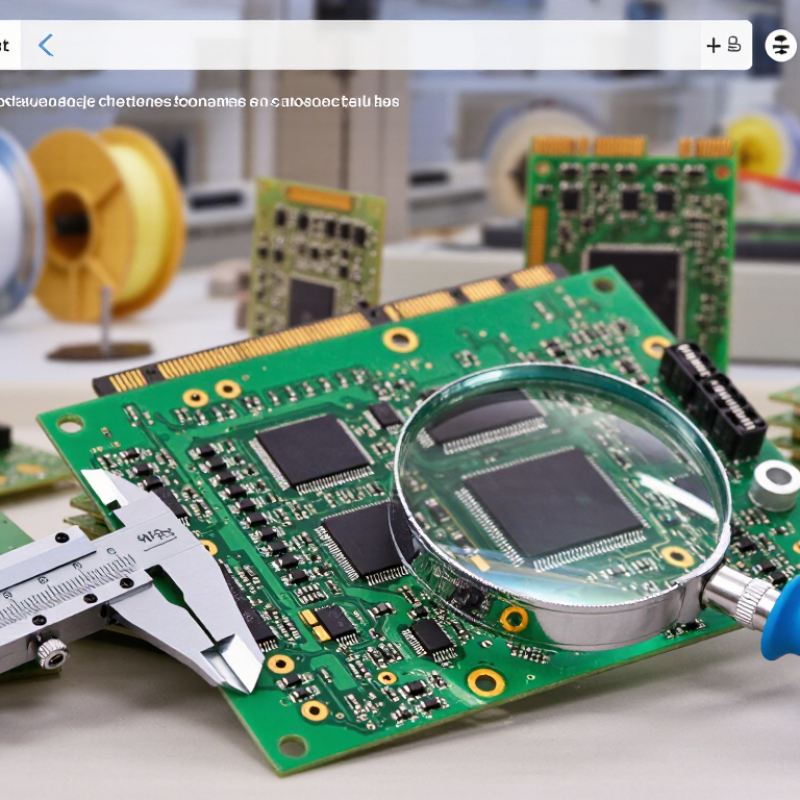
Testing should include electrical checks, thermal cycling, and visual inspection under magnification. Cross-section analysis can reveal hidden voids or weak plating. I have seen boards pass a basic test yet fail after repeated temperature changes. Testing is never perfect. Supplier records, process controls, and samples still require careful review.
Tips:
Ask for material certificates, inspection reports, and clear acceptance criteria. Check whether the supplier controls drilling, plating, soldering, and final testing. Request samples that match the actual production process. Compare signal performance before and after thermal stress. Do not judge quality by appearance alone. A clean surface can hide poor internal connections. Keep communication precise, especially when tolerances, layer structures, and delivery conditions cross borders.
For global PCB buyers, quality must be measurable, not based on appearance alone. Recognized standards provide a practical reference. IPC-A-600 defines requirements for finished board quality, including surface conditions, holes, and conductor patterns. IPC-6012 covers qualification and performance for rigid printed boards. For assembled boards, IPC-A-610 establishes acceptance criteria for solder joints, component placement, and visible defects.
ISO 9001 certification shows that a manufacturer controls its documented processes, inspections, corrective actions, and customer records. UL certification addresses important electrical and fire safety requirements for applicable board materials and constructions. RoHS and REACH declarations help verify restricted substance compliance. These documents matter. Buyers should check the certificate scope, expiration date, factory address, and covered product category. A certificate may apply to another facility or process.
Experienced sourcing teams also request lot-level records, such as material certificates, impedance reports, AOI or X-ray results, solderability data, and electrical test logs. Traceability should connect each board to its laminate lot, production equipment, and inspection date. Third-party audits can reveal poor storage, exposed copper, or uneven drilling. Still, standards are not magic. A supplier may pass an audit and miss a small annular ring defect. Sampling plans also have limits. Certification review should be combined with first-article inspection, cross-section analysis, and clear acceptance limits. Paperwork alone is not enough.
Why Is PCB Board Quality Important for Global Buyers?
How Quality Control Reduces Costs and Supply Chain Risks
For global buyers, PCB quality control is a cost-control tool, not just a factory checkpoint. A weak board can fail during assembly, testing, or field use. Each failure may involve replacement parts, extra labor, delayed shipments, and customer complaints. A minor solderability issue can stop an entire production line.
Reliable suppliers use layered inspections throughout production. Incoming teams check laminate condition, copper thickness, and material certificates. Automated optical inspection can detect missing pads, uneven traces, and solder bridges. X-ray inspection helps examine hidden joints on dense boards. Electrical testing confirms continuity and isolation before shipment. These steps create evidence, not assumptions.
Traceability also reduces supply chain risk. Lot numbers, inspection records, and operator data help buyers identify problems quickly. Thermal cycling and impedance checks are useful for demanding applications. Yet no inspection plan is perfect. I have seen clean test reports hide handling damage caused during packing. That is why protective packaging, sampling after transit, and clear acceptance criteria matter. Sometimes buyers focus heavily on unit price and overlook inspection depth. That decision can look efficient until a rejected batch reaches the assembly floor. Quality reviews should examine defect trends, corrective actions, and response time, not only pass rates. A supplier that explains a mistake clearly may be more dependable than one claiming flawless production.
| Quality Dimension | Control or Inspection Method | Objective Requirement or Reference | Potential Failure if Uncontrolled | Cost and Supply Chain Effect | Risk Level |
|---|---|---|---|---|---|
| Electrical continuity and isolation | Flying-probe testing or fixture-based electrical testing against the approved netlist | 100% test coverage is recommended for production lots where open or short circuits could affect product safety or field reliability. | Open circuits, short circuits, intermittent connections, or non-functional assemblies | Early detection reduces downstream assembly, rework, warranty, and expedited-shipment costs. | High |
| Visual workmanship | Inspection for solder mask damage, copper exposure, delamination, scratches, burrs, contamination, and unacceptable conductor defects | Acceptance should be defined by the applicable IPC-A-600 class and the buyer’s approved drawing. | Reduced insulation, corrosion risk, assembly interference, or premature field failure | Standardized acceptance criteria reduce subjective disputes, lot rejection, and repeated inspection cycles. | High |
| Dimensional and mechanical accuracy | Coordinate measuring machine, optical measurement, tooling-hole verification, and panel-size inspection | Board outline, hole locations, slot dimensions, and tolerances must match the released engineering drawing. | Assembly misfit, connector alignment problems, enclosure interference, or unusable panels | Prevents line stoppages and avoids the cost of scrapping boards that cannot be assembled. | High |
| Plated through-hole and via integrity | Microsection analysis, hole-wall inspection, thermal-stress testing, and plating-thickness verification | Requirements should follow the applicable IPC-6012 specification, product class, and customer drawing. | Barrel cracks, weak interconnections, intermittent faults, or failures after thermal cycling | Detecting structural defects before shipment lowers field-return exposure and protects production continuity. | High |
| Surface finish consistency | Thickness measurement, solderability testing, visual inspection, and finish-specific laboratory testing | Finish type and performance requirements should be specified in the purchase order and validated against the relevant IPC requirements. | Poor solder wetting, oxidation, contact-resistance problems, or reduced shelf life | Consistent finishes reduce assembly defects, line adjustments, and rejected incoming lots. | Medium to High |
| Material and regulatory compliance | Material declarations, supplier certificates, restricted-substance testing, and traceability records | EU RoHS restricted-substance limits include 0.1% by weight for lead, mercury, hexavalent chromium, PBB, PBDE, and four phthalates; cadmium is limited to 0.01%. | Import delays, customer non-acceptance, regulatory penalties, product recalls, or forced redesign | Verified compliance reduces customs, documentation, and market-access risks in international trade. | High |
| Traceability and change control | Lot numbers, material records, process records, inspection reports, and documented engineering-change approval | ISO 9001 requires controlled documented information and monitoring of production processes; it does not prescribe a universal PCB defect rate. | Inability to isolate affected lots, investigate failures, or prove product conformity | Fast containment limits the size and cost of recalls, rework campaigns, and supplier disputes. | High |
| Process capability and defect prevention | Statistical process control, first-article inspection, corrective-action reports, and recurring-defect analysis | Use customer-defined limits and process capability targets; a common statistical reference is Cpk ≥ 1.33 for capable stable processes, unless the contract specifies another value. | Unstable dimensions, recurring defects, inconsistent yield, and unpredictable delivery performance | Preventive controls improve yield and reduce scrap, rework, emergency production, and schedule variability. | Medium to High |
| Packaging and moisture protection | Moisture-barrier packaging, desiccant, humidity indicators, edge protection, and packaging-condition checks | Packaging requirements should reflect the board material, surface finish, storage period, transport route, and applicable moisture-sensitivity controls. | Oxidation, contamination, mechanical damage, or solderability degradation during international transport | Proper packaging reduces transit damage, repacking, replacement orders, and delivery interruptions. | Medium |
| Supplier corrective action | Root-cause analysis using structured methods such as 8D, containment verification, and effectiveness review | Corrective actions should identify root cause, immediate containment, permanent action, responsible owner, and closure evidence. | Repeated nonconformities and recurring disruptions across multiple purchase orders | Effective corrective action lowers the probability of repeat failures and reduces long-term quality-management overhead. | Medium |
Why Is PCB Board Quality Important for Global Buyers?
Global buyers should evaluate more than a supplier’s sample board. They should examine process control, traceability, testing, and delivery discipline. The ISO Survey 2023 recorded 1,265,216 ISO 9001 certificates worldwide. Certification shows a documented system, but it does not guarantee perfect circuit boards. Buyers still need production evidence.
Ask for material certificates, impedance reports, solderability results, and records from electrical tests. Confirm whether the supplier follows IPC-6012 and IPC-A-600 requirements. Review drill accuracy, copper thickness, surface finish, and defect limits. A capable supplier should explain corrective actions clearly. Vague answers deserve caution. A clean factory tour can still hide weak process controls.
Tips: Request three recent inspection reports, not one polished sample. Check whether serial numbers connect materials, operators, machines, and test results. Compare promised lead times with actual shipment records. Small pilot orders can reveal packaging damage, warpage, or inconsistent solder masks. Do not rely only on price; rework and field failures often cost more. Even experienced buyers miss hidden risks. That is worth remembering. Validate claims through independent testing when the application is safety-critical. Supplier quality should be measured repeatedly, not accepted once.