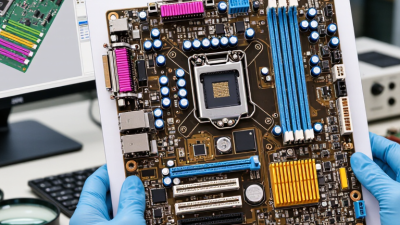
How to Find the Best PCB Fabrication Company in China?
Choosing the right partner for pcb fabrication in China is not simply a search for the lowest quote. A low price can look attractive beside a spreadsheet, yet tell you little about drilling accuracy, layer alignment, or how problems are handled. The details matter. A slight mismatch between your design requirements and a factory’s process can mean delays, extra cost, or boards that need rework.
Veteran PCB technologist Happy Holden has written extensively about manufacturing and design. Paraphrasing a practical lesson from his work: “Judge a fabricator by repeatable process control, not by a low quote alone.” Treat that as guidance, not a verified verbatim quotation. Buyers should check whether a supplier can explain its layer stackup, material options, copper weights, tolerances, and inspection steps in plain language. Ask for relevant test reports, sample boards, and clear answers about production capacity. A polished website is not proof.
This guide will help you compare Chinese PCB manufacturers with more confidence. It covers technical capability, quality systems, communication, lead times, pricing, and sample evaluation. Look closely at how each company responds to a specific design question. Does it flag a tight spacing issue before production, or simply accept the files? That response can reveal a lot. Still, no checklist removes every risk. Requirements vary, and a factory that suits a prototype may not suit larger runs. Careful verification takes time. It is worth the effort.
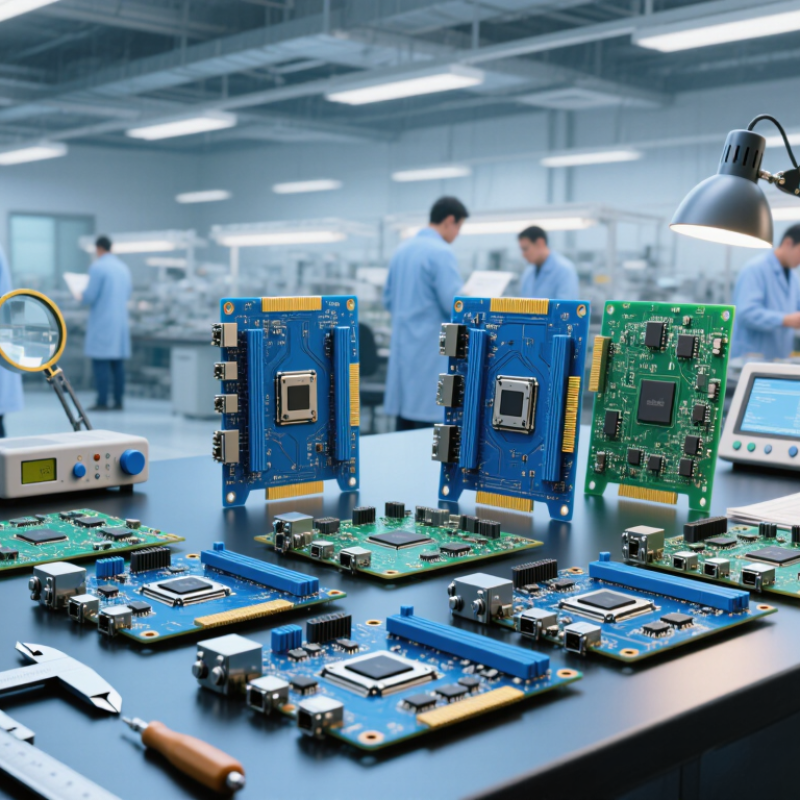
Define Your PCB Project Requirements and Production Scope
Before comparing suppliers, turn your design into a measurable production brief. Specify board dimensions, layer count, material, copper weight, finished thickness, surface finish, minimum trace and spacing, and controlled-impedance needs. Include the Gerber files, drill data, bill of materials, and expected annual volume. A simple note such as “1.6 mm board” is not enough if thickness tolerance or copper balance matters. Small omissions can become costly.
Prismark’s 2023 Global PCB Industry Report estimated that worldwide PCB production value fell about 15% in 2023, to roughly US$69.5 billion. That volatility makes capacity and lead-time questions practical, not academic. State whether you need prototypes, pilot builds, or repeat production, then define batch size, delivery schedule, testing, and packaging. Ask a prospective fabricator to confirm which requirements it can meet and where it needs clarification. For example, specify impedance targets and test coupons, rather than merely writing “high speed.” IPC-6012 and IPC-A-600 can help frame qualification and acceptance criteria; name the applicable revision in your purchase documents. Keep the brief realistic. I have seen teams over-specify early prototypes, then discover that a basic material choice was never agreed. That is avoidable, though not always obvious at first.
Assess Fabrication Capabilities, Certifications, and Quality Controls
A capable PCB fabricator should match your board’s actual demands, not just offer an impressive equipment list. Ask about layer count, minimum trace and spacing, copper weight, finished-hole tolerance, and available materials. For controlled-impedance boards, request details on stack-up review and impedance testing. Can the engineering team flag a risky design before production? A sample report or anonymized case study can help answer that. Still, one successful sample does not guarantee consistent results at volume.
Check whether the factory’s certifications are current and cover the site and processes handling your order. ISO 9001 can indicate a documented quality system, but it does not prove every board will meet your requirements. Ask how the company controls revisions, corrective actions, and supplier materials. If it cites workmanship standards, confirm which standard and acceptance class apply. Paperwork matters. So does the person who can explain it clearly.
Quality controls should be visible at several stages: incoming material checks, imaging inspection, electrical testing, and final review. Ask whether the supplier uses automated optical inspection and flying-probe or fixture-based tests suited to your design. For critical boards, request cross-section data or impedance results where appropriate. Lot traceability should connect the finished panels to materials and test records. A polished report can still miss a weak process; compare documented controls with actual production evidence.
How to Find the Best PCB Fabrication Company in China? — Assess Fabrication Capabilities, Certifications, and Quality Controls
How to use this chart: These are suggested buyer-defined evaluation weights, not survey results or rankings of suppliers. Compare each supplier using verifiable evidence, such as a capability matrix, current certificates, inspection records, and test reports. Adjust the weights to match your board’s requirements.
Compare Quotation Details, Lead Times, and Communication
A low PCB quotation can look attractive until the details are compared.
Check whether each supplier priced the same layer count, board dimensions, copper weight, surface finish, and quantity.
Details matter. Ask whether tooling, electrical testing, panelization, and packaging are included, and whether engineering questions could add fees.
A line such as “standard finish” is not specific enough; request the exact finish and thickness in writing.
Compare equivalent specifications, not just the final number. Even then, a neat spreadsheet cannot reveal every production risk.
Lead times deserve the same scrutiny.
Ask for separate estimates for engineering review, fabrication, testing, and shipping. A stated five-day build may not include transit or a delay caused by unclear files.
Request a dated schedule and ask how schedule changes are reported.
Communication is easier to judge before ordering. Send one practical question about a drill file or stack-up, then notice whether the reply is clear and specific.
No reply, or a vague one, is useful evidence too.
I would not treat fast replies as proof of quality; that assumption can be wrong. Keep answers, revisions, and approved specifications in one written record.
Verify Supplier Reliability Through Samples and Customer References
A reliable PCB fabrication partner should prove its process with real boards, not promises. Request samples made with a stack-up and finish similar to your project. Check solder-mask alignment, clean edges, plated-hole consistency, and board thickness with basic measuring tools. If possible, test the sample electrically and review its inspection records. A glossy sample is useful, but it cannot show how consistently the factory handles repeat orders. Ask how production controls keep later batches close to the approved sample.
Tips: Send the supplier a short inspection checklist before sampling. Photograph any defects, note measurements, and ask for a written response. Keep the approved sample for comparison.
Customer references can reveal what a sample cannot. Ask for contacts who have ordered boards of comparable complexity, then ask specific questions: Were delivery dates dependable? Did the supplier explain defects promptly? How were revisions or corrective actions handled? A polished testimonial may tell you little about day-to-day performance, so seek concrete examples and, where possible, speak directly with the customer. Small details matter. I would still treat references cautiously; project conditions differ, and even a capable supplier can have an occasional miss. Look for a pattern of clear communication, documented checks, and practical follow-through rather than a claim of perfection.
Select a Partner Based on Fit, Risk, and Long-Term Support
Choosing a PCB fabrication partner in China is not a price comparison alone. UNIDO’s International Yearbook of Industrial Statistics reports that China produced about 31.8% of global manufacturing value added in 2022. The World Bank’s 2023 Logistics Performance Index ranked China 19th among 139 economies. These figures show scale and logistics capacity, not the quality of any one factory. Keep that distinction clear.
Request a sample build with the same layer count, material, copper weight, and finish as your production board. Review the cross-section, impedance results, drill registration, and inspection records. Ask how the factory handles a failed test coupon or a late engineering change. Specific answers matter. A polished capability sheet is not proof of stable process control.
Long-term support deserves equal weight. Agree on revision control, traceability, response times, and a named escalation route before placing repeat orders. Confirm whether the factory can retain build records and explain deviations with evidence. A low quote may still be the right choice, but only if quality expectations and recovery steps are written down. I would also recheck communication during a small pilot; one unanswered technical question can expose a bigger gap.