What Is the Best Circuit Design Software in 2026?

Choosing the best circuit design software in 2026 depends less on a feature checklist than on what you need to build. A solo engineer sketching a two-layer sensor board faces different constraints from a team designing high-speed, multilayer hardware. Both need dependable schematics, layout tools, and checks that catch costly errors before fabrication.

The market context is growing. The Semiconductor Industry Association, citing WSTS, reported global semiconductor sales of $627.6 billion in 2024, up 19.1% from 2023. That figure describes chip sales, not circuit-design tools, but it reflects the scale and pace of the electronics ecosystem these tools support. More capable hardware also brings practical trade-offs: simulation depth, library quality, collaboration, learning time, and licensing costs can matter as much as headline features. A polished interface is not enough.

This guide compares circuit design software across real workflows, from schematic capture to board verification. It considers options for beginners, independent designers, and professional engineering teams, while distinguishing PCB-focused platforms from broader electronic design automation suites. There is no universal winner. Some tools make a first board feel refreshingly simple; others can be difficult to justify for small projects. We will examine where each excels, where it falls short, and what to test before committing. One caution: product capabilities and pricing change, so confirm current details with vendors before making a purchasing decision.

What Is the Best Circuit Design Software in 2026?

Define Circuit Design Software Across the Schematic-to-PCB Workflow

Circuit design software connects an electrical idea to a board that can be manufactured. The workflow begins with a schematic: engineers place components, draw nets, and check that each pin has a purpose. Simulation can expose problems before hardware exists. But models are imperfect.

The design then moves into PCB layout. Component footprints, copper traces, vias, and board layers translate the schematic into physical geometry. Design-rule checks flag issues such as insufficient spacing or a trace that is too narrow. Manufacturing outputs carry the finished layout to fabrication and assembly. Not just drawing. A usable tool keeps electrical intent linked to physical changes, so a moved connector does not silently break a net.

This workflow matters in a large, fast-moving sector. WSTS reported global semiconductor sales of $627.6 billion in 2024, up 19.1% from 2023, in its December 2024 market data. That figure describes chip sales, not circuit software demand; it signals the scale of the electronics ecosystem designers serve. In real projects, the handoff can still feel clumsy: footprints may need review, and clean rule checks cannot guarantee a reliable board. Strong software makes those gaps visible, supports revision history, and exports consistent production files. The engineer still has to question the result.
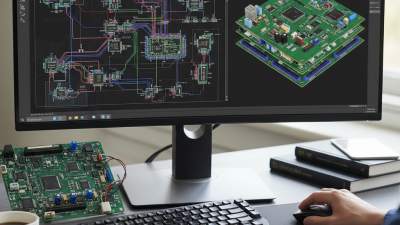
Compare Core EDA Functions with IPC-2221 and IPC-2581 Standards

What Is the Best Circuit Design Software in 2026?

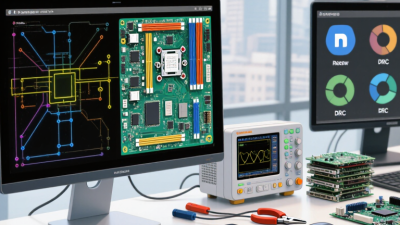
Choosing circuit design software means looking beyond a polished schematic editor. Strong EDA tools connect schematic capture, PCB layout, design-rule checks, and manufacturing outputs. The useful question is how clearly they support standards-based decisions. IPC-2221 provides general guidance for printed-board design, including conductor sizing and electrical spacing. Good software can help apply these rules, but engineers still need to check assumptions such as copper thickness, temperature rise, and operating environment.

IPC-2581 addresses a different task: exchanging PCB design data between engineering and manufacturing systems. Compare whether a tool exports complete, structured data, including layer definitions, component information, and fabrication details. A clean export can reduce repeated file checks, but it does not prove the board is manufacturable. I still find this distinction easy to overlook. Treat standards support as a workflow capability, not a checkbox, and confirm the required standard revision with your fabrication partner.

Tips: Test a real board, not a demo. Run clearance and trace-width checks, then inspect the IPC-2581 output for missing layers or properties. Record the IPC-2221 assumptions behind critical dimensions. Small omissions matter. If the software flags a rule without explaining its source, pause and verify it against your project requirements.

Assess Signal-Integrity Tools for 10, 25, and 100 GbE Design Rates

Choosing circuit design software in 2026 means testing its signal-integrity workflow against real channel demands, not counting features. For 10 GbE, check whether it models differential impedance, connector transitions, and basic crosstalk across a practical PCB stackup. The plot should be readable. A clean eye diagram can still hide poor assumptions about materials or reference planes.

At 25 GbE, faster edges make discontinuities harder to ignore. Look for field-solver support, via-stub analysis, and reliable models for packages and connectors.

The software should let engineers compare pre-layout estimates with post-layout results. It should also document model versions and settings, so another reviewer can reproduce the run. That detail is easy to overlook.

For 100 GbE, clarify the signaling architecture before comparing tools: aggregate links may use multiple lanes, while each lane has its own channel budget.

Assess equalization and eye analysis, including IBIS-AMI support where relevant, plus manageable workflows for long, coupled routes. Ask whether the solver handles realistic loss and crosstalk without turning every iteration into an overnight task.

Then validate critical predictions with lab measurements. Software is not a measurement instrument, and a convincing simulation can still be wrong. I would weigh traceable models and fast iteration above a crowded feature list, though that judgment deserves testing on your own boards.

Frame 2026 EDA Needs Against SIA’s $627.6B in 2024 Chip Sales

Global chip sales reached $627.6 billion in 2024, up 19.1% from 2023, according to the Semiconductor Industry Association’s annual market figures. That scale puts real pressure on circuit design workflows: teams must move from schematics to verified layouts without losing track of timing, power, or manufacturability. The figure measures chip sales, not EDA demand. The gap matters. A large market does not automatically make one design tool the best.

SEMI reported that worldwide semiconductor equipment sales reached $117.1 billion in 2024, showing how much investment supports fabrication. For designers, the practical test is whether software helps catch problems before a board reaches production. Can it flag a crowded connector route, model a power rail, and share revisions clearly across a team? Strong options support simulation, signal-integrity checks, design-rule verification, and reliable file handoffs. Yet no feature list replaces a project-specific trial. A workflow can look polished and still miss a thermal hot spot. That is an uncomfortable, useful reminder. Compare tools using the same sample circuit, constraints, and review process, then judge which one reduces rework for your team.

What Is the Best Circuit Design Software in 2026? - Frame 2026 EDA Needs Against SIA’s $627.6B in 2024 Chip Sales
A data-led checklist for evaluating electronic design automation (EDA) workflows—without ranking or naming vendors.
Dimension Verified 2024 data or workflow fact What to evaluate in circuit design software for 2026
Global semiconductor sales $627.6 billion in 2024, up 19.1% from $526.8 billion in 2023. Check whether the tool supports the project’s full design flow, from schematic capture and simulation through PCB layout and manufacturing outputs.
Fourth-quarter market scale Global sales were $170.9 billion in Q4 2024, up 17.1% year over year and 3.0% quarter over quarter. Test performance on representative project sizes: large schematics, high-component-count boards, and multi-user review workflows.
Annual growth, calculated The 2024 increase was $100.8 billion compared with 2023, based on the reported annual totals. Assess revision tracking, reusable libraries, project organization, and how easily teams can maintain designs as requirements change.
Schematic and connectivity A schematic represents circuit intent; connectivity must remain consistent when the design is transferred to PCB layout. Verify electrical-rule checks, net highlighting, hierarchical design support, and reliable synchronization between schematic and board.
Simulation and verification Simulation can help evaluate circuit behavior before a physical prototype is built; available analyses depend on the software and models used. Match supported analyses and model formats to the project—for example, analog, digital, mixed-signal, or power-integrity checks.
PCB layout and rule checking PCB design involves component placement, routed connections, and constraints such as clearance and track width. Confirm design-rule configuration, constraint management, routing options, layer support, and checks suited to the board’s complexity.
Manufacturing handoff Fabrication and assembly require accurate design data and manufacturing outputs appropriate to the production process. Check required output formats, drill and layer data, bill-of-materials handling, and whether outputs can be validated before release.
Best-fit decision The market-sales figures describe semiconductor industry scale; they do not measure EDA software quality or establish a single best tool. Choose using a trial project that reflects actual board complexity, team workflow, verification needs, learning curve, and total cost.
Source note: 2023 and 2024 annual sales and Q4 2024 sales and growth figures are reported by the Semiconductor Industry Association. Annual dollar difference is calculated from the reported totals. Software evaluation points are selection criteria, not vendor ratings.

Choose a 2026 Platform by Design Scale, Team Workflow, and Cost

The best circuit-design platform in 2026 depends on board complexity, team habits, and the full cost of delivery. A solo engineer building a two-layer prototype needs different tools from a team managing dense multilayer boards, shared libraries, and frequent revisions. Look beyond the subscription price. Count seat limits, compute needs, onboarding, library migration, and the hours spent fixing handoff errors. Small costs add up.

Workflow matters, too. Deloitte and MAPI’s 2024 Smart Manufacturing survey found that 92% of surveyed executives expect smart manufacturing to drive competitiveness within three years. That does not mean every design team needs cloud tools. It does suggest that reliable data handoffs deserve attention. Gartner forecast worldwide public-cloud spending at $679 billion in 2024, up 20.4% from 2023. That is broad market context, not proof that hosted design is automatically better. Check access controls, offline needs, and review history against your actual workflow.

Test candidate platforms with a real board: import an existing library, route a crowded connector area, and ask a colleague to review the changes. Measure the time, not just the feature list. A powerful tool can still slow a small team. And a cheaper one may cost more in rework. The trade-off is rarely neat.

What Is the Best Circuit Design Software in 2026?

Choose a platform by design scale, team workflow, and total cost.

How to read this chart: Bars show the minimum layer count in each example tier; “20+” is open-ended. These are comparison buckets, not formal industry standards—actual stack-ups depend on the design.

Choosing a platform: For smaller boards, prioritize ease of use and total cost. For complex boards, evaluate advanced design-rule checks and library management. For teams, check collaboration, version control, file exchange, and the full cost of seats, support, and training.

Wordpress Social Share Plugin powered by Ultimatelysocial
Facebook
X (Twitter)
YouTube
LinkedIn
Share

Purchase Product Request

Request Pricing