Why Is Material Handling Equipment Important?

Why Is Material Handling Equipment Important? The answer begins with the daily movement of goods. In a warehouse, a pallet may travel from receiving to storage, then to picking and shipping. Every transfer uses time, labor, space, or energy. Material Handling Equipment helps control these movements with greater consistency. Forklifts, conveyors, pallet jacks, cranes, and automated storage systems each serve different operational needs.

Dr. James A. Tompkins, a respected authority in facilities planning, expressed a central principle: “The best material handling is no material handling.” This idea does not mean eliminating every machine. It means removing unnecessary movement, repeated lifting, and avoidable delays. A well-designed system can reduce product damage, improve workplace ergonomics, and support more accurate order fulfillment. It can also give workers clearer paths and safer working distances.

Still, equipment alone cannot solve a poorly planned process. A fast conveyor may only move mistakes faster. An oversized forklift can waste aisle space and raise operating costs. Experience matters here. Managers should study product weight, travel distance, workflow, maintenance needs, and employee training before selecting equipment. Small details matter, too. A damaged wheel, blocked charging area, or unclear pedestrian route can disrupt an entire shift.

There is no perfect system.

The strongest approach combines practical observation, measurable data, and regular review. When Material Handling Equipment matches the real work, it becomes more than a collection of machines. It becomes a dependable link between people, products, and customer expectations. Yet every facility has room to improve, and that honest recognition supports safer, more efficient decisions.
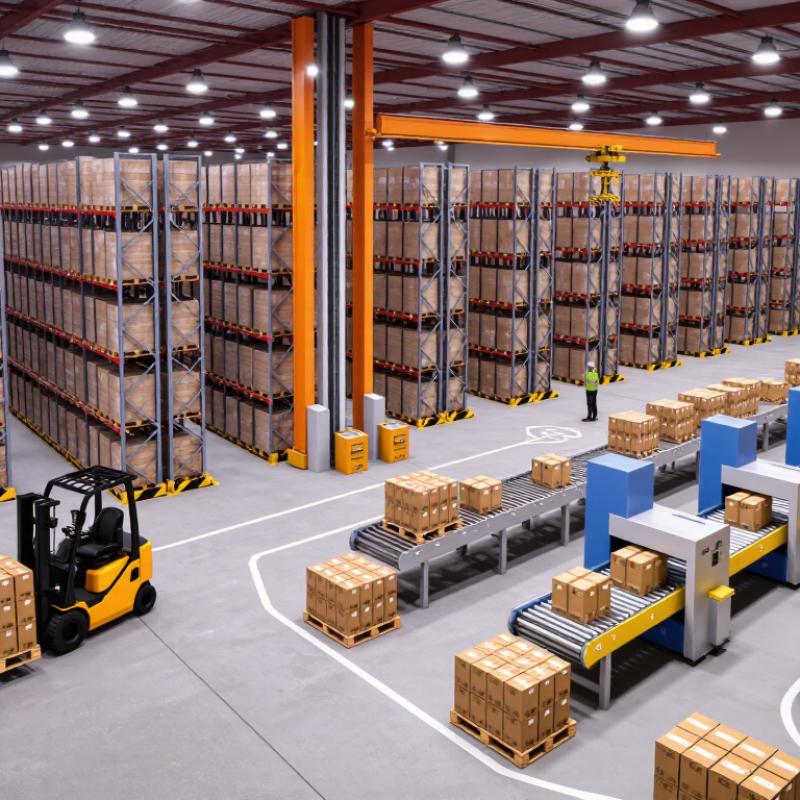
Why Is Material Handling Equipment Important?

What Is Material Handling Equipment?

Material handling equipment, or MHE, is the collection of tools used to move, lift, position, store, and protect materials. It supports work inside warehouses, factories, distribution centers, and loading areas. Common examples include conveyors, forklifts, pallet jacks, hoists, racks, carts, and automated storage systems. These tools handle boxes, components, raw materials, and finished goods. Not just machines. MHE can be manual, powered, or computer-controlled, depending on load size, travel distance, speed, and workplace design.

In a warehouse, a pallet jack may move a loaded pallet across a short aisle. A conveyor can carry cartons between packing and shipping stations. Racking uses vertical space, while lifts place stock at suitable working heights. Sensors and controls can track movement, but they still require inspection and trained operators.

In warehouse practice, the best choice begins with observing the work, not purchasing equipment. Measure aisle width, floor condition, load weight, travel distance, and lifting frequency. Small details matter. A poorly matched machine may slow workers, damage goods, or create avoidable strain.

MHE also includes planning tools, labels, charging stations, and maintenance schedules that support physical equipment. Reliable handling depends on the complete system. One weak point can affect every movement. Equipment capacity should match real loads, not optimistic estimates. Some automated systems look efficient on paper, yet they may struggle when products vary constantly. That limitation deserves attention. Regular inspections, clear procedures, and recorded repairs help confirm whether equipment remains dependable. Its value depends on fit, maintenance, and how people actually use it each day.


How Material Handling Equipment Supports Workplace Operations

Material handling equipment supports workplace operations by moving, storing, protecting, and positioning goods. In a busy warehouse, pallet trucks, conveyors, lifts, and shelving reduce unnecessary walking. That saved time helps teams load orders, replenish stock, and meet delivery schedules. Good equipment also keeps loads stable and work areas less congested. For example, a lift table can place heavy cartons near waist height. Workers then handle fewer awkward movements during repetitive tasks. Small changes matter. They can reduce strain and improve consistency.

Operations depend on more than machine availability. Supervisors need clear traffic routes, weight limits, inspection routines, and practical training. Daily checks should cover wheels, brakes, forks, guards, controls, and visible damage. Maintenance records provide useful evidence when managers review safety and productivity. From workplace observations, neglected inspections often create delays before they cause obvious failures. A blocked aisle or low battery can stop several connected tasks. Equipment selection also requires honest analysis of floor space, load sizes, work height, and usage frequency. The cheapest option may not support the real workflow. I have seen teams buy efficient equipment that workers avoid because the controls feel awkward. That is a useful warning. Reliable operations require listening to operators, measuring results, and revising routines when evidence challenges assumptions.

Which Types of Material Handling Equipment Are Commonly Used?

Why Is Material Handling Equipment Important?

Material handling equipment keeps goods moving safely through receiving, storage, production, and shipping. The right equipment reduces lifting strain, product damage, and avoidable delays. It also helps workers maintain steady movement during busy periods. Small improvements matter. A shorter walking route can save hours each week.

Hand trucks and platform carts suit boxes, tools, and irregular loads. Pallet jacks move palletized goods across short, level distances. Forklifts handle heavier pallets and lift them onto storage racks. However, forklifts require trained operators, clear aisles, and regular inspections. Stackers can support lighter vertical storage where a full-sized forklift feels excessive. Conveyors provide continuous movement between workstations, loading areas, and packing lines. They are useful when the same route repeats throughout the day. Cranes and hoists serve heavy or awkward loads that cannot be moved safely by hand. Automated guided vehicles may support repeated transport, but they need reliable floor markings and traffic controls.

Choosing equipment requires more than checking its maximum capacity. Managers should examine load dimensions, floor conditions, aisle width, lifting height, and daily travel distance. A pallet jack may look economical, yet it performs poorly on uneven surfaces. I have seen simple layouts become complicated after equipment blocked emergency access. That mistake deserves attention. Equipment also needs maintenance records, operator training, and practical safety checks. The best choice is not always the newest machine. It is the one that fits the workflow without creating new risks.

Why Is Material Handling Equipment Important?

Material handling equipment improves workplace safety, reduces manual lifting, and helps move, store, and control goods efficiently. Common equipment includes forklifts, pallet jacks, conveyors, cranes and hoists, and automated storage and retrieval systems.

The chart shows OSHA-estimated annual forklift-related incidents in the United States. These figures demonstrate why proper equipment selection, operator training, inspections, and safe operating procedures are essential.

Source: U.S. Occupational Safety and Health Administration (OSHA), forklift safety estimates.

How This Equipment Improves Safety, Efficiency, and Productivity

Material handling equipment improves safety by reducing lifting, carrying, and awkward reaching.

A lift truck, conveyor, or pallet positioner can keep loads stable and workers away from pinch points. However, equipment does not remove every hazard. Poor visibility, crowded aisles, and rushed operators still create serious risks.

The U.S. Bureau of Labor Statistics reported 1,495 fatal injuries in transportation and material moving occupations in 2023.

That figure shows why safe equipment selection must include training, inspections, traffic controls, and realistic workload planning.

Efficiency improves when materials move through a planned route. Conveyors can reduce repeated walking, while adjustable workstations help employees handle cartons at waist height. Small improvements matter. A few saved seconds per carton can become hours each shift.

The MHI 2024 Industry Report found that 83% of respondents considered supply chain innovation important.

It also identified workforce shortages as a major operational challenge. Automation can help address that pressure, but only when processes are stable first. Adding equipment to a disorganized warehouse may simply create faster confusion.

Productivity depends on reliable daily performance, not impressive machinery alone.

Operators need clear controls, preventive maintenance, and enough space to work safely. A damaged wheel or poorly positioned rack can slow an entire line.

My practical concern is often simple: companies measure output before checking fatigue, near misses, or unnecessary movement. That decision may produce short-term gains, but it can weaken performance later.

The National Safety Council’s 2024 workplace safety research continues to identify ergonomics and overexertion as costly workplace concerns.

Good handling systems should protect people while making the next task easier.

What Factors Determine the Right Material Handling Equipment?

Choosing the right material handling equipment begins with the work, not the catalog. The load’s weight, shape, and stability matter every day. A narrow carton may need different support than a steel coil. Measure load dimensions carefully. Small errors can create large handling problems. Also consider travel distance, lifting height, and daily handling frequency. Moving ten pallets per shift is not the same as moving one hundred.

The facility itself sets important limits. Check aisle width, floor strength, ceiling height, ramps, and door clearance. A powerful machine is useless if it cannot turn safely in a tight aisle. Battery life, charging space, noise, and indoor air quality also affect equipment selection. In warehouses with uneven floors, wheel design and ground clearance deserve close attention. Operators should not need awkward twisting or excessive force. Poor ergonomics often becomes a hidden operating cost.

Safety records and maintenance access should guide the decision. Look for clear visibility, reliable braking, load protection, and practical emergency controls. I have seen teams choose equipment from purchase price alone, then struggle with repairs and training. That approach needs reconsideration. Calculate the total cost, including energy, servicing, downtime, and operator instruction. Future growth matters too. A system that fits today may become restrictive next year. Still, planning for every possible change can waste money. The best choice usually comes from measured site data, operator feedback, and a realistic view of daily work.

Why Is Material Handling Equipment Important? - What Factors Determine the Right Material Handling Equipment?

Material Handling Equipment Selection Guide
Equipment Type Typical Handling Task Typical Load or Capacity Best Operating Environment Primary Selection Factors Main Benefit
Hand Pallet Truck Moving palletized loads over short distances Approximately 2,000–5,500 lb (900–2,500 kg) Warehouses, loading areas, and retail backrooms with level floors Load weight, pallet dimensions, aisle width, floor condition, and travel distance Low purchase and maintenance cost with simple manual operation
Forklift Truck Lifting, stacking, and transporting palletized materials Common warehouse capacities range from about 3,000–10,000 lb (1,360–4,540 kg) Warehouses, factories, yards, and distribution centers; model-dependent Rated capacity at lift height, load center, mast height, turning radius, fuel or battery type, and operator training High lifting capacity and efficient horizontal movement
Reach Truck Placing and retrieving loads in high warehouse racks Often approximately 2,000–4,500 lb (900–2,040 kg), depending on lift height and configuration Indoor distribution centers with narrow aisles and high-density storage Required lift height, aisle width, rack layout, residual capacity, and floor flatness Improves vertical storage utilization in narrow aisles
Electric Pallet Jack Frequent pallet movement across short and medium distances Commonly approximately 4,000–8,000 lb (1,800–3,630 kg) Indoor facilities where low noise and zero direct exhaust emissions are important Duty cycle, battery capacity, charging facilities, aisle width, ramp gradients, and operator controls Reduces physical effort and supports higher throughput than manual handling
Conveyor System Continuous movement of cartons, totes, parcels, or components Determined by product size, weight, belt or roller design, and line speed Fixed production lines, sortation areas, packing stations, and distribution centers Throughput, product dimensions, accumulation requirements, layout, noise, guarding, and controls integration Predictable material flow and reduced manual carrying
Automated Guided Vehicle (AGV) Repeated transport between defined pickup and drop-off points Capacity varies widely; many systems are designed for several hundred kilograms to several tonnes Structured facilities with stable routes, controlled traffic, and repeatable workflows Payload, navigation method, route complexity, traffic management, battery charging, safety controls, and system integration Consistent transport performance and reduced dependence on repetitive manual travel
Overhead Crane Lifting and positioning heavy or oversized loads Capacity is application-specific and may range from a few tonnes to substantially higher ratings Manufacturing plants, fabrication areas, maintenance bays, and heavy industrial spaces Rated load, span, lift height, duty class, building structure, load path, controls, and inspection requirements Uses overhead space while keeping floor areas available for other operations
Scissor Lift Table Raising loads or workers to a more ergonomic working height Capacity depends on platform size, lift height, and whether it is designed for goods or personnel Assembly, packing, maintenance, loading, and order-picking operations Platform dimensions, load type, lift range, mobility, guarding, stability, and applicable safety requirements Improves ergonomics and can reduce bending, reaching, and manual lifting
Note: Capacity figures are indicative industry ranges rather than universal specifications. The actual safe working load must be confirmed from the equipment rating plate, manufacturer documentation, site conditions, and applicable workplace safety regulations.

Article Source:

Wordpress Social Share Plugin powered by Ultimatelysocial
Facebook
X (Twitter)
YouTube
LinkedIn
Share

Purchase Product Request

Request Pricing