What Are the 2026 Top Marine Generator Sets?

What Are the 2026 Top Marine Generator Sets? The answer increasingly depends on duty profile, fuel strategy, and verified emissions performance. The International Maritime Organization’s Fourth GHG Study estimated that shipping produced 2.89% of global anthropogenic greenhouse-gas emissions in 2018. Its 2023 strategy now targets net-zero emissions from international shipping by or around 2050. These figures change the buying question. A generator must deliver dependable power today while remaining adaptable tomorrow.

DNV’s Maritime Forecast to 2050 highlights efficiency, alternative fuels, onboard energy management, and operational flexibility as central maritime priorities. The best Marine Generator Sets therefore combine high load acceptance, low fuel consumption, compact maintenance access, and compatibility with cleaner fuels. Wärtsilä Marine’s Roger Holm has described the transition as having “no silver bullet.” That warning matters. Battery support, shore power, methanol, LNG, and future fuels each bring different technical limits.

Real vessels expose those limits quickly. A ferry may need rapid load response after ramp operations. An offshore support vessel may run for long hours below its rated load. A cargo ship may prioritise service intervals, redundancy, and global parts availability. Laboratory efficiency alone is insufficient.

The strongest 2026 candidates should be judged against measured fuel curves, transient performance, emissions data, classification requirements, and documented field experience. Not marketing language. The comparison is not perfectly tidy. It should not be. Vessel owners still face incomplete fuel infrastructure, uncertain resale values, and evolving regulations. A careful shortlist must acknowledge those weaknesses, then match generator architecture to the vessel’s actual operating pattern.
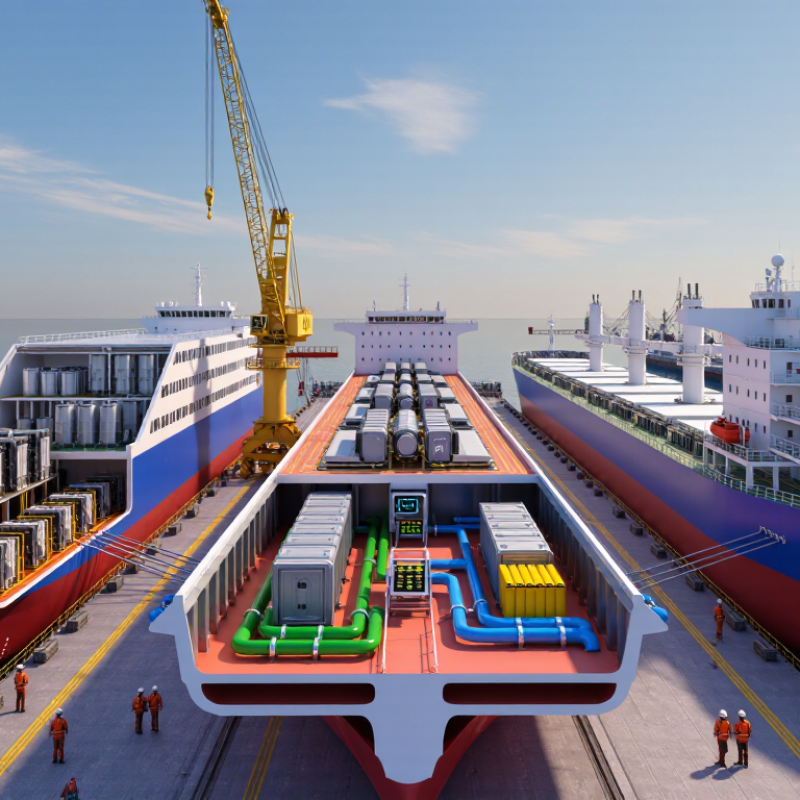
What Are the 2026 Top Marine Generator Sets?

Definition and Role of Marine Generator Sets in 2026

In 2026, a marine generator set is an onboard power system, not merely a backup engine. It combines an engine, alternator, controls, cooling, and exhaust treatment. The system converts fuel energy into electricity for lighting, pumps, navigation, communications, and cargo equipment. Propulsion moves the vessel. The generator set keeps its essential services alive.

This role becomes clearer beside global shipping data. UNCTAD’s Review of Maritime Transport 2024 reports that over 80% of global merchandise trade by volume moves by sea. A failed generator can therefore interrupt refrigeration, steering support, safety systems, or port operations. On an operating vessel, engineers watch load changes closely. A sudden crane start can pull far more power than cabin lighting. Stable voltage matters. Small faults can become expensive delays.

The 2026 definition also includes efficiency and emissions performance. The IMO 2023 greenhouse-gas strategy targets at least a 40% reduction in carbon intensity by 2030, compared with 2008 levels, and net-zero emissions around 2050. DNV’s Maritime Forecast to 2050 highlights efficiency, alternative fuels, and onboard energy management as major transition areas. A top marine generator set should therefore match vessel load, fuel availability, maintenance skill, and regulatory needs. Hybrid operation, variable-speed control, and continuous emissions monitoring may improve that fit. Yet the definition has a blind spot: lower fuel consumption does not automatically mean lower total environmental impact. Life-cycle emissions, fuel quality, and real operating behavior still require honest measurement.


What Are the 2026 Top Marine Generator Sets?

Marine generator sets convert mechanical energy into electrical power for propulsion support, navigation, pumps, lighting, communications, hotel loads, and emergency systems. The chart shows representative electrical output ratings commonly used for different vessel applications in 2026. Actual sizing depends on vessel design, redundancy, operating profile, and regulatory requirements.

Larger commercial vessels generally require higher-capacity generator sets because they operate more pumps, navigation systems, cargo equipment, accommodation systems, and safety equipment. Modern marine installations increasingly combine high-efficiency diesel, dual-fuel, gas, hybrid, and battery-supported systems to improve fuel economy, emissions performance, reliability, and operational flexibility.

Key Technologies Shaping 2026 Marine Generator Sets

Marine generator sets in 2026 will be shaped by efficiency, flexibility, and cleaner onboard power. The IMO 2023 GHG Strategy targets net-zero emissions from international shipping around 2050. It also calls for zero- or near-zero-emission fuels to reach at least 5% of shipping energy by 2030. These targets are pushing generator systems toward dual-fuel operation, improved combustion control, and fuel-ready designs.

The engine room is changing. Digital monitoring can track cylinder temperature, exhaust composition, vibration, and fuel consumption in real time. DNV’s Maritime Forecast to 2050 identifies energy efficiency, alternative fuels, and onboard digitalization as major maritime transition themes. In practice, adaptive controls can reduce wasted fuel during slow steaming or hotel-load operations. Small gains matter daily. Battery-assisted systems may also handle peak loads, reducing sudden generator starts and inefficient low-load running. The technology is promising, but battery capacity, cooling, and fire protection still require careful engineering.

Shore power compatibility is becoming more valuable in ports with strict emissions rules. The International Energy Agency reports that maritime transport remains a significant oil consumer, reinforcing pressure for electrification and fuel substitution. However, future fuel availability is uncertain. Methanol, ammonia, hydrogen, and advanced biofuels each present storage, safety, or supply challenges. A technically impressive generator can still fail commercially if its fuel is unavailable. Designers should therefore test real operating profiles, not rely only on laboratory ratings. Forecasts may be too confident.

Top Marine Generator Set Types and Their Applications

What Are the 2026 Top Marine Generator Sets?

Top Marine Generator Set Types and Their Applications

Marine generator sets in 2026 are increasingly selected by vessel duty, fuel access, and electrical load. Diesel generator sets remain practical for cargo ships, fishing vessels, and offshore support boats. They offer strong torque, simple refueling, and dependable operation during long voyages. However, fuel consumption and exhaust treatment require careful planning under current maritime emissions rules.

Gas and dual-fuel generator sets suit ferries, coastal vessels, and ports with reliable gas infrastructure. They can reduce certain emissions, but storage space and fuel availability may limit their usefulness. Hybrid generator systems combine engines with batteries and power management software. Ferries often use them during docking, while research vessels benefit from quieter operation near sensitive areas. The battery does not replace the generator in every case.

Small variable-speed sets work well on yachts and service boats with changing electrical demand. They adjust engine speed instead of running constantly at full output. This can reduce noise and unnecessary fuel use. Emergency generator sets remain essential for navigation, pumps, lighting, and communication systems. They must start quickly and operate reliably after long standby periods.

A practical selection begins with measured load data, not guesswork. An oversized set may run inefficiently for most of its life. An undersized set can overheat under sudden demand. No configuration is perfect. A design that looks efficient on paper may disappoint after installation, especially when ventilation, vibration, or maintenance access is overlooked.

How to Compare Efficiency, Emissions, Reliability, and Cost

What Are the 2026 Top Marine Generator Sets?

The strongest marine generator sets in 2026 are not simply the largest or newest. They match the vessel’s real load profile, operating area, and maintenance capacity. Compare fuel consumption at 25%, 50%, and 75% load, not only at the rated point. A ferry may need clean response during frequent hotel-load changes. An offshore vessel may value steady output during long, remote voyages. Record fuel use during sea trials when possible. Brochure figures can miss rough-weather behavior.

Emissions require careful verification. Check nitrogen oxide performance, particulate output, sulfur-related fuel requirements, and applicable emission-control areas. Confirm certification against current flag-state, class, and MARPOL requirements. Exhaust after-treatment may reduce emissions, but it can add heat, backpressure, space needs, and maintenance work. That trade-off is easy to underestimate. Ask for measured data, not vague compliance language. Small details matter, especially sensor access and filter replacement intervals.

Reliability depends on more than engine design. Review cold-start performance, load acceptance, vibration levels, spare-part access, and documented failure history. A generator that runs efficiently but takes hours to service may cost more offshore. Calculate total ownership cost using fuel, lubricants, crew time, overhauls, downtime, and resale value. Include backup capacity and redundancy in the calculation. A spreadsheet helps. It can still lie. Real operating data should challenge optimistic assumptions. For many vessels, the best 2026 choice is a balanced set with predictable maintenance, verified emissions, and stable efficiency across changing loads.

Selection Criteria for Different Vessel and Offshore Needs

What Are the 2026 Top Marine Generator Sets?

The strongest 2026 marine generator sets will match vessel duty, not simply advertise higher output. A ferry needs fast load response, quiet operation, and reliable hotel power. An offshore support vessel needs redundancy, shock resistance, and stable performance during dynamic positioning. Cargo ships often prioritize fuel efficiency over short acceleration times. The right choice begins with the load profile. Measure peak demand, standby hours, harmonics, and future electrical upgrades.

The IMO 2023 GHG Strategy targets net-zero greenhouse gas emissions from international shipping by or around 2050. Therefore, dual-fuel readiness and lower specific fuel consumption deserve serious attention. DNV’s Maritime Forecast to 2050 identifies efficiency improvements, alternative fuels, and onboard energy management as major transition tools. Generator sets should also support shore power, battery systems, and variable-speed operation where practical. These features can reduce wasted fuel at low loads. However, performance claims require independent test data. Real engine-room conditions are less forgiving.

Tips: Keep one realistic failure scenario. Simulate a blackout during heavy weather, not only calm-water operation. Check class-approved documentation, service access, spare-part logistics, and emissions compliance for each operating region. Select redundancy from risk analysis, not habit. A smaller vessel may need two sets instead of one oversized unit. That choice can improve flexibility, but it may increase maintenance workload. This trade-off is often underestimated. UNCTAD’s Review of Maritime Transport 2024 also highlights fleet expansion and continuing pressure for cleaner, more efficient shipping, making lifecycle cost more useful than purchase price alone.

What Are the 2026 Top Marine Generator Sets? - Selection Criteria for Different Vessel and Offshore Needs

Vessel or Offshore Application Typical Generator Rating Recommended Engine Speed Suitable Fuel Options Operating Profile Emission and Compliance Priorities Key Selection Criteria
Harbor Tugs and Push Boats 200–1,000 kWe per set; multiple sets are common for redundancy 1,500–1,800 rpm for 50/60 Hz systems Marine diesel; renewable diesel or approved biodiesel blends where permitted Frequent load changes, maneuvering, standby, and short high-load periods IMO MARPOL Annex VI requirements; IMO Tier III may apply when operating in a designated NOx ECA Fast load response, shock and vibration resistance, compact footprint, high transient performance, and easy maintenance access
Offshore Supply Vessels 500–2,500 kWe per set; commonly installed in four-set or similar redundant configurations 720–1,800 rpm, selected according to vessel acoustics, space, and load profile Marine diesel, dual-fuel natural gas, or methanol-capable configurations Continuous hotel load, dynamic positioning, deck machinery, and variable propulsion support IMO Tier III strategy, class notation, fuel safety rules, and offshore-area environmental requirements Dynamic-positioning compatibility, redundant switchboards, black-start capability, fuel flexibility, and strong part-load efficiency
Ferries and Ro-Pax Vessels 500–3,000 kWe per set, depending on passenger capacity and hotel load 900–1,800 rpm; lower speeds can reduce noise and improve passenger comfort Marine diesel, LNG, methanol, or hybrid-ready diesel-electric systems Regular schedules, rapid port turnaround, high HVAC demand, and repeated acceleration cycles NOx and sulfur limits under MARPOL Annex VI, local port restrictions, and passenger-vessel safety rules Low noise and vibration, rapid synchronization, high efficiency at variable load, shore-power compatibility, and emissions after-treatment space
Cruise and Large Passenger Ships 1,000–5,000 kWe per set; several generators are normally used for redundancy 500–1,800 rpm, with medium-speed units preferred for large continuous loads Low-sulfur marine fuel, LNG, methanol, or other approved lower-emission fuels High continuous hotel load from HVAC, kitchens, lighting, elevators, and entertainment systems Strict port-emission requirements, NOx compliance, sulfur limits, particulate control, and shore-connection readiness High electrical reliability, low vibration, lifecycle fuel economy, maintainability during voyages, and segregation of essential loads
Fishing Vessels and Trawlers 150–1,500 kWe per set 1,500–1,800 rpm for compact installations; 720–1,200 rpm for larger continuous-duty systems Marine diesel or approved renewable diesel blends Long voyages, refrigeration, winches, hydraulic equipment, and fluctuating fishing loads MARPOL Annex VI compliance, local fishing-zone rules, and fuel-quality requirements Low fuel consumption, robust construction, corrosion protection, easy onboard servicing, and reliable low-load operation
Yachts and Small Commercial Craft 20–500 kWe per set 1,500–1,800 rpm; variable-speed systems may improve efficiency at light loads Marine diesel; hybrid battery integration is increasingly suitable for hotel loads Intermittent operation, high comfort requirements, air-conditioning peaks, and low overnight loads Local marina restrictions, applicable recreational-vessel emission rules, and low-noise requirements Very low noise and vibration, compact dimensions, clean power quality, automatic load management, and simple controls
Research, Survey, and Cable-Laying Vessels 500–3,000 kWe per set 720–1,800 rpm, selected to minimize vibration and electrical interference Marine diesel, LNG, methanol, or hybrid diesel-electric arrangements Highly variable loads from winches, cranes, sensors, laboratories, and precision positioning systems IMO and class requirements, NOx-control strategy, low electromagnetic interference, and special operating-area rules Excellent voltage and frequency stability, low vibration, harmonic control, redundancy, and compatibility with sensitive equipment
Offshore Platforms and Production Facilities 1–10 MWe per set, configured according to platform demand and critical-load philosophy 720–1,200 rpm for large continuous-duty installations Natural gas, dual-fuel gas/diesel, marine diesel, or other approved low-emission fuels Continuous 24-hour operation with critical safety, process, accommodation, and emergency loads Offshore class certification, hazardous-area segregation, gas-safety standards, NOx control, and emissions-permit conditions High availability, N+1 or equivalent redundancy, fire and gas integration, maintainability, long overhaul intervals, and black-start capability
Emergency and Standby Marine Generator Sets 50–2,000 kWe, sized for essential services rather than total vessel load 1,500–1,800 rpm for rapid starting and compact installation Marine diesel with compliant low-sulfur fuel Rare operation, automatic start, short-duration testing, and emergency operation after loss of main power SOLAS emergency-power provisions, class rules, automatic-start requirements, and applicable MARPOL limits Reliable cold starting, rapid voltage recovery, independent fuel and cooling systems, fire safety, and periodic testability
Technical note: Generator ratings are representative selection ranges rather than product specifications. Final sizing should be based on the vessel load analysis, maximum step load, short-circuit study, ambient conditions, classification requirements, fuel availability, operating area, and the applicable IMO, SOLAS, MARPOL, and local port regulations. IMO Tier III requirements apply when the vessel operates in a designated NOx Emission Control Area and the installation falls within the applicable regulatory scope.
Wordpress Social Share Plugin powered by Ultimatelysocial
Facebook
X (Twitter)
YouTube
LinkedIn
Share

Purchase Product Request

Request Pricing