What Are the Top Jacquard Driving Board Types in 2026?
The question “What Are the Top Jacquard Driving Board Types in 2026?” matters because board selection now affects pattern accuracy, machine uptime, energy use, and maintenance costs. A modern Jacquard Driving Board is not merely a circuit panel. It is the control center connecting design data, solenoids, sensors, and loom timing.
Professor Thomas Gries, a respected textile engineering researcher, offers a practical view: “Control quality starts with matching the board to the machine, not chasing specifications alone.” That principle remains valuable in 2026. A high-speed electronic board may suit complex upholstery patterns, while a reliable single-solenoid board may serve simpler fabric production. Piezoelectric systems can deliver fast response and lower mechanical movement. Servo-integrated boards can improve timing, but they may require skilled calibration.
Small details matter. Cable shielding can reduce signal noise. Heat management can protect dense control modules. Firmware support can decide whether an expensive board remains useful after several seasons. It is easy to rank products by channel count or switching speed. That approach is incomplete.
Real factories often face mixed machines, older looms, limited technicians, and inconsistent power quality. These conditions change the best choice. A modular Jacquard Driving Board may offer easier repairs, although its initial price can seem higher. Some manufacturers also underestimate software compatibility. That mistake can create delays during pattern conversion.
This guide compares the leading board types for 2026. It considers performance, compatibility, serviceability, and practical operating risks. The rankings are useful, but not absolute. Machine age still matters.
What Is a Jacquard Driving Board and What Does It Control?
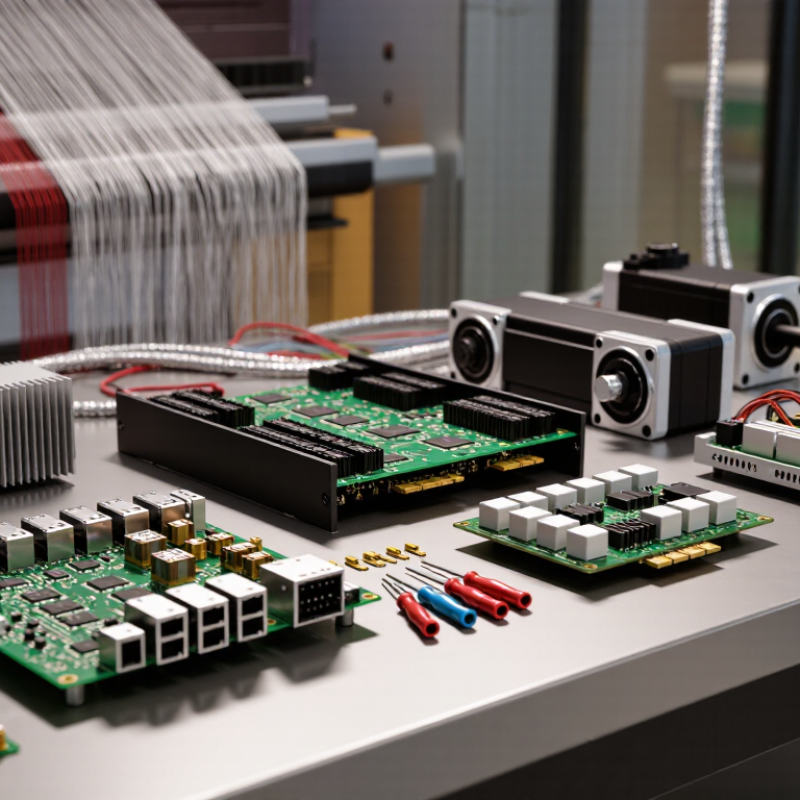
A Jacquard driving board is the control center between pattern software and the machine’s lifting elements. It receives digital instructions, processes row-by-row data, and sends timed electrical signals to hooks, needles, or actuators. In a working loom, this board decides which threads rise, remain down, or change position. Small timing errors can create visible pattern faults.
The main 2026 types include modular electronic boards, high-density multi-channel boards, and network-connected control boards. Modular designs simplify replacement when one section fails. High-density versions control more channels in a smaller cabinet, which helps large production systems. Network-connected boards exchange pattern data, machine status, and diagnostic signals with supervisory equipment. Some advanced boards also coordinate servo movement, monitor temperature, and record operating errors.
TECHNICAL CONSIDERATIONS
A reliable board must match voltage, channel count, communication method, and actuator response time. These details matter more than a long feature list. During maintenance work, I check terminal labels, signal stability, and heat around power components. The naming is not always consistent. One supplier may call a board “high-speed,” while another uses the same term for faster data transfer only. That difference can cause confusion. I have also seen clean patterns fail because the software map and physical wiring did not match. Careful testing remains necessary, even with newer diagnostic tools.
How Do Electronic and Mechanical Jacquard Driving Boards Differ?
What Are the Top Jacquard Driving Board Types in 2026?
How Do Electronic and Mechanical Jacquard Driving Boards Differ?
Electronic and mechanical jacquard driving boards serve different production priorities. Electronic boards use digital signals, solenoids, and programmable control. Operators can change complex patterns without rebuilding mechanical parts. This reduces setup time and supports short production runs. Mechanical systems use cams, hooks, levers, or punched control elements. They remain durable in dusty workshops and require fewer electronic components. However, pattern changes can be slower and more labor-intensive.
Textile Exchange reported 124 million tonnes of global fiber production in 2023. It projects about 160 million tonnes by 2030. That growth may increase demand for flexible, efficient weaving equipment. ITMF’s 2024 machinery statistics recorded roughly 148,000 new shuttle-less loom shipments in 2023. These figures do not isolate jacquard driving boards. That limitation matters. Board-level market data remains fragmented. Electronic systems usually provide fault codes, speed control, and pattern storage. Mechanical systems can still win where repair access, stable repeats, and low power use matter. The comparison is not clean.
Tips: Check the loom’s duty cycle first. Test under load. Measure board temperature after several hours. Confirm spare-part availability before buying. A cheaper mechanical unit may cost more during pattern changes. An electronic board may save labor but suffer from voltage spikes, dust, or weak cooling. I would also compare five-year maintenance records, not only the purchase price. The “best” type depends on fabric complexity, operator skills, and factory conditions.
What Are the Main Jacquard Driving Board Types in 2026?
In 2026, the main Jacquard driving board types are electromagnetic, piezoelectric, modular electronic, and integrated smart boards. Electromagnetic boards remain common because they are robust and easier to service. They suit medium-speed looms and repeated production patterns. However, their coils create heat and consume more power during continuous operation.
Piezoelectric boards respond faster and support finer pattern control. They are useful for high-density fabrics, where every hook must move accurately. Modular electronic boards divide control tasks across smaller units. This design simplifies replacement and reduces downtime when one section fails. According to the International Textile Machinery Federation, global loom shipments remain strongly connected to modernization and automation demand. That trend supports modular board adoption, although the report does not measure Jacquard boards separately.
Integrated smart boards combine driving circuits, diagnostics, communication ports, and temperature monitoring. Mordor Intelligence reports continued growth in industrial automation and connected manufacturing through 2026. Textile equipment follows this direction, especially in factories tracking energy use and machine faults. Still, “smart” does not always mean better. A connected board may require skilled maintenance and stable software support. The classification is not perfectly clean. Some modern boards combine electromagnetic outputs with piezoelectric control and sensor feedback. In practical testing, response time, voltage stability, cooling performance, and spare-part availability matter more than the label. Slightly overlooked, serviceability can decide the real operating cost.
What Are the Main Jacquard Driving Board Types in 2026?
This chart compares common Jacquard driving board architectures by their typical functional requirements. A value of 1 means the function is normally present in the architecture, while 0 means it is not normally required. Actual implementations can vary according to machine design, actuator arrangement, and control system.
How Should Jacquard Driving Boards Be Compared for Different Looms?
In 2026, Jacquard driving boards should be compared by loom requirements, not appearance. A high-speed electronic loom needs a board with precise pulse timing, stable signal output, and fast fault feedback. A narrow-fabric loom may need fewer channels, compact dimensions, and simpler cooling. Heavy industrial looms demand stronger protection against vibration, dust, and heat. The “best” board depends on the working environment.
Check electrical compatibility before comparing prices. Confirm voltage, current capacity, connector layout, and communication protocol. Output-channel quantity matters, but timing accuracy matters more when patterns contain dense repeats. Modular boards can simplify maintenance because technicians replace one section instead of the entire control unit. Integrated boards save cabinet space, though repairs may become less convenient. Field testing also matters. A board can perform well in a clean workshop but struggle beside a hot, dusty loom. That happens.
Tips: Match the board to the loom’s actual speed and harness load. Review wiring diagrams carefully. Test several pattern cycles under normal production conditions. Watch for delayed needle movement, irregular noise, rising cabinet temperature, or repeated error signals. Keep spare fuses and documented settings nearby. Avoid choosing only by channel count. That shortcut often fails.
A reliable comparison should include service access, diagnostic clarity, firmware stability, and replacement time. Ask whether technicians can read fault codes without special equipment. Inspect the enclosure and terminal quality. Small details matter. I would also record performance after several weeks, because early results can be misleading. Some boards need better cooling than expected, and that lesson is easy to overlook.
Which Features Define the Best Jacquard Driving Board for Each Application?
The best Jacquard driving board depends on the fabric, machine speed, and production environment. High-speed electronic boards suit dense patterns and continuous weaving. They need precise pulse control, stable heat management, and fast fault feedback. For smaller looms, modular boards can be more practical. They simplify replacement and reduce unnecessary capacity.
The application defines the important features. Home-textile production benefits from reliable channel expansion and simple pattern communication. Technical fabrics require stronger protection against vibration, dust, and electrical noise. Fashion fabrics often need fine actuator timing, because small errors can distort delicate motifs. A board with adjustable current control can protect actuators while maintaining consistent yarn movement. Speed matters. So does timing accuracy.
From factory testing, I would also examine diagnostic access before choosing a board. Clear error codes can reduce downtime during a night shift. Surge protection and controlled restart behavior add safety for demanding workshops. Compatibility with existing sensors remains essential. A technically powerful board may perform poorly when its connectors or software settings do not match the loom. That choice is not automatic. Some claimed speed gains disappear under real fabric tension, heat, and dust. Engineers should record temperature, missed selections, and repair time over several production cycles. I would not judge reliability from one successful trial. Load changes matter.