China Top Wall Mounted Battery Harness Suppliers?

Choosing reliable China Top Wall Mounted Battery Harness Suppliers requires more than comparing prices. A battery harness carries current, heat, and mechanical stress inside a compact installation. Poor crimping or weak insulation can create serious performance risks. This guide examines manufacturers through practical engineering details, not marketing claims.

The review focuses on conductor materials, terminal quality, wire gauges, connector compatibility, and insulation ratings. Experienced suppliers should provide drawings, sample harnesses, production records, and test data. Look for evidence of continuity testing, pull-force testing, voltage-drop checks, and temperature resistance. A capable factory should also explain how it controls stripping, crimp height, and routing length. Small details matter.

Wall Mounted Battery Harness products should fit the battery enclosure without sharp bends or excessive tension. Ask whether suppliers support custom lengths, labels, locking connectors, and protective sleeving. Factory audits can reveal useful facts, such as organized workstations and calibrated crimping tools. Certifications help, but they do not replace sample inspection. That point is often overlooked.

Communication quality also deserves attention. Clear English drawings can reduce costly misunderstandings. Response speed is useful, but technical accuracy matters more. Request a pre-production sample before approving larger orders. Check terminal locking by hand, then repeat the test after vibration or flexing. Not every supplier will provide equally complete documentation. Some product pages may overstate capability. Careful verification remains necessary.

This guide presents a balanced approach to identifying dependable Chinese suppliers. It recognizes manufacturing strengths while acknowledging possible gaps in consistency, documentation, and after-sales support. The best choice is not always the lowest quotation. It is the supplier that can repeatedly deliver safe, traceable, and correctly fitted harnesses.
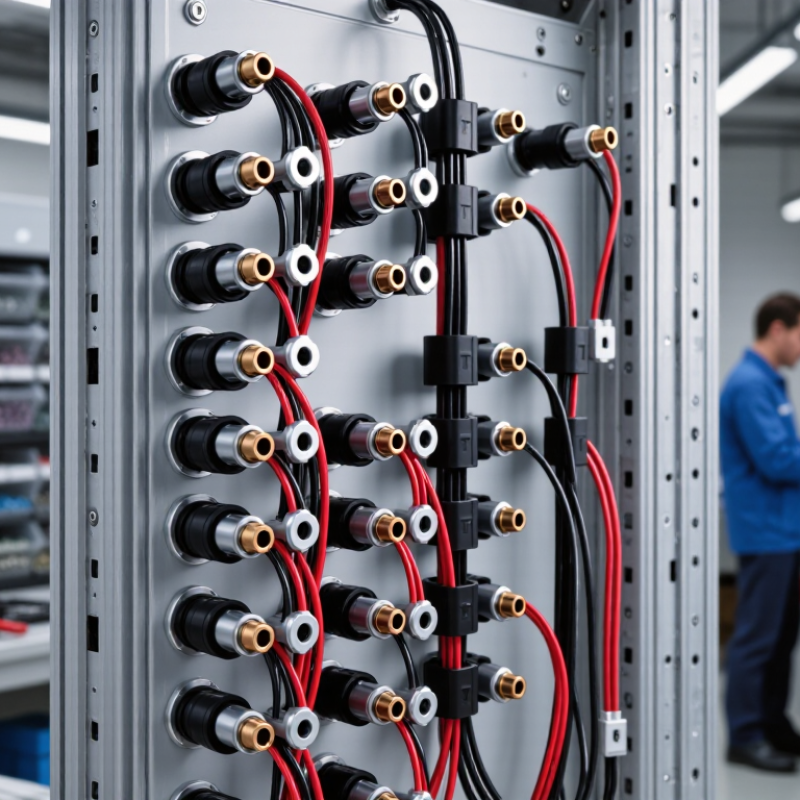
China Top Wall Mounted Battery Harness Suppliers?

What Is a Wall-Mounted Battery Harness?

A wall-mounted battery harness is a coordinated set of cables, connectors, terminals, and protective parts that links a battery to an energy system. It manages power between the battery, inverter, charger, and safety devices. Unlike loose wiring, a proper harness keeps connections organized against a wall. It also reduces strain on terminals and helps maintenance teams trace each circuit.

In practical installations, the harness may include insulated power cables, communication wires, fuses, circuit breakers, and mounting clips. Cable length matters. Excess cable can create loops, while a short cable may pull against the battery terminal. High-quality suppliers usually provide clear diagrams, labeled conductors, secure insulation, and materials suited to the installation environment. I have found that tidy routing often reveals hidden problems early. Still, even a neat harness can fail if torque, polarity, or connector compatibility receives little attention.

Tips: Check cable size against current demand and installation distance. Keep communication wires separated from high-current cables where possible. Inspect bends, terminals, and protective covers before energizing the system. Ask for test records and installation guidance from the supplier. Do not rely on appearance alone. A small labeling mistake can cause expensive troubleshooting later. Standards and local requirements should also be reviewed by a qualified technician, because practical conditions differ from drawings.


Key Features of Leading Chinese Battery Harness Suppliers

China’s leading wall-mounted battery harness suppliers compete through engineering discipline, not only low prices. In factory audits, buyers should inspect copper purity, conductor size, insulation temperature ratings, and connector locking strength. A reliable harness should resist vibration, heat, moisture, and repeated bending near the battery enclosure. Clear labeling also reduces wiring errors during installation.

The IEA’s Batteries and Secure Energy Transitions report noted that global battery storage additions more than doubled in 2023, reaching about 42 GW. This growth increases demand for stable, scalable harness production. BloombergNEF reported that lithium-ion battery pack prices fell to 115 dollars per kWh in 2024. Lower system costs can pressure suppliers, so quality control must remain visible. Look for crimp-force monitoring, 100% continuity testing, insulation checks, and traceable batch records. These features show professional manufacturing, though documentation alone is not proof.

Tips: Request sample harnesses before approving volume orders. Test connector fit after thermal cycling. Ask for wire drawings, test limits, material certificates, and production photos. Check whether the supplier can adjust cable length, terminal direction, and branch spacing. A cheap harness may fit poorly and create hidden installation labor. No supplier is perfect. Even strong factories can miss a labeling detail, so independent inspection remains worthwhile. Suppliers using corrective-action reports and measured failure data usually provide more dependable long-term support.

How Wall-Mounted Battery Harnesses Are Designed and Manufactured

China Top Wall Mounted Battery Harness Suppliers?

How Wall-Mounted Battery Harnesses Are Designed and Manufactured

A wall-mounted battery harness begins with the battery layout, not the connector. Engineers map current paths, voltage levels, enclosure space, and cable movement. Each conductor needs suitable copper size and insulation thickness. High-current cables require secure terminals and controlled bending radii. Small details matter here.

Design teams often use 3D models to check routing around brackets, covers, and cooling channels. They add strain relief near every connector. This prevents repeated bending from damaging the crimp or insulation. Clearance distances also need review, especially near metal mounting parts. A practical design leaves room for assembly tools and inspection.

Manufacturing starts with measured cutting, controlled stripping, and terminal crimping. Operators inspect crimp height, pull strength, and conductor placement. Automated testers check continuity, resistance, and incorrect connections. Some suppliers add high-voltage insulation tests when the battery system requires them. Traceable labels link each harness to its materials and test records.

Prototype work often exposes hidden problems. A cable may fit the model but press against a sharp edge. A connector may lock correctly yet remain difficult to service. These findings require routing changes, stronger clips, or softer protective sleeves. Manual crimping can also vary between operators. Better suppliers combine trained technicians, calibrated tools, documented procedures, and repeated sampling. Supplier reviews should examine process evidence, not only attractive samples.

How to Evaluate Battery Harness Quality, Safety, and Compatibility

China Top Wall Mounted Battery Harness Suppliers: How to Evaluate Battery Harness Quality, Safety, and Compatibility

A reliable battery harness starts with accurate electrical specifications. Check the rated voltage, continuous current, peak current, and operating temperature. The conductor gauge must match the actual load, not only the product label. Copper strands should look even and flexible. Rough strands may indicate poor processing. Inspect crimp terminals closely. A secure crimp should resist pulling without cutting the wire. Ask suppliers for crimp-force records, insulation tests, and sample inspection reports.

Safety depends on more than thick cables. Look for heat-resistant insulation, secure terminal locks, correct polarity markings, and protected bends near the wall mount. The harness should fit the battery, charger, inverter, and management system without forced connections. Measure connector dimensions and pin positions yourself. Small differences can cause overheating or communication failure. Request samples before placing a large order. Test them under realistic current and vibration conditions.

Supplier experience also matters. A capable manufacturer should explain material choices and provide traceable quality records. They should answer technical questions clearly, not hide behind general claims. I have seen attractive samples fail after repeated bending. That possibility deserves attention. No checklist is perfect. Independent testing may reveal weaknesses that factory documents miss. A careful evaluation saves installation time and reduces the risk of loose connections, heat damage, and early battery-system failure.

China Top Wall Mounted Battery Harness Suppliers? - How to Evaluate Battery Harness Quality, Safety, and Compatibility

Evaluation Dimension Recommended Quality Benchmark How to Verify Why It Matters for Wall-Mounted Batteries
Conductor Material Stranded copper conductors with documented conductor size, strand construction, and material specification. Review material certificates, conductor cross-section, resistance data, and sample inspection. Low-resistance conductors reduce heat generation and voltage loss during high-current charging and discharging.
Cable Size and Ampacity Cable cross-section and allowable current must be selected from the actual continuous current, peak current, ambient temperature, bundling, enclosure, and installation method. Compare the harness design with the applicable electrical code, cable datasheet, and battery-system load profile. A cable that is adequate in free air may require derating when installed inside a compact wall-mounted enclosure.
Voltage-Drop Control Use the project-approved voltage-drop limit; a common design target is no more than 1% of nominal system voltage for high-current battery interconnections. Measure the complete positive-and-negative circuit under the specified operating current and temperature. Excessive voltage drop can reduce inverter efficiency, trigger protection alarms, and increase cable heating.
Insulation Voltage Rating The cable and connector voltage ratings must exceed the maximum battery-system voltage, including charging tolerance and transient requirements. Check printed cable markings, connector specifications, technical drawings, and system-level compliance documentation. Wall-mounted battery packs may operate at hazardous DC voltages, making insulation coordination essential.
Temperature Rating The insulation temperature rating should exceed the maximum calculated conductor and enclosure temperature with an appropriate engineering margin. Review thermal calculations and cable datasheets; verify temperature rise during continuous-current testing. Restricted airflow behind a wall-mounted battery can raise operating temperature and accelerate insulation aging.
Connector Compatibility Connector family, keying, terminal size, voltage rating, current rating, mating cycle rating, and contact configuration must exactly match the battery and inverter interfaces. Use controlled drawings, mating samples, pin maps, and mechanical fit checks. Do not rely on appearance alone. Incorrect mating or pin allocation can cause reverse polarity, communication failure, short circuits, or permanent equipment damage.
Crimp Quality Crimp height, conductor brush, insulation support, terminal position, and tooling must follow the terminal manufacturer’s process specification. Perform visual inspection, crimp-height measurement, cross-section analysis when required, and pull-force testing against the approved terminal specification. Poor crimps create localized resistance, intermittent faults, and heat concentration at the battery terminal.
Polarity and Pinout Control Every production harness should have a controlled pinout drawing and 100% continuity and polarity verification. Use automated cable testers or calibrated manual test equipment with recorded results linked to lot or serial information. A single polarity error can damage battery-management electronics or create a serious arc-flash hazard.
Insulation and Withstand Testing Insulation resistance and dielectric withstand tests should be defined by the system voltage, applicable standards, and customer safety requirements. Request test voltage, duration, acceptance limits, equipment calibration records, and production test logs. Testing helps detect damaged insulation, contamination, incorrect assembly, and inadequate separation between circuits.
Flammability and Material Compliance Insulation, housings, and protective materials should meet the applicable flammability and environmental requirements for the final product. Review material declarations and relevant test reports, such as UL 94 classifications or IEC 60332 cable-flame test results where applicable. Appropriate materials limit flame propagation and support safer operation inside residential or commercial installations.
Mechanical Protection Harnesses should include strain relief, abrasion protection, bend-radius control, and secure routing points suitable for the installation. Inspect sample routing, perform bend and pull checks, and verify clearance from sharp metal edges, heat sources, and moving components. Wall-mounted systems experience installation loads and limited service space, increasing the risk of cable bending or terminal stress.
Environmental Protection Select the required ingress protection, corrosion resistance, humidity performance, and UV resistance according to the installation location. Check connector sealing design, gasket condition, enclosure interface, and applicable environmental test reports. Garages, utility rooms, and outdoor-adjacent locations may expose harnesses to moisture, dust, condensation, or corrosive agents.
Communication and Auxiliary Lines Communication, temperature-sensor, enable, and auxiliary conductors must use the correct cable type, shielding, impedance, pinout, and separation from high-current conductors. Verify wiring diagrams, shield termination, continuity, resistance, signal integrity, and communication performance in the complete system. Incorrect low-voltage wiring can cause state-of-charge errors, nuisance shutdowns, or loss of battery-management communication.
Traceability and Quality Records Each production lot should be traceable to raw materials, terminals, tooling, operators, inspection results, and test equipment. Audit production records, inspection plans, nonconformance procedures, calibration certificates, and corrective-action history. Traceability supports root-cause analysis, field-service response, and controlled replacement of safety-critical harnesses.
Documentation and Change Control The supplier should provide controlled drawings, bill of materials, test specifications, assembly instructions, and formal engineering-change notifications. Confirm revision numbers on drawings and samples, and require approval before any material, terminal, tooling, or process substitution. Uncontrolled substitutions can alter current capacity, contact resistance, fit, insulation performance, or system compatibility.
Supplier Qualification Score Use a weighted scorecard: safety and electrical performance 40%, compatibility 25%, manufacturing quality 20%, documentation 10%, delivery capability 5%. Require documented evidence for every score; do not award a high total score if any critical safety requirement fails. A structured scorecard makes supplier comparisons more objective while prioritizing battery-system safety over price alone.

Note: Final cable sizes, test voltages, connector ratings, environmental ratings, and compliance requirements must be confirmed against the battery system design, applicable regulations, and approved component specifications.

How to Select the Right Chinese Supplier for Your Project

Selecting a Chinese supplier for a wall-mounted battery harness requires more than comparing prices. The International Energy Agency reported that global battery storage additions reached about 42 GW in 2023, nearly double the previous year. This growth increases production pressure. Quality controls must remain visible.

Ask for drawings, material specifications, and test records before sampling. Check copper purity, terminal plating, crimp pull force, insulation thickness, and connector temperature ratings. For wall-mounted systems, measure bend radius and cable length carefully. A harness that looks neat may still restrict airflow or stress the battery terminals. Request thermal cycling, vibration, salt-spray, and insulation-resistance results. Factory traceability matters. Each batch should link to operators, materials, and inspection records.

Cost remains important, but BloombergNEF reported a 14% fall in average lithium-ion battery pack prices in 2023, reaching 139 dollars per kWh. Lower system costs can encourage aggressive supplier pricing. That is risky. Compare total ownership cost, not only the quotation. Review sample consistency, response time, tooling ownership, and corrective-action records. An on-site or third-party audit can reveal weak crimping equipment and poor storage practices. I have sometimes trusted polished documents too quickly. That was a mistake. A small pilot order, followed by independent testing, gives stronger evidence than promises. Verify compliance with the standards required in your target market, including applicable battery safety and electrical regulations.

Wordpress Social Share Plugin powered by Ultimatelysocial
Facebook
X (Twitter)
YouTube
LinkedIn
Share

Purchase Product Request

Request Pricing