China Top 10 PE Tarpaulin Manufacturers for Global Buyers

Choosing a reliable supplier requires more than comparing factory prices. China’s PE Tarpaulin industry includes large exporters, specialized producers, and smaller factories with impressive samples. Yet performance can vary between batches.

This guide introduces ten China-based PE Tarpaulin manufacturers for global buyers. It considers material thickness, fabric density, lamination quality, waterproofing, UV resistance, edge reinforcement, and eyelet strength. Production capacity also matters. So do inspection records, packaging details, and communication after shipment. A blue tarpaulin may look identical in photographs, but its coating can crack after repeated folding or strong sunlight.

David Chen, a PE Tarpaulin industry consultant with more than fifteen years of sourcing experience, says, “A dependable tarpaulin is judged by performance after use, not by appearance before shipment.” That point deserves attention. Buyers often focus on GSM and overlook weave consistency, welding quality, or storage conditions. Small oversights can create expensive problems.

The manufacturers in this overview are not ranked by size alone. Their strengths may differ. One may offer stronger agricultural covers, while another specializes in construction sheets, truck covers, or custom printed tarps. There is no universal winner.

That is the practical reality.

Global buyers should verify technical specifications, request current samples, and confirm quality-control procedures before placing large orders. Supplier websites can provide useful clues, but they cannot replace testing. This overview aims to support a more informed shortlist, while recognizing that factory capabilities, pricing, and export performance can change over time.
China Top 10 PE Tarpaulin Manufacturers for Global Buyers

PE Tarpaulin: Materials, Features, and Common Global Applications

PE Tarpaulin: Materials, Features, and Common Global Applications

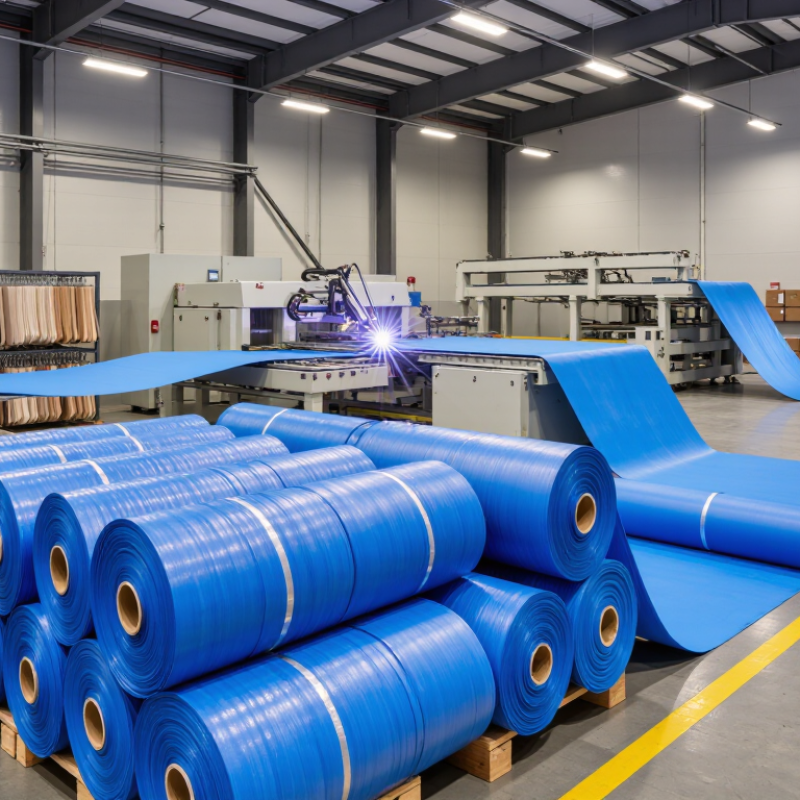
PE tarpaulin usually combines woven high-density polyethylene scrim with low-density polyethylene coatings. The scrim supplies tear resistance. The coating limits water penetration and protects fibers from dirt. Common grades range from lightweight sheets near 90 gsm to reinforced covers above 250 gsm. Actual performance depends on fabric density, lamination quality, and edge construction.

Plastic production reached 400.3 million tonnes globally in 2022, according to PlasticsEurope’s Plastics—The Facts 2023 report. Polyethylene remains widely used because it is light, flexible, and economical. Field buyers commonly select PE tarpaulin for agricultural crop covers, temporary storage, truck loads, construction materials, and outdoor equipment. Silver or white surfaces can reduce solar heating. Darker sheets often provide better visual screening.

Water resistance is not the same as long-term weather resistance. UV stabilizers, weld quality, and correct installation matter greatly. ASTM D751 and ISO 1421 provide recognized methods for evaluating coated-fabric strength and related performance. Yet laboratory results cannot fully predict damage from sharp corners, wind flutter, or repeated folding. This is often overlooked. The OECD reported 353 million tonnes of plastic waste in 2019, reminding buyers to consider reuse, repair, and end-of-life handling. A thicker sheet is not automatically the better choice. In practice, matching GSM, coating, eyelet spacing, and expected exposure usually produces a more reliable result.


China Top 10 PE Tarpaulin Manufacturers for Global Buyers

PE Tarpaulin: Materials, Features, and Common Global Applications

Commercial PE tarpaulins commonly use woven HDPE fabric laminated or coated with LDPE or LLDPE. Product weight increases with the required strength, tear resistance, waterproofing performance, and service life. The chart shows typical market specification points used for common global applications; actual specifications vary by supplier and use case.

How China’s PE Tarpaulin Manufacturing Industry Is Evaluated

China Top 10 PE Tarpaulin Manufacturers for Global Buyers

Evaluating China’s PE tarpaulin industry requires more than comparing factory prices. Grand View Research values the global tarpaulin market at about US$7 billion in 2023. Mordor Intelligence also forecasts annual growth above 5% through 2029. These figures show demand, but market definitions differ between reports. That difference matters. Buyers should compare coating weight, fabric density, tensile strength, tear resistance, and UV performance. Testing should follow recognized methods, such as ISO 1421 for tensile strength and ISO 4674-1 for tear resistance. A thicker sheet is not automatically stronger.

Factory verification adds practical evidence. Experienced buyers request production samples, batch records, seam photographs, and aging-test results. They should inspect extrusion lines, lamination equipment, welding areas, and warehouse conditions. A reliable supplier can explain how polyethylene resin, color masterbatch, and recycled content affect performance. Independent inspection before shipment is also useful. It checks dimensions, eyelet spacing, surface defects, and package counts.

The process is not perfect. Laboratory results may not represent months of outdoor exposure in coastal weather. Supplier certificates can also require closer checking. Therefore, a professional ranking should combine technical data, factory experience, complaint handling, delivery records, and transparent documentation. Price alone is weak evidence. A low quotation may hide lighter fabric, unstable color, or poorly reinforced corners.>xpath

China’s Top 10 PE Tarpaulin Manufacturers for Global Buyers

China’s Top 10 PE Tarpaulin Manufacturers for Global Buyers represent a practical starting point for international sourcing. These suppliers commonly produce woven polyethylene sheets for agriculture, construction, logistics, storage, and outdoor protection. Experienced factories usually offer several weights, colors, edge treatments, and waterproofing grades. Buyers should examine more than catalog photos.

A reliable manufacturer can explain fabric density, coating thickness, tear strength, and temperature performance in clear technical terms. Ask for recent test reports, production samples, and photographs from the cutting and welding lines. Check whether eyelets are evenly spaced and firmly reinforced. Small details matter during repeated folding, windy transport, and long-term outdoor use. Packaging should protect folded sheets from moisture and crushing.

The top ten should not be judged by price alone. A cheaper quotation may reflect lighter fabric or fewer reinforcement layers. No ranking is perfect. Factory capacity can change during peak seasons, and sample quality may not match mass production without inspection. Buyers should confirm tolerances, order quantities, lead times, and export documentation in writing. Independent pre-shipment checks can reduce unpleasant surprises. It is also wise to test one shipment before expanding the order. Some manufacturers communicate well but provide limited customization. Others have strong equipment yet respond slowly. That difference can affect real purchasing results.

Key Factors for Comparing Chinese Tarpaulin Suppliers

China Top 10 PE Tarpaulin Manufacturers for Global Buyers

When comparing Chinese tarpaulin suppliers, start with product evidence, not catalogue photos. Check fabric weight, PE coating thickness, tear strength, and waterproof performance. A reliable manufacturer should provide recent test reports and clear material specifications. Ask whether the stated GSM includes coating. This detail often changes the real comparison.

Production consistency matters just as much. Inspect heat-welded seams, eyelet spacing, edge reinforcement, and roll width. Request a sample from current production, not only a showroom piece. Confirm monthly capacity, minimum order quantity, packaging method, and realistic lead times. Factory audits can reveal crowded storage areas, weak labeling, or poor moisture control. I once underestimated packaging quality. Several rolls arrived with crushed edges. That was avoidable.

Tips: Compare at least three samples under the same conditions. Measure thickness with a gauge. Test a corner seam after folding it repeatedly. Ask for inspection photos before shipment, carton details, and a written replacement policy. Also check communication speed and technical accuracy. A supplier that answers quickly may still misunderstand specifications. Use a simple comparison sheet for price, GSM, color tolerance, warranty, and delivery performance. Leave room for doubt. Specifications can look perfect on paper, yet field performance may disappoint.

China Top 10 PE Tarpaulin Manufacturers for Global Buyers - Key Factors for Comparing Chinese Tarpaulin Suppliers
Position Anonymized Supplier Profile Typical PE Tarpaulin Construction Finished GSM Range Common Width Capability Coating and Lamination Options Typical MOQ Indicative Production Lead Time Quality and Compliance Evidence to Request Export Readiness Best-Fit Buyer Applications Buyer Comparison Score
1 Profile A
Large-scale woven-fabric producer
HDPE woven scrim with LDPE/LLDPE coating; heat-sealed or stitched hems 80–250 g/m² Up to approximately 4 m in a single panel; wider sizes by center-seam joining Both-side coatingUV stabilizerEyelets About 5,000–10,000 pieces per standard specification 25–40 days after approval of specifications and artwork Batch GSM records, tensile and tear results, eyelet pull-out testing, UV package information, pre-shipment inspection Strong container-loading and export-document capability Construction covers, agricultural storage, truck and cargo protection ★★★★★
2 Profile B
Integrated extrusion and lamination supplier
High-strength HDPE tape fabric with controlled coating thickness 90–300 g/m² 2–6 m finished widths depending on construction and joining method Waterproof coatingAnti-mildewCustom color About 3,000–8,000 pieces for repeatable specifications 20–35 days for regular products Coating adhesion data, hydrostatic-pressure or water-leakage testing, color consistency records Suitable for mixed-container and full-container orders Industrial covers, warehouse partitions, temporary shelters ★★★★★
3 Profile C
Heavy-duty agricultural tarp specialist
Dense HDPE woven base with reinforced perimeter and high-strength corner patches 120–280 g/m² 2–5 m standard production width; larger sizes assembled from panels High UV resistanceReinforced cornersRope hem About 2,000–5,000 pieces 25–45 days, depending on printing and accessories UV-weathering test method, seam-strength results, fabric weight tolerance, corner reinforcement inspection Experienced with agricultural and seasonal procurement cycles Hay and grain covers, livestock shelters, irrigation and farm equipment protection ★★★★☆
4 Profile D
Custom-printing and promotional cover manufacturer
Light-to-medium HDPE woven fabric with flexographic or digital surface printing 70–180 g/m² Up to approximately 4 m before joining Multi-color printingMatte coatingHeat-sealed edges About 1,000–3,000 pieces, subject to artwork complexity 30–50 days including artwork approval and color matching Color-reference approval, print adhesion test, ink-weathering data, proofing procedure Good for private-label and promotional export orders Retail packaging, event covers, branded logistics and advertising tarps ★★★★☆
5 Profile E
Value-oriented standard product factory
Standard HDPE/LDPE woven tarp with basic hemming and galvanized eyelets 60–180 g/m² 2–4 m standard width; joined panels available Standard UV packageBasic eyeletsMultiple colors About 5,000–15,000 pieces 20–35 days for stock constructions Written GSM tolerance, eyelet spacing confirmation, packaging inspection, random sampling plan Efficient for price-sensitive full-container purchases General-purpose covers, outdoor storage, retail and wholesale distribution ★★★★☆
6 Profile F
Technical tarp and reinforced-seam producer
High-density woven scrim with welded seams, webbing, and reinforced load points 150–350 g/m² Up to approximately 5 m in standard equipment configurations Welded seamsWebbing reinforcementHeavy-duty eyelets About 1,000–3,000 pieces 30–50 days, depending on custom construction Seam-peel strength, tensile and tear results, load-point testing, dimensional inspection Appropriate for buyers requiring technical drawings and inspection reports Transport covers, machinery protection, mining and infrastructure projects ★★★★☆
7 Profile G
Small-batch customization supplier
Flexible PE woven fabric with made-to-order dimensions and accessory combinations 80–220 g/m² Approximately 2–4 m standard width Custom dimensionsRope or webbing hemAccessory options About 500–2,000 pieces 25–45 days after sample confirmation Golden sample approval, measurement report, material declaration, packaging and labeling checklist Flexible for distributors and project-based buyers Special-size covers, regional distribution, short-run private-label orders ★★★☆☆
8 Profile H
Recycled-content and sustainability-focused producer
PE woven fabric using controlled recycled content where specified by the buyer 80–200 g/m² 2–4 m standard width; larger sizes joined by welding or sewing Recycled-content optionUV stabilizationRecyclable PE structure About 3,000–8,000 pieces 30–45 days, including material verification Recycled-content documentation, restricted-substance declaration, GSM and tensile testing, traceability records Suitable for buyers with documented sustainability requirements Retail packaging, environmental projects, reusable logistics covers ★★★☆☆
9 Profile I
Fast-turnaround stock and replenishment supplier
Common HDPE woven tarp constructions maintained in regular production inventory 70–180 g/m² 2–4 m in regular stock formats Standard colorsBasic UV protectionReady packaging About 1,000–5,000 pieces for available specifications 15–30 days for stock items; longer for custom production Current production photos, stock verification, pre-shipment sample, packing-list accuracy Good for urgent replenishment and standardized SKUs Wholesale distribution, emergency covers, seasonal retail demand ★★★☆☆
10 Profile J
Export trader with contracted manufacturing capacity
Standard and custom PE tarpaulins sourced from qualified production lines 60–250 g/m² Usually 2–4 m; capability depends on the assigned factory Multiple specificationsCustom packingAccessory sourcing About 1,000–10,000 pieces 25–45 days, subject to factory allocation Factory identification, product-specific test reports, third-party inspection, supply-chain traceability Convenient for multi-product purchasing but requires stronger verification Importers seeking consolidated orders and flexible sourcing ★★★☆☆

Buyer note: The figures above are practical comparison ranges for anonymized Chinese PE tarpaulin supplier profiles. Actual MOQ, GSM tolerance, width, testing results, lead time, certifications, and export capability should be confirmed with a current quotation, approved sample, production audit, and pre-shipment inspection.

How to Choose, Verify, and Import a Reliable Manufacturer

China Top 10 PE Tarpaulin Manufacturers for Global Buyers

Choose manufacturers through evidence, not impressive catalogs. The OECD Global Plastics Outlook reports that global plastics production reached 460 million tonnes in 2019, doubling since 2000. This scale increases supply options, but also makes quality differences harder to detect.

Shortlist factories with verifiable production records, export references, and an ISO 9001-based quality system. Ask for recent test reports covering GSM, tensile strength, tear resistance, UV stability, and seam strength.

Request a physical sample before discussing large orders. Measure its length, width, thickness, and weight yourself. Check eyelet spacing, corner reinforcement, stitching tension, and coating uniformity under direct light.

A 3-by-3-meter sample can reveal weak seams quickly. Confirm the polyethylene grade and request the actual production specification, not a sales summary.

Use UN Comtrade data under HS 6306 to compare shipment patterns and destination experience. The World Bank’s 2023 Logistics Performance Index covers 139 economies, offering useful context for customs and delivery reliability.

However, trade records do not prove factory ownership. I once treated export volume as quality evidence; that was too optimistic. An independent pre-shipment inspection remains necessary.

Verify carton labels, quantity, random samples, and container loading photos before payment release.

Clear contracts should define tolerances, replacement terms, packaging, and inspection rights. Small omissions become expensive later.

Wordpress Social Share Plugin powered by Ultimatelysocial
Facebook
X (Twitter)
YouTube
LinkedIn
Share

Purchase Product Request

Request Pricing