30+ Years of Experience in PCB Design and Manufacturing


Choosing the right 304 Stainless Steel Plate Supplier requires more than comparing online rankings. Buyers must examine material quality, production capacity, certification, delivery performance, and technical support. This guide introduces ten recognized suppliers serving international markets, including manufacturers, stockists, and processing specialists.
Quality begins with traceability.
Reliable suppliers should provide mill test certificates, heat numbers, chemical composition, and mechanical results. Their documentation should clearly identify chromium and nickel content. Buyers may also need ASTM, EN, or JIS compliance, depending on the project location. Surface finish matters too. A bright 2B finish suits many fabricated products, while No. 4 finishes support visible architectural applications.
Real purchasing experience reveals practical differences. One supplier may offer competitive prices but require a high minimum order. Another may cut plates accurately but have slower export handling. Thickness tolerance, edge condition, packaging, and moisture protection can affect the final result. Wooden crates, plastic wrapping, and corner protection are small details with large consequences during ocean transport.
This list should not be treated as an absolute ranking. Supplier capabilities, prices, inventories, and lead times change regularly. Some information may also require direct confirmation. That is an important limitation.
The strongest choice depends on your application, budget, delivery schedule, and inspection requirements. Comparing quotations is useful, but asking precise questions is better. Request recent certificates, production photos, sample policies, and references from similar projects. A dependable supplier should answer clearly and consistently. That builds confidence before the first order is placed.
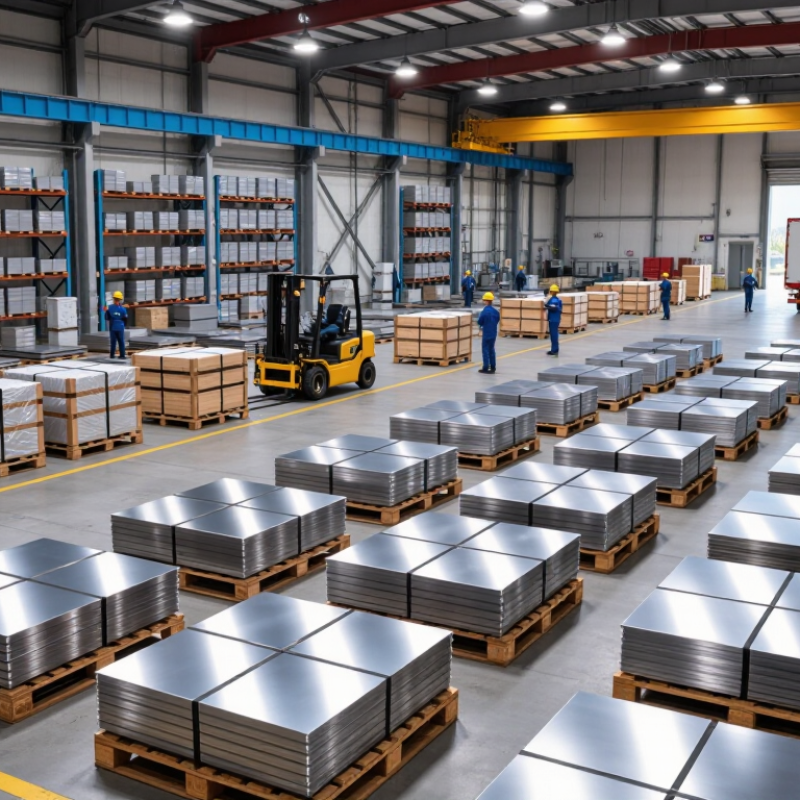
304 Stainless Steel Plate is an austenitic alloy valued for corrosion resistance, formability, and weldability. Its typical chemistry contains about 18% chromium and 8% nickel. ASTM A240 commonly covers 304 plate for pressure vessels, chemical equipment, and general fabrication.
The International Stainless Steel Forum reported global crude stainless steel production of approximately 58.4 million tonnes in 2023. This figure shows the material’s broad industrial importance, but it does not make every 304 plate suitable for every environment. In practice, 304 performs well in food-processing rooms, kitchen equipment, architectural panels, storage tanks, and indoor transport components. Chloride-rich coastal areas can still cause pitting. That limitation is easy to underestimate.
Surface finish, plate thickness, heat treatment, and welding quality affect real performance. A supplier’s mill test certificate should confirm chemical composition, mechanical properties, dimensions, and applicable standards. Traceability matters. So does inspection.
Tips: Check whether the plate is 304 or 304L before welding-heavy projects. Review the certificate, surface condition, and corrosion environment together. A polished surface looks clean, but it does not automatically improve resistance in every service condition. Supplier comparisons should include testing capability, production consistency, delivery control, and technical support. Price alone can be misleading.
Brand-neutral comparison of major stainless-steel sourcing markets and commonly available 304 plate specifications
| No. | Major Supplier Market | Common Product Forms | Common International Standards | Typical Surface Options | Typical Applications | Recommended Purchasing Focus |
|---|---|---|---|---|---|---|
| 1 | East Asia | Cold-rolled and hot-rolled plates; cut-to-size sheets | ASTM A240/A240M, EN 10088-2, JIS G4304 | 2B, No. 1, BA, brushed finishes | Food equipment, tanks, architectural panels | Verify mill certificates, flatness, thickness tolerance, and export documentation |
| 2 | South Asia | Hot-rolled plates, cold-rolled sheets, industrial blanks | ASTM A240/A240M, EN 10088-2, ASME material specifications | 2B, No. 1, satin, polished | Pressure vessels, chemical processing, kitchen equipment | Confirm heat treatment, PMI testing, ultrasonic testing, and packing quality |
| 3 | Western Europe | Precision cold-rolled sheet and heavy plate | EN 10088-2, ASTM A240/A240M, EN 10204 | 2B, 2R, No. 1, brushed and polished | Pharmaceutical equipment, dairy processing, construction | Request EN 10204 3.1 certification and detailed dimensional tolerances |
| 4 | Northern Europe | Heavy plate, precision sheet, fabricated components | EN 10088-2, ASTM A240/A240M | 2B, No. 1, brushed, laser-finished | Marine interiors, energy equipment, industrial fabrication | Evaluate traceability, weldability data, surface consistency, and delivery reliability |
| 5 | North America | Plate, sheet, coil, and precision-cut blanks | ASTM A240/A240M, ASME SA-240, ASTM A480/A480M | 2B, No. 1, BA, mill and polished finishes | Industrial machinery, food processing, architectural fabrication | Check ASTM/ASME compliance, domestic content requirements, and test reports |
| 6 | Southeast Asia | Cold-rolled sheets, decorative plate, cut-to-length material | ASTM A240/A240M, JIS G4304, EN 10088-2 | 2B, HL, No. 4, mirror-polished finishes | Elevators, commercial kitchens, interior decoration | Confirm protective film, edge condition, surface roughness, and container loading |
| 7 | Middle East | Imported hot-rolled plate and service-center cut sizes | ASTM A240/A240M, EN 10088-2, ASME SA-240 | 2B, No. 1, brushed, polished | Desalination, building services, oil and gas support equipment | Prioritize corrosion-service suitability, inspection records, and weather-resistant packaging |
| 8 | Oceania | Sheet, plate, fabricated and cut-to-size material | AS 1528.1, ASTM A240/A240M, EN 10088-2 | 2B, No. 1, satin, polished | Water treatment, architectural work, food and beverage plants | Check local compliance, chloride exposure conditions, and freight protection |
| 9 | Latin America | Hot-rolled plate, cold-rolled sheet, industrial service-center stock | ASTM A240/A240M, EN 10088-2, local adoption standards | 2B, No. 1, brushed and polished | Mining equipment, food processing, storage tanks | Validate lead time, customs documents, chemical composition, and welding requirements |
| 10 | Africa | Imported plate, sheet, coil, and project-specific cut material | ASTM A240/A240M, EN 10088-2, ASME SA-240 | 2B, No. 1, satin, polished | Water infrastructure, construction, mining, and hospitality | Assess stock availability, corrosion environment, inspection support, and delivery logistics |
| Data Dimension | Typical Requirement or Value | Practical Meaning |
|---|---|---|
| UNS designation | S30400 | A widely used austenitic stainless-steel grade |
| Chromium content | 18.0–20.0% | Provides the passive oxide layer responsible for corrosion resistance |
| Nickel content | 8.0–10.5% | Supports the stable austenitic structure and formability |
| Maximum carbon | 0.07% | Supports welding performance when correctly processed |
| Density | Approximately 8.0 g/cm³ | Useful for weight calculations and freight planning |
| Minimum tensile strength | 515 MPa under ASTM A240/A240M | Indicates resistance to tensile loading |
| Minimum yield strength | 205 MPa under ASTM A240/A240M | Indicates the approximate stress at permanent deformation |
| Minimum elongation | 40% in 50 mm under ASTM A240/A240M | Reflects strong ductility and forming capability |
| Common surface finishes | 2B, No. 1, BA, No. 4, HL, and mirror-polished | The selected finish affects appearance, cleanability, and surface roughness |
| Typical applications | Food equipment, architectural panels, tanks, heat exchangers, and kitchenware | Suitable for many general-purpose indoor and moderately corrosive environments |
Note: The supplier-market section is an indicative, brand-neutral sourcing guide rather than a verified ranking of individual companies. Final suitability should be confirmed against the applicable standard, service environment, thickness, surface finish, and inspection requirements.