7 Tips for Choosing the Right Welding Machine
Choosing a welding machine is less about buying the biggest unit and more about matching its capabilities to the work in front of you. A thin-gauge repair on a quiet garage bench has different demands from repeated structural fabrication. The right choice affects weld quality, setup time, and operator comfort. It also affects the jobs you can confidently accept. Small details matter: a stable arc, clear controls, and cables that reach your workpiece without stretching.
A useful reminder from Elena Ruiz, a fictional composite welding-equipment specialist, is: “Choose for the work you do most, and leave room for the work you may grow into.” Treat that as a guiding principle, not a substitute for checking product specifications. This guide’s seven tips examine welding processes, material thickness, input power, duty cycle, portability, controls, and after-sales support. Together, they offer a practical way to compare a Machine Welding Machine without getting distracted by impressive-looking numbers. Bring a real project list when you shop. Note the metals and thicknesses you use, your available power supply, and whether you work at home or on site. I would still verify every machine’s manual before purchase; a neat comparison chart can miss a limitation that matters in your workshop. Some choices are not obvious. That is exactly why a careful check helps.
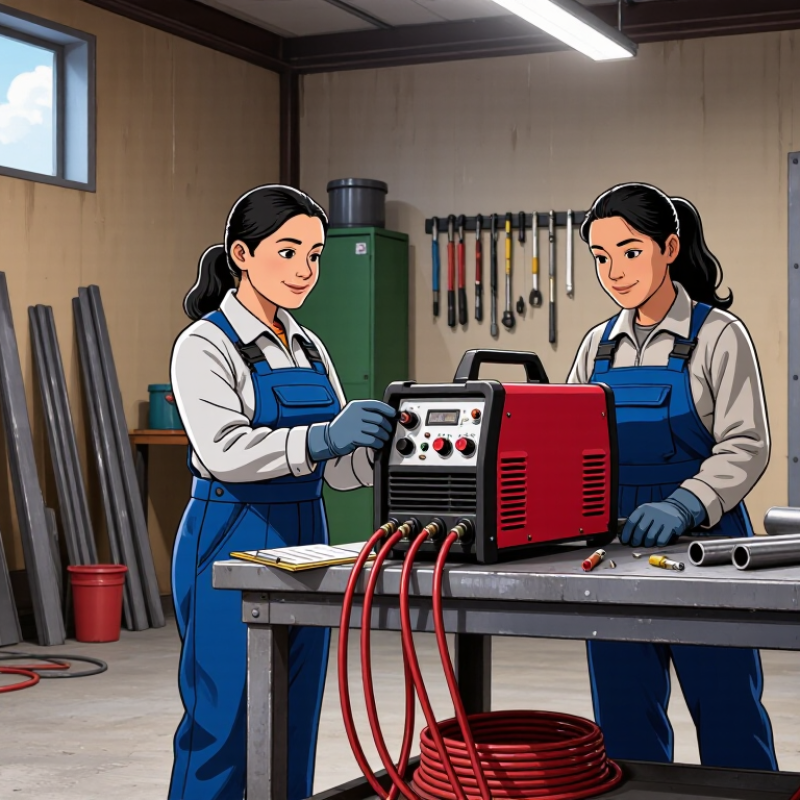
Assess Your Welding Projects and Skill Level
Before comparing machines, define the work you actually expect to do. Note the metals, thicknesses, joint types, and positions involved. Repairing a thin garden gate calls for different capabilities than joining thick steel brackets. A small test coupon can reveal whether your planned settings produce clean, consistent welds. That detail matters.
Be specific. If most projects involve thin sheet metal, look for a machine with stable low-current control. For thicker material, check its output range and duty cycle, which indicates how long it can weld before cooling. Also consider where you will work. A garage outlet, extension cord, or outdoor setup may limit your options. It is easy to focus on maximum power and overlook the supply available at home.
Your skill level matters, too. Beginners may benefit from clear controls and a process suited to their common projects, such as flux-cored welding for some outdoor repairs. But convenience is not a substitute for practice. A machine that feels simple on the first day may still require careful setup and steady technique. If you already weld confidently, prioritize the process and adjustments your work demands. Read the specifications closely, and compare them with your actual materials—not an ambitious project you may never attempt. I would reconsider any choice that seems capable of everything but is awkward for your regular work.
Compare Welding Processes and Their Ideal Uses
Choosing a welding process starts with the workpiece, not the machine’s feature list. MIG welding feeds wire continuously and suits many clean-steel projects, shop fabrication, and longer seams. It is often easier to learn, though wind can disrupt its shielding gas. A gate repaired in a breezy driveway may need a different approach. Convenient, but not automatic.
Stick welding uses coated electrodes and can be practical for outdoor repairs or heavier steel. It tolerates less-than-perfect conditions, but slag removal and a steady hand take practice. Self-shielded flux-core wire is another option for outdoor work, since it does not rely on an external shielding-gas cylinder. Check the wire type: some flux-core processes do use gas. Small details matter.
TIG welding offers careful control on thin materials, stainless steel, and aluminum, but it is slower and demands coordination. For a thin sheet-metal panel, too much heat can warp the edge before the weld looks finished. It is tempting to choose the process with the neatest-looking bead. That can mislead. Match the process to material, thickness, position, power supply, and your experience, then test settings on scrap of similar thickness. A clean surface and secure workholding still matter.
Match Machine Power to Materials and Thickness
Match machine output to the metal and its thickness, not just the job’s appearance. Thin stainless sheet needs controlled, low amperage; a thick steel plate needs enough current for sound fusion. TWI’s published TIG guidance gives roughly 30–40 amps per millimetre of steel as a starting range. Treat it as a guide, not a guaranteed setting. Joint shape, filler size, and heat loss can change the result. Thin sheet burns fast.
Tips: Check the machine’s usable amperage range, then compare it with the process chart in its manual. For example, a 1 mm steel panel may start near 30–40 amps with TIG; a 6 mm plate may need multiple passes or a higher-capacity setup. Confirm the recommendation with a test bead on matching scrap. Look for even bead edges and adequate fusion, not just a bright arc.
Also check duty cycle: a machine rated for high output may only sustain it briefly. The American Welding Society’s Welding Handbook explains how heat input and joint preparation affect weld quality, so power alone is not the whole answer. A cold workshop, long leads, or poor fit-up can alter results. These details are easy to overlook, and the amperage rule is imperfect. When the metal is valuable, verify settings with a qualified welding procedure or technician.
Compare Controls, Safety Features, and Long-Term Costs
A welding machine can look simple until you adjust it with thick gloves on. Compare control layouts in person when possible. Clear labels, firm knobs, and a readable display make it easier to repeat settings. Some machines offer preset programs; these can help beginners, but they do not replace checking the material thickness and recommended settings. Try the controls before buying. Awkward controls get old.
Safety features deserve the same close attention. Look for thermal overload protection, a stable wire-feed system where applicable, and a case that shields internal parts from dust and accidental contact. Check the manual for duty cycle: a machine rated for shorter welding periods may need frequent cooling breaks during longer jobs. Keep ventilation, eye protection, gloves, and a suitable welding helmet in your plan; built-in protections do not make these optional. Details matter.
Compare more than the purchase price. Add expected costs for consumables, compatible torches or leads, replacement parts, and routine servicing. Ask how readily wear items can be obtained, and whether local repair support is available. A lower-priced unit may cost more over time if common parts are difficult to source. Still, estimates are imperfect. Your workload can change, and I would avoid paying for capacity you are unlikely to use. A simple cost sheet helps: list the machine, likely supplies, and one realistic repair allowance.