Top Galvanized Steel Square Pipe Suppliers Worldwide

Choosing reliable suppliers matters when a project depends on consistent steel performance, accurate dimensions, and predictable delivery. Galvanized Steel Square Pipe is widely used in construction, fencing, machinery, agricultural structures, and infrastructure projects. Yet supplier quality can vary significantly across regions.

This guide examines leading suppliers worldwide through practical sourcing criteria. These include production capacity, zinc coating consistency, steel grades, welding quality, dimensional tolerance, and export experience. Buyers should request mill test certificates, coating reports, inspection records, and clear product specifications before placing large orders. Small details matter. A rough weld seam or uneven coating may create installation problems later.

Experienced suppliers usually explain their manufacturing process clearly. They can discuss hot-dip galvanizing, pre-galvanized production, surface preparation, and applicable standards. They should also provide samples or inspection support when required. Delivery reliability deserves equal attention. A competitive price means little if containers arrive late or packaging fails during ocean transport.

Still, no supplier is perfect. A polished website does not prove factory capability. Some published information may also require independent verification. Buyers should compare factory audits, customer references, certifications, response times, and after-sales support. Regional strengths differ, and the best supplier depends on project volume, corrosion exposure, budget, and destination requirements.

This overview offers a practical starting point for identifying reputable galvanized steel square pipe manufacturers and distributors. The final decision should rely on documented evidence, direct communication, and careful technical review.
Top Galvanized Steel Square Pipe Suppliers Worldwide

Galvanized Steel Square Pipe Basics: Sizes, Grades, and 275 g/m² Zinc Coating

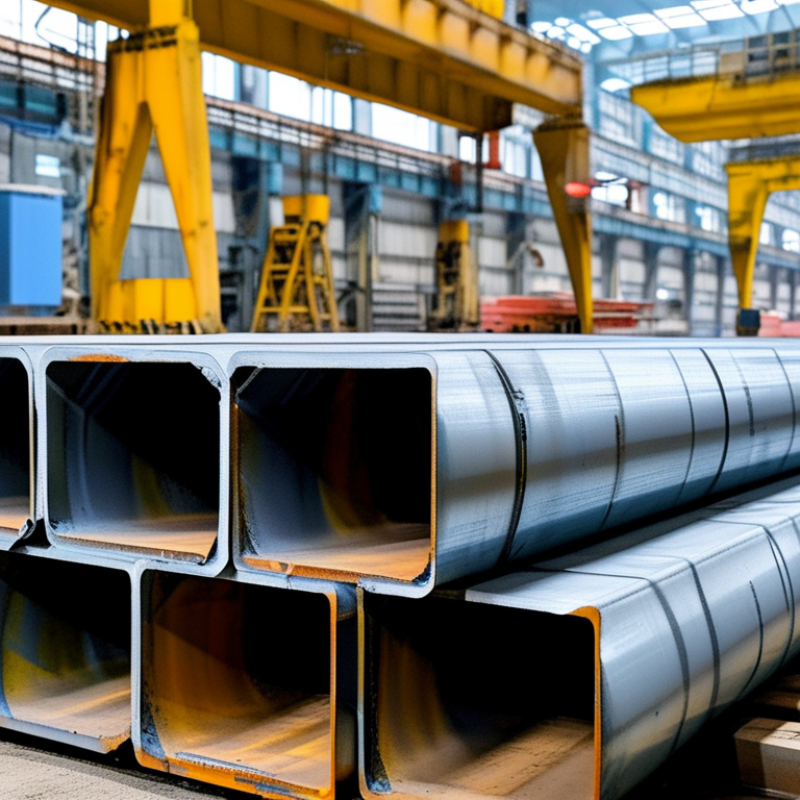
Galvanized steel square pipe is widely used for frames, fences, handrails, equipment supports, and outdoor structures. Its square profile simplifies alignment, while zinc protects the steel from moisture and surface corrosion. Common sizes range from 20 × 20 mm to 200 × 200 mm, with wall thicknesses often between 1.2 and 8 mm. Actual availability varies by mill and region.

Grade selection should match the load, forming process, and welding method. Structural grades such as S235, S275, or equivalent grades may suit general construction. Higher-strength options can support demanding designs, but strength alone does not guarantee durability. Engineers should check yield strength, tensile strength, chemical composition, and inspection documents before approval. Small details matter.

A 275 g/m² zinc coating usually describes the combined zinc mass on both surfaces, not a 275-micron thickness. Its approximate average thickness is far lower, depending on zinc density and test tolerances. Buyers should request the coating standard, sampling method, and minimum local coating value. During site inspections, uncoated cut edges, thin weld areas, and damaged corners often deserve attention. They are easy to overlook. A clean silver finish can still hide uneven coverage. Reliable worldwide suppliers provide dimensional reports, material certificates, coating results, and traceable batch numbers. Packaging also matters, because trapped moisture between bundled pipes can create early storage stains. Dry spacers and ventilation help, though they cannot repair poor galvanizing.

Top Galvanized Steel Square Pipe Suppliers Worldwide - Galvanized Steel Square Pipe Basics: Sizes, Grades, and 275 g/m² Zinc Coating

Category Typical Specification Common Sizes / Values Relevant Standard or Explanation
Product form Galvanized square hollow section Cold-formed or hot-finished square tube A hollow steel section with four equal sides and a zinc coating for corrosion protection.
Outside dimensions Small to large structural sections 20 × 20 mm to approximately 500 × 500 mm Available ranges depend on the manufacturing process, wall thickness, standard, and supplier capability.
Wall thickness Light, medium, and structural wall Approximately 1.2–25 mm Actual thickness availability varies with outside dimensions and whether the tube is welded or seamless.
Standard lengths Commercial and fixed-length supply Commonly 6 m and 12 m; cut lengths by order Length tolerances and cutting allowances should be confirmed against the purchase specification.
Metric structural grade S250GD, S280GD, S320GD, S350GD Minimum yield strength: 250–350 MPa Grades commonly associated with continuously hot-dip coated structural sheet under EN 10346; the finished tube standard may also apply.
Higher-strength metric grade S420GD and S550GD Minimum yield strength: 420–550 MPa Used where increased strength-to-weight performance is required, subject to forming and welding requirements.
North American structural grades ASTM A500 Grade B or Grade C Yield strength commonly 46 ksi or 50 ksi minimum ASTM A500 covers cold-formed welded and seamless carbon steel structural tubing in round, square, and rectangular shapes.
General-purpose grade EN 10219 S235JRH or equivalent carbon steel grade Minimum yield strength approximately 235 MPa Commonly used for welded cold-formed hollow sections where moderate structural strength is sufficient.
Zinc coating designation Z275 275 g/m² total coating mass on both surfaces The Z275 designation is widely used for continuously hot-dip galvanized sheet and strip under EN 10346.
Approximate zinc thickness Z275 equivalent thickness Approximately 19 µm per side, assuming even distribution This is a calculated approximation using zinc density of about 7.14 g/cm³; coating mass is the controlling requirement.
North American coating comparison ASTM A653 G90 0.90 oz/ft² total, approximately 275 g/m² G90 is a coating-mass designation under ASTM A653. It is often compared with Z275, but certification requirements and test methods differ.
Hot-dip galvanizing after fabrication ISO 1461 coating system Typical minimum local coating thickness depends on steel thickness Fabricated tubes are immersed after welding and cutting, allowing zinc coverage on external and internal surfaces where designed for drainage and venting.
Corrosion resistance Atmospheric exposure protection Performance varies by environment, coating thickness, and maintenance Zinc provides barrier protection and sacrificial protection; marine, industrial, and high-humidity environments require specific coating selection.
Typical applications Construction, infrastructure, and fabrication Frames, fences, handrails, supports, agricultural structures, and solar mounting systems Application suitability depends on load, welding, fire, drainage, corrosion category, and local building requirements.
Supplier comparison criteria Worldwide procurement Mill certificate, coating test, dimensional tolerance, packing, lead time, and export documentation A reliable comparison should be based on verified standards, inspection records, production capacity, and delivery terms rather than price alone.

Note: Dimensions, grades, coating masses, tolerances, and test requirements should be confirmed against the applicable edition of the selected standard and the supplier’s inspection certificate.


Global Standards for Square Pipes: ASTM A123, EN 10240, and ISO 1461

For global square pipe sourcing, standards matter more than a polished catalogue. ASTM A123/A123M covers hot-dip galvanized coatings on fabricated iron and steel products. It defines coating thickness, appearance, sampling, and adhesion requirements. However, it does not replace dimensional or mechanical pipe standards.

EN 10240 addresses protective coatings for steel tubes, including factory-applied zinc coatings. It specifies coating classes, surface preparation, testing, and inspection conditions. ISO 1461 covers hot-dip galvanized coatings on fabricated iron and steel articles. Its minimum coating requirements depend on the steel thickness. These standards are related, but they are not interchangeable. A supplier claiming “galvanized to international standards” may still provide incomplete evidence. Ask for the exact standard edition, coating test results, steel grade, and batch traceability. World Steel Association reported approximately 1.89 billion tonnes of crude steel production in 2023, showing the scale of this supply chain. Scale does not guarantee consistency.

Tips: Request both average and local coating measurements. Check cut ends, corners, weld zones, and internal surfaces. These areas often reveal weak preparation. A third-party inspection can verify the report, although it adds cost and time. EN 10240 may fit tube-specific projects better, while ISO 1461 often suits fabricated assemblies. ASTM A123 remains useful when North American specifications govern. The practical choice depends on application, exposure, and contract wording. Misreading one clause can create expensive rework.

Top Supplier Regions: China, India, Turkey, and North America Compared

China, India, Turkey, and North America serve different galvanized steel square pipe markets. China remains the largest steel manufacturing base. World Steel Association data reports approximately 1,005 million tonnes of crude steel production in China during 2024. This scale supports broad product selection and competitive mill pricing. Buyers should still verify coating thickness, weld quality, and export documentation.

India produced about 149 million tonnes in 2024, according to the same report. Its supplier base is expanding with construction and infrastructure demand. Indian mills can offer practical pricing for standard square sections. Quality consistency may vary between facilities, so third-party inspection is sensible. The data is useful, but it does not isolate galvanized square pipe.

Turkey produced roughly 36.9 million tonnes in 2024. Its location supports efficient deliveries into Europe, North Africa, and nearby markets. Turkish suppliers often compete through flexible batch sizes and regional logistics. North America produced about 116 million tonnes, combining the United States, Canada, and Mexico. ASTM-based specifications, traceability, and domestic delivery are strong advantages there. However, labor and compliance costs can raise quotations. The OECD Steel Outlook 2024 also highlights global overcapacity pressures, which can make prices unstable. A cheaper offer is not always cheaper after freight, testing, and delays. Buyers should compare mill certificates, zinc mass, dimensional tolerances, and actual lead times. No region wins every order. Forecasts can be wrong.

Top Galvanized Steel Square Pipe Suppliers Worldwide: Regional Comparison

Regional supplier strength is compared using 2024 crude steel production as an upstream supply indicator. North America represents the combined output of the United States, Canada, and Mexico. Higher production supports broader availability of steel inputs, although it does not directly measure galvanized square pipe exports.

Data source: World Steel Association, “2024 World Steel in Figures” and 2024 crude steel production statistics. North America total is calculated from the United States, Canada, and Mexico figures.

Supplier Evaluation: Tensile Strength, Yield Strength, Tolerances, and Certifications

When evaluating galvanized steel square pipe suppliers, ask for heat-specific test data, not brochure averages. ASTM A500/A500M Grade B requires at least 400 MPa tensile strength and 290 MPa yield strength. Grade C raises these minimums to 425 MPa and 315 MPa. These values describe the steel tube before galvanizing. Zinc protects the surface, but it does not repair weak welds or inconsistent forming.

Dimensional control matters on site. ASTM A500 commonly permits about ±1% on outside dimensions and ±10% on wall thickness, subject to the current edition. For a 100 mm square section, a one-millimetre size variation can affect fit-up.

Noticeably.

Request inspection records covering corner radius, straightness, wall thickness, and zinc coating mass. ISO 1461 provides hot-dip galvanizing requirements, while EN 10204 Type 3.1 certificates connect results to a specific production heat.

Reliable suppliers should provide tensile reports, coating inspection results, and traceable batch numbers. ISO 9001 certification shows process control, but it does not prove every pipe meets the ordered grade. An independent laboratory report adds stronger evidence.

The World Steel Association’s 2024 industry reporting also highlights energy and emissions differences across steelmaking routes, so procurement teams should review environmental declarations when sustainability claims matter. One practical weakness remains: certificates can be complete yet poorly matched to delivered bundles. Check markings, sample dimensions, and documents together.

Worldwide Purchasing Guide: MOQ, Lead Times, Incoterms, and Quality Testing

Top Galvanized Steel Square Pipe Suppliers Worldwide

Global pipe purchasing starts with measurable requirements, not attractive quotations. The World Steel Association reported 1.89 billion tonnes of crude steel production in 2023, showing the market’s enormous scale. Yet supplier capacity varies sharply by region. Request the outside dimensions, wall thickness, zinc coating target, steel grade, length tolerance, and packing method. A practical MOQ may range from 5 to 25 tonnes for standard sizes, while custom dimensions can require much more. Confirm this before approving samples.

Lead times commonly run 20 to 45 days for stocked sections and 45 to 75 days for made-to-order production. Port congestion can extend delivery further. UNCTAD reports that over 80% of global merchandise trade moves by sea, so freight planning matters.

Specify Incoterms 2020 clearly, especially whether the price is EXW, FOB, CFR, or DDP. The cheapest quotation may exclude unloading, duties, or destination handling. That mistake is surprisingly common.

Quality Control

Quality control should include mill certificates, dimensional checks, zinc coating measurement, and weld inspection. ISO 1461 provides widely used requirements for hot-dip galvanized coatings, while ASTM A53 covers applicable steel pipe requirements. Ask for independent testing when the order is critical. Inspectors should record coating thickness at several points, not just one convenient location. A weak point remains: visual inspection cannot reveal every internal defect. Retesting costs money, but skipping it can cost more. Industry data from the International Zinc Association also links coating thickness with corrosion protection, although local exposure conditions still change actual service life.

Wordpress Social Share Plugin powered by Ultimatelysocial
Facebook
X (Twitter)
YouTube
LinkedIn
Share

Purchase Product Request

Request Pricing