Why is Circuit Board Design Important for Electronics?
Circuit board design is a crucial process in the field of electronics. It acts as the backbone of all electronic devices. From smartphones to industrial machinery, circuit boards are everywhere.
The importance of circuit board design cannot be overstated. It impacts performance, reliability, and manufacturability. Poor design choices can lead to malfunctions, increased costs, and waste. Every layer of a circuit board must be carefully planned. Small errors can have big consequences. Components need to fit perfectly, and traces must be routed efficiently.
Reflecting on past projects, many designers find room for improvement. They encounter challenges in signal integrity and heat management. Each failure teaches a valuable lesson. The field is constantly evolving, pushing designers to innovate. Circuit board design remains a key pillar in the success of any electronic venture.
Importance of Circuit Board Design in Modern Electronics
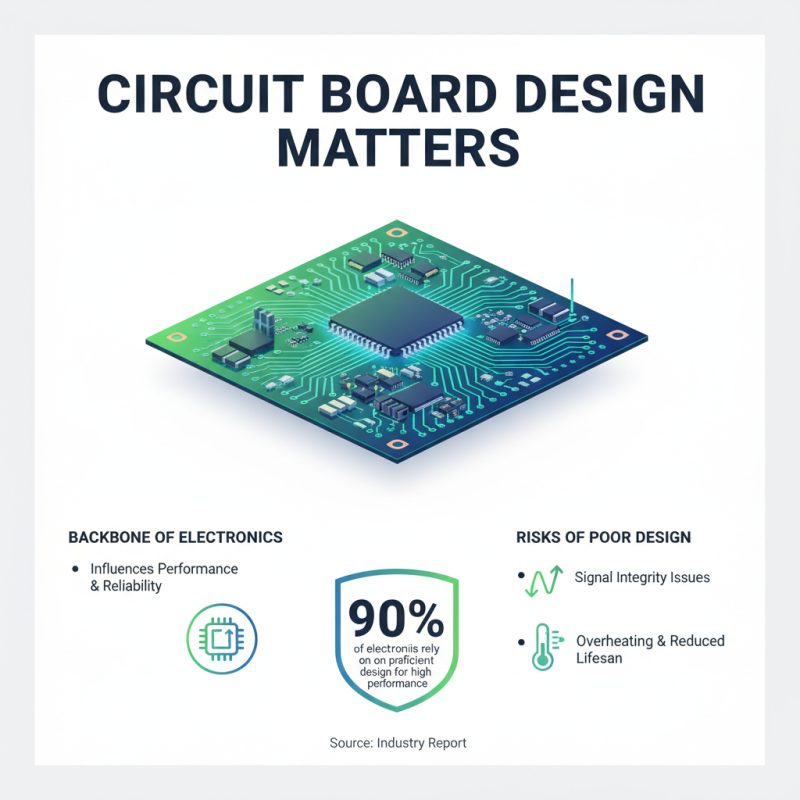
Circuit board design holds significant importance in modern electronics. It serves as the backbone of most electronic devices, influencing their performance and reliability. According to a recent industry report, over 90% of electronic products rely on proficient circuit board design to meet high performance standards. Moreover, poorly designed boards can lead to signal integrity issues and overheating. These problems can affect product lifespan and consumer satisfaction.
Tips for circuit board designers include focusing on layout optimization. Effective use of space can minimize interference. Balancing component placement is essential; too close can cause malfunction. Additionally, designers should consider thermal management. Heat can damage components, leading to failure. Innovative cooling techniques can enhance longevity.
The rapid growth of the electronics industry places added pressure on design processes. Companies are adopting advanced design tools to mitigate errors. Yet, many still face challenges in achieving optimal functionality. A study noted that around 30% of projects encounter delays due to design flaws. Continuous learning and adaptation in circuit board design strategies can help overcome these persistent issues.
Key Components of Circuit Board Design and Their Functions
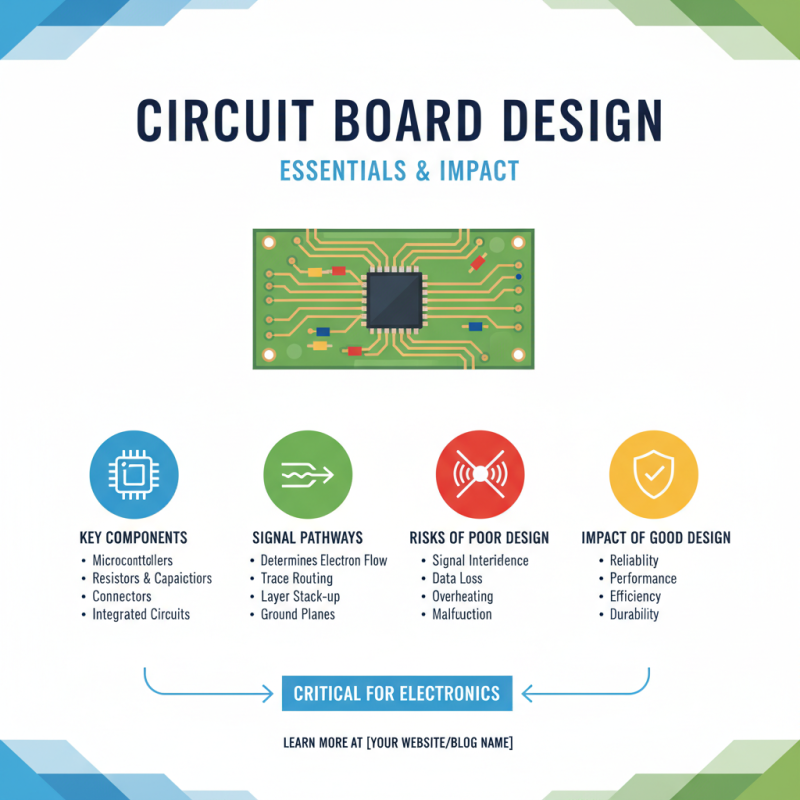
Circuit board design is vital in electronics. This process involves several key components, each serving a specific function. The layout of the circuit board determines how electrical signals travel. Poor design can lead to interference or signal loss.
One important component is the traces. These are conductive pathways that connect different electronic parts. They must be carefully designed to ensure optimal signal flow. If traces are too thin, they may resist current, causing heat or damage. Capacitors and resistors also play crucial roles. Capacitors store energy, while resistors control current flow. Incorrect values can disrupt functionality.
Another essential element is the placement of components. Effective spacing can minimize electromagnetic interference. However, designers sometimes overlook this, resulting in performance issues. For instance, placing a high-frequency component too close to a sensitive one can cause signal degradation. Keeping a balanced design requires constant reflection and adjustment. Mistakes in layout or component choice can significantly impact overall performance.
Impact of Circuit Board Layout on Device Performance
The layout of a circuit board plays a crucial role in the overall performance of electronic devices. A poorly designed board can lead to significant issues like signal interference and increased heat generation. This can ultimately affect the reliability and efficiency of the product. Engineers must carefully consider component placement and routing. The spacing between traces must be managed to avoid crosstalk.
Incorrect layout can cause unexpected failures. For instance, if components are too close, it may lead to short circuits. Similarly, if power traces are too narrow, they might overheat under load. Balancing these factors is vital. Small design choices can have a lasting impact on performance. Each element on the board should serve a purpose and reflect a thoughtful design philosophy.
However, not every layout meets the challenges of modern technology. Design tools may not catch every potential flaw. Sometimes, engineers might overlook heat dissipation needs until it’s too late. Reflections of these oversights can be seen in devices that underperform or fail prematurely. Re-evaluating design practices is essential for innovation and improving circuit board reliability.
Challenges and Best Practices in Circuit Board Design
Circuit board design plays a crucial role in the functionality of electronic devices. However, it comes with challenges that designers must navigate. Inadequate space can lead to overcrowding. Components might interfere with each other, causing performance issues. Designers often overlook thermal management, which can be detrimental. Heat must be dissipated efficiently to prevent damage.
**Tip**: Always leave space between high-power components and sensitive ones. This helps reduce interference and extends lifespan.
Moreover, signal integrity is essential. If signals degrade, the device may malfunction. Tight routing can make it hard to troubleshoot failures later. Many designers underestimate the importance of ground planes. A solid ground plane can minimize noise and enhance overall performance.
**Tip**: Use simulation tools to visualize signal flow. It can save time and identify potential issues early in the design process.
It’s easy to get lost in technical details. Sometimes, this leads to missing the bigger picture. Feedback from peers can help spot overlooked problems. Regular revisions and testing can refine the design significantly. In the end, balancing these elements is key for successful circuit board design.
Importance of Circuit Board Design for Electronics
Future Trends in Circuit Board Design for Advanced Technologies
Future trends in circuit board design are pivotal for advancing technology. As devices become smaller and more complex, the need for innovative designs is crucial. According to a recent report by the Institute of Electrical and Electronics Engineers (IEEE), the global PCB market is expected to reach $80 billion by 2026. This growth underscores the demand for high-density interconnect (HDI) designs that accommodate intricate circuitry.
Emerging technologies like 5G and IoT require circuit boards with improved performance and efficiency. HDI boards allow for better heat dissipation and signal integrity. A survey by IPC revealed that nearly 70% of manufacturers are investing in HDI technology to meet these needs. However, achieving efficient designs poses challenges. Layout optimization must consider both performance and production costs.
Moreover, sustainability trends are gaining traction. Many companies are exploring eco-friendly materials for PCBs. This development reflects a shift in industry priorities. Still, balancing sustainability with performance remains a complex issue. To adopt greener solutions, manufacturers must innovate while addressing cost implications and reliability concerns. The future landscape of circuit board design is set to evolve, yet significant hurdles remain.
Why is Circuit Board Design Important for Electronics? - Future Trends in Circuit Board Design for Advanced Technologies
| Dimension |
Importance |
Future Trends |
| Design Accuracy |
Ensures functionality and reliability of the electronics. |
Incorporating advanced simulation tools for precise design. |
| Material Selection |
Affects electrical performance and thermal management. |
Emergence of eco-friendly and high-performance materials. |
| Thermal Management |
Prevents overheating, ensuring longevity of components. |
Use of advanced cooling solutions and materials. |
| Size Optimization |
Crucial for compact and portable electronic devices. |
Adoption of miniaturization techniques and 3D designs. |
| Routing Complexity |
Impacts signal integrity and reduces electromagnetic interference. |
AI-assisted routing algorithms for optimal layouts. |