How to Choose the Right Waste Heat Boiler for Your Needs?
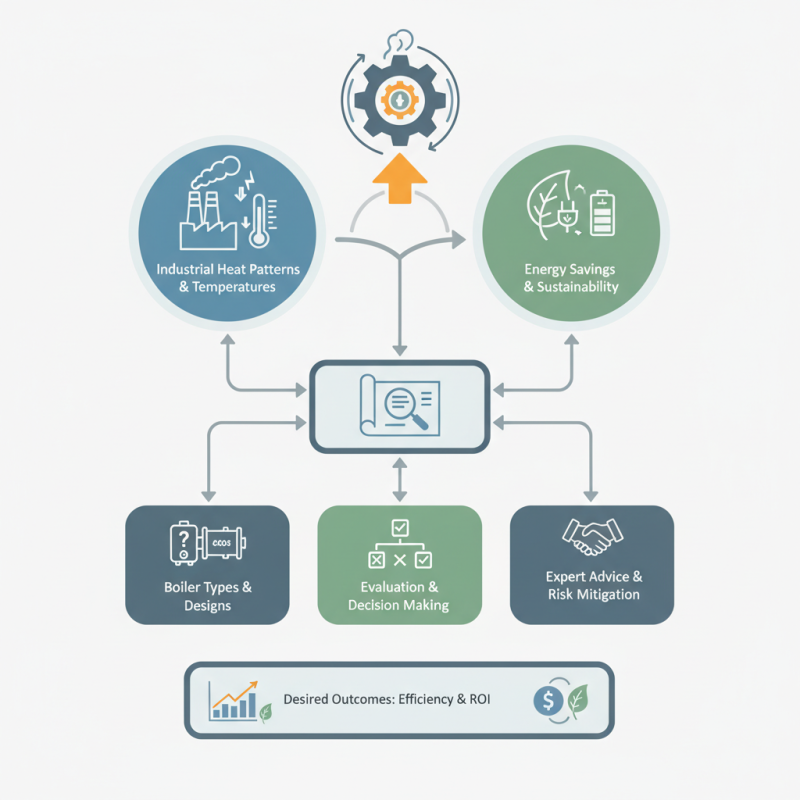
Choosing the right Waste heat boiler is critical for efficiency and sustainability. According to a recent report by the International Energy Agency, waste heat recovery can lead to energy savings of up to 30%. This statistic highlights the importance of selecting an effective waste heat boiler system. Experts such as Dr. Emily Sanders, a prominent engineer in thermal systems, have emphasized, “The right waste heat boiler can transform energy efficiency in industrial applications.”
Industries face unique challenges in selecting the appropriate waste heat boiler. Each process generates specific heat patterns and temperatures. Understanding these dynamics is crucial. Moreover, improper selection can lead to inefficiencies and added costs. Research indicates that more than 25% of heat recovery systems do not meet expectations due to poor design choices. This calls for thorough evaluation during the decision-making process.
Investing time to evaluate options is vital. There are various types and designs of waste heat boilers. The market offers solutions that cater to diverse industrial needs. Yet, navigating these choices can be daunting. Choosing incorrectly might result in operational setbacks. Taking expert advice and thorough analysis can mitigate such risks, ensuring that investments yield the desired outcomes.
Understanding the Basics of Waste Heat Boilers
Understanding the basics of waste heat boilers is crucial for optimizing energy efficiency. Waste heat boilers capture excess heat from industrial processes. This can include heat from gas turbines, furnaces, or engines. By recycling this heat, facilities can reduce fuel consumption and greenhouse gas emissions.
Different types of waste heat boilers cater to varying needs. Some employ direct contact methods, while others use indirect heat exchangers. The most suitable type for your operation depends on the specific heat source and temperature ranges involved. It can be challenging to determine what works best. Often, a professional assessment is necessary.
Consideration of factors like operating pressure and required steam output is vital. Not all boilers suit every scenario. Misalignment can lead to inefficiencies. It’s essential to validate your choices through detailed analysis. Industry experience plays a key role in making informed decisions. So, consulting experts is often beneficial. Risk assessment should also be part of this evaluation. Small mistakes can lead to big consequences.
How to Choose the Right Waste Heat Boiler for Your Needs? - Understanding the Basics of Waste Heat Boilers
| Boiler Type | Heat Recovery Efficiency (%) | Operating Temperature (°C) | Fuel Source | Typical Applications |
| Fire Tube | 80 - 90 | 300 - 550 | Natural Gas, Oil | Industrial Heating |
| Water Tube | 85 - 95 | 400 - 600 | Natural Gas, Biomass | Power Generation |
| Organic Rankine Cycle | 90 - 95 | 150 - 400 | Geothermal, Waste Heat | Renewable Energy |
| Heat Recovery Steam Generator | 85 - 95 | 200 - 550 | Natural Gas | Combined Cycle Power Plants |
| Condensing Boiler | 90 - 95 | 70 - 100 | Natural Gas | Residential Heating |
Identifying Your Energy Needs and Requirements
Identifying your energy needs is the first step in selecting a waste heat boiler. Every facility has unique requirements. These can vary widely depending on the type of industry and the processes involved. For instance, a manufacturing plant may generate excess heat during production. Capturing this energy can reduce overall operational costs. However, understanding how much waste heat is available is crucial.
Next, assess the temperature and flow rate of the exhaust gases. High-temperature applications often require more robust boilers. It’s also essential to evaluate the reliability of your current systems. Are they frequently failing? This might indicate the need for a more efficient solution. Consider the potential for future energy needs as well. Are you planning expansions? Planning for the long term can lead to better investments.
Finally, think about the integration with existing systems. Compatibility can be a challenge. Sometimes, existing infrastructure doesn't match new technology perfectly. Collaborating with knowledgeable engineers can bridge these gaps. The right waste heat boiler should fit your unique situation, but achieving this requires thoughtful evaluation and expert insight.
Evaluating Different Waste Heat Boiler Types
When evaluating different types of waste heat boilers, understanding your specific needs is crucial. Waste heat boilers are designed to capture exhaust heat from various processes. They convert this heat into usable energy, improving overall efficiency. Common types include fire-tube, water-tube, and air-heated boilers. Each design has unique benefits and limitations.
Fire-tube boilers are generally simpler and more compact. They are effective for low-pressure applications. However, their efficiency can be limited for high-temperature recovery. In contrast, water-tube boilers offer better performance at high pressures. They tend to have a larger footprint and may require more maintenance.
Lastly, air-heated boilers are capable of rapidly recovering heat but can sometimes experience lower heat transfer rates.
Choosing the right type requires assessing several factors. Know your operational temperature and pressure requirements. Consider the space you have available. It's essential to reflect on the trade-offs of each option. Sometimes, the simplest solution may not meet long-term needs. A thorough analysis will lead to a more reliable choice for your organization.
Assessing Efficiency and Economic Factors
When selecting a waste heat boiler, efficiency is a crucial aspect. High-efficiency models can significantly reduce operational costs over time. Look for boilers with advanced technology, such as condensing capabilities, which allow for better heat recovery. They often have higher thermal efficiency ratings. However, these systems may come with a higher initial investment. Evaluate your budget to see what aligns best with your financial capabilities.
Economic factors also come into play. Consider not just the purchase price, but the long-term savings from reduced energy consumption. Analyze the fuel sources you will use. Some systems work better with particular fuels, impacting economic viability. Maintenance costs are another important aspect. A seemingly inexpensive boiler may incur high maintenance expenses over its lifespan. It’s vital to consider the total cost of ownership to make the best decision.
Reflecting on your actual needs is essential. A larger boiler may offer more efficiency, but it might not be appropriate for smaller operations. Think about the specific conditions of your facility. Sometimes, smaller models can provide adequate performance at a fraction of the cost. Balancing needs with economic realities leads to better choices. It’s a journey that requires careful thought and evaluation.
Considering Installation and Maintenance Options
When considering installation and maintenance options for a waste heat boiler, several factors come into play. The installation site must be large enough for the boiler's dimensions. Consider ease of access for maintenance activities. This could save significant time and costs down the line.
Tips: Always assess the space before finalizing your selection. Poor placement can lead to inefficiencies.
Regular maintenance is crucial for optimal performance. Not all boilers have similar maintenance requirements. Some may need frequent checks, while others are low-maintenance. Understand the specific needs of your selected model.
Tips: Keep a maintenance checklist. This helps track service needs and performance levels. Ignoring maintenance can lead to larger issues.
Don’t overlook the training for staff who will handle the boiler. Proper knowledge of operations and troubleshooting can minimize downtime and repairs. Investing in training can prove invaluable in the long run.
Tips: Organize training sessions early. This prepares your team for any challenges ahead. Regular updates on best practices can enhance reliability.