How to Choose a Thermal Expansion Vessel?
Choosing a Thermal Expansion Vessel is not a simple matter of matching pipe size. It requires understanding how the entire heating or hot-water system behaves.
When water heats, it expands. The vessel provides a controlled space for that increase in volume. Without adequate capacity, pressure may rise, causing frequent relief-valve discharge, noisy operation, or premature component wear. The correct choice depends on system volume, maximum temperature, cold-fill pressure, operating pressure, and the fluid used.
John Barba, a respected hydronic heating educator associated with Caleffi, describes the expansion tank as “the shock absorber of the system.” That comparison is practical. A correctly charged vessel cushions pressure changes, much like a vehicle suspension absorbs sudden movement.
Real installation experience also matters. A vessel that looks suitable on paper may perform poorly if its pre-charge is wrong. For example, a gauge reading taken while the vessel remains connected to system pressure can mislead the installer. Small errors become visible when the boiler reaches operating temperature and the pressure gauge climbs sharply.
This guide explains how to choose a Thermal Expansion Vessel with evidence-based considerations. It examines sizing, diaphragm materials, connection points, pressure settings, and manufacturer data. It also acknowledges an uncomfortable truth: many selection mistakes come from assumptions, not calculations.
Check the system records.
Measure where possible.
Do not trust appearance alone.
Reliable guidance should be confirmed against current technical documentation and applicable installation standards. A careful selection process may take longer, but it reduces maintenance risks and supports stable, efficient operation.
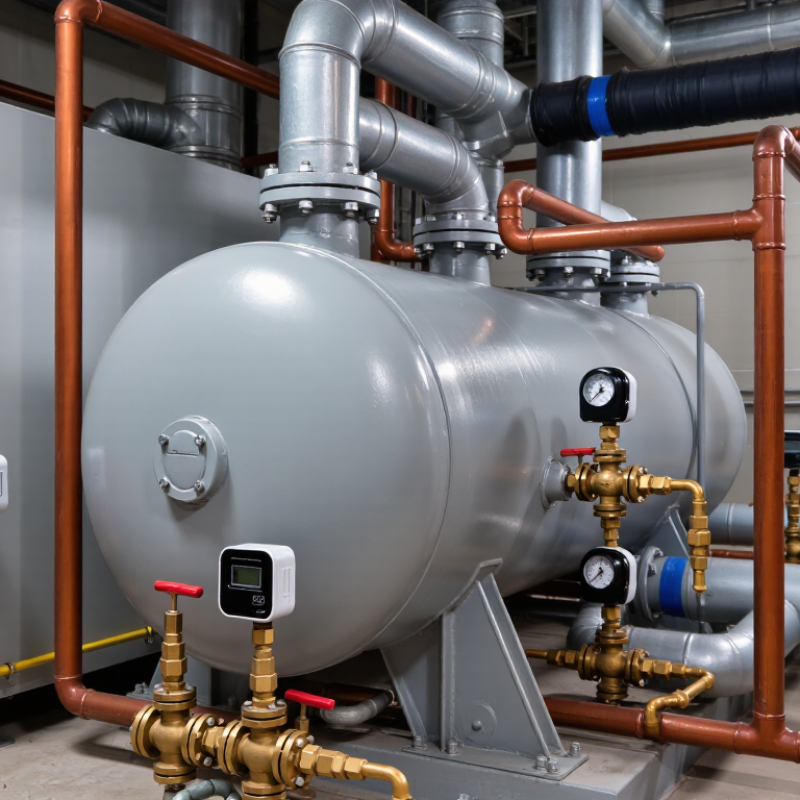
Understanding the Role of a Thermal Expansion Vessel
How to Choose a Thermal Expansion Vessel?
A thermal expansion vessel absorbs the pressure created when water heats and expands. Without it, pressure can rise quickly inside a closed heating or hot-water system. This may trigger the safety valve, cause dripping, or stress joints and fittings.
The vessel contains water on one side and compressed air or nitrogen on the other. As water expands, the flexible diaphragm moves into the air chamber. That simple movement protects the system from pressure shocks.
Choosing the correct vessel requires more than matching pipe size. Check the system volume, maximum operating temperature, working pressure, and fluid type. A heating circuit may need a different capacity from a domestic hot-water system. The initial air pressure must also suit the system’s cold-fill pressure.
In field inspections, a vessel can look correctly installed but still fail because its pre-charge was never checked. That detail is easy to miss. It should not be.
Tips: Measure the system before selecting capacity. Confirm the vessel’s pressure rating and temperature range. Leave access for inspection and air-pressure adjustment. Watch the pressure gauge during heating and cooling. A large vessel is not automatically better, while an undersized one may cycle too often. Follow applicable installation standards and the manufacturer’s technical instructions. When calculations seem uncertain, ask a qualified heating professional to verify them.
Identifying the Heating or Water System Requirements
Choosing a thermal expansion vessel begins with identifying what the system must protect. A sealed heating circuit behaves differently from a domestic water line. For heating systems, calculate water volume, temperature range, static pressure, and safety-valve setting. A vessel that is too small may cause frequent pressure relief. One that is too large can waste space and money. Start with measurements, not guesswork.
For potable water, check whether a non-return valve, pressure-reducing valve, or booster pump traps expanding water. Record incoming pressure during quiet and peak demand. The vessel must suit the water temperature and approved materials. Its pre-charge should match the system design, then be checked with the water pressure released. This detail is often missed. It can distort the result.
On site, I would compare the vessel data with the boiler or cylinder manual and local plumbing requirements. Confirm connection size, mounting position, service access, and corrosion protection. Heating calculations often use a technical formula or an engineer’s worksheet. Those tools are useful, but input errors remain possible. I would recheck the actual pipework volume and operating pressure before purchase. A neat installation can still perform poorly if the pressure assumptions are wrong.
Calculating the Required Vessel Capacity
How to Choose a Thermal Expansion Vessel?
Calculating the Required Vessel Capacity
Correct sizing begins with the total water volume, not just the boiler size. Include pipes, radiators, heat exchangers, storage tanks, and hidden circuit sections. A 500-litre sealed heating system heated from 10°C to 80°C may expand by approximately 2.9%. Its expansion volume is therefore about 14.5 litres. Use verified water-property tables for accurate results, because temperature changes alter the expansion coefficient.
The vessel must absorb this expansion without reaching the relief-valve setting. A practical sizing equation is: vessel volume = expansion volume ÷ acceptance factor. The acceptance factor depends on pre-charge pressure and maximum working pressure. For example, with a 1.5-bar gauge pre-charge and a 3-bar gauge limit, use absolute pressures: 2.5 and 4.0 bar. The acceptance factor is 1 − 2.5 ÷ 4, or 0.375. Dividing 14.5 litres by 0.375 gives roughly 39 litres. Select the next suitable capacity, then verify the result against the installation manual and local technical requirements.
Tips: Measure the actual system volume whenever possible. Check pre-charge pressure with the vessel isolated and empty of system water. Allow room for uncertainty. Air pockets, inaccurate pressure gauges, and future pipework changes can affect performance. A tidy calculation may still be wrong if one radiator circuit was missed. Record the design temperature, fill pressure, maximum pressure, and safety-valve setting for later inspection.
How to Choose a Thermal Expansion Vessel? – Calculating the Required Vessel Capacity
The chart estimates the required nominal vessel capacity for a closed hot-water heating system. It assumes water is heated from 10°C to 80°C, producing approximately 2.87% volumetric expansion, with a cold fill pressure of 1.5 bar gauge and a maximum operating pressure of 3.0 bar gauge.
Calculation: required vessel capacity = system water volume × 2.87% ÷ [1 − (cold absolute pressure ÷ maximum absolute pressure)]. Final selection should use the next available standard vessel size and be verified against the actual system pressure, temperature, safety valve setting, and installation requirements.
Selecting the Correct Pressure and Connection Specifications
Choosing a thermal expansion vessel starts with pressure, not tank size. The vessel must suit the system’s cold fill pressure, operating temperature, and maximum allowable pressure.
Measure it cold. Set the vessel’s pre-charge slightly below the system’s static pressure, following the installation specification. A heating circuit may need a different setting from a domestic hot-water circuit.
Oversizing can reduce pressure swings, but it may also increase cost and installation space. Undersizing causes frequent relief-valve discharge and unstable gauge readings.
Check the connection specification carefully. The port size, thread standard, orientation, and connection material must match the pipework. Threads must match. Never force a nearly compatible fitting. A small mismatch can leak after repeated heating cycles.
In field inspections, I also check access around the air valve and vessel bracket. Technicians need room to test pressure later. The mounting point must support the filled vessel, not just its empty weight.
For potable systems, confirm that the vessel’s internal materials are suitable for drinking water.
For closed heating systems, confirm compatibility with the fluid and inhibitor used.
Record the vessel pressure, connection details, and commissioning date. This record makes future servicing clearer, although it is easy to forget during a rushed installation.
A final pressure check after the system reaches operating temperature can reveal a poor pre-charge setting before damage occurs.