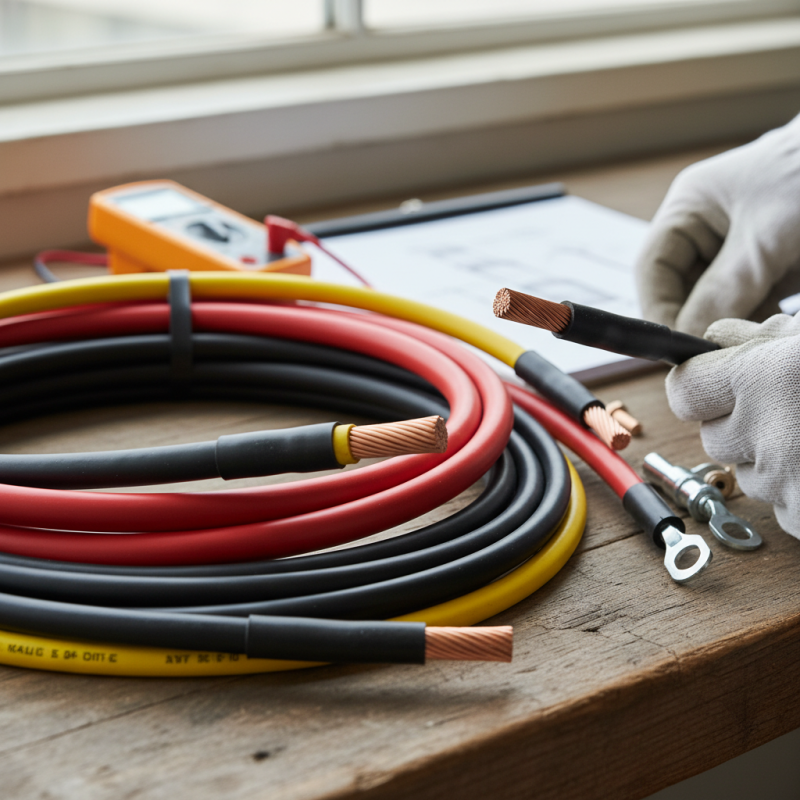
Why Choosing the Right Battery Cable is Essential for You?
Selecting the right Battery Cable is crucial for optimal performance in various applications. A quality battery cable can enhance both efficiency and safety. Poor choices may lead to insufficient power delivery or even hazards.
Battery cables vary in size, material, and specification. Different projects demand specific features to ensure reliability. Without a reliable battery cable, systems can fail, leaving users frustrated and potentially stranded.
Understanding your needs is vital. Do you prioritize flexibility, durability, or conductivity? Researching these aspects is essential for making informed choices. A wrong decision can disrupt the entire electrical setup. Take the time to reflect on your requirements. Your project deserves the best.
Understanding the Importance of Battery Cables in Electrical Systems
Battery cables play a crucial role in electrical systems. They ensure that power is efficiently transferred from the battery to various components. A high-quality cable can reduce voltage drop, which is vital for maintaining optimal performance. For example, in vehicles, a reliable connection can mean the difference between a smooth start and a frustrating no-start scenario.
Choosing the right gauge is essential. Insufficient gauge may cause overheating and even fires. This risk underlines the importance of understanding cable specifications. Sometimes, users overlook this aspect and choose based on price rather than quality. This can lead to long-term issues, such as decreased battery life.
An effective battery cable must withstand environmental conditions. Factors like heat, moisture, and abrasion can compromise performance. Regular checks are necessary to ensure connections remain secure. Inadequate maintenance can cause failures that are easily avoidable. Electrical systems are complex, and every detail matters. Understanding battery cables is a step towards reliability and safety.
Why Choosing the Right Battery Cable is Essential for You?
| Dimension | Importance | Specifications | Common Materials |
| Wire Gauge | Determines current carrying capacity | AWG (American Wire Gauge) Rating | Copper, Aluminum |
| Length | Affects voltage drop | Measured in feet/meters | PVC, Rubber Insulation |
| Insulation Type | Ensures safety and longevity | Thermal resistance rating | Cross-linked polyethylene (XLPE), Rubber |
| Connector Type | Direct connection to car/battery | Connector shape and size | Tin-plated copper, Brass |
| Temperature Rating | Ensures performance in extreme conditions | Operating temperature range | Silicone, PVC |
Types of Battery Cables: Choosing the Right Material for Your Needs
Selecting the right battery cable involves understanding the types of materials available. Typically, copper and aluminum are popular choices. Copper cables conduct electricity better, making them ideal for high-performance applications. However, aluminum cables are lighter and more cost-effective, which may suit less demanding setups.
When choosing a material, consider your specific needs. If you require flexibility and durability, opt for copper. Aluminum may suffice for basic functions. The gauge of the cable also matters; thicker cables handle higher currents. Ensure that your choice aligns with the power requirements of your equipment.
Tips: Always check for corrosion resistance. This can extend the lifespan of your cables. Keep in mind that improper installation can lead to issues. Double-check connections to avoid future hassles. Don’t overlook the importance of insulation quality. Poor insulation can cause short circuits and safety hazards.
Consider the environment where your cables will be used. Extreme temperatures can affect performance. Seek cables rated for harsh conditions if necessary. Assess your unique situation carefully to make the best choice. Making informed decisions leads to better performance and safety in your electrical systems.
Battery Cable Types and Their Applications
This bar chart illustrates the performance ratings of different battery cable materials. Selecting the right battery cable material is crucial for ensuring optimal performance in your electrical systems. Copper cables offer the best conductivity, while aluminum alternatives may be more cost-effective but provide lower performance. Understanding these differences helps in making informed choices based on your specific needs.
Factors Influencing Battery Cable Performance and Longevity
When it comes to battery cables, performance and longevity are vital. Various factors play a role in determining how well a cable functions. The gauge of the wire, for instance, influences the current capacity. Thicker wires decrease resistance, enabling efficient energy transfer. However, they can be bulkier and harder to manage. Selecting the right gauge requires careful thought and often trial and error.
Temperature resistance is another critical aspect. Cables exposed to extreme heat or cold may degrade faster than expected. Proper insulation can enhance longevity, but it may also make cables less flexible. Balancing flexibility with durability can be challenging. Consider the environment where the cables will be used. Do you often work in tight spaces? This can impact your choice of cable.
Lastly, connectors and terminal types matter. Poor connections can lead to power loss and overheating. Some people overlook this detail, which can result in significant issues down the line. An informed decision is crucial. Investigating materials and their durability can save time and money later. Each decision shapes your overall experience with battery cables, so pay attention to the details.
Key Specifications to Consider When Selecting Battery Cables
Choosing the right battery cable is critical for performance and safety. When selecting battery cables, several key specifications should guide your decision. First, consider the cable gauge. Thicker cables can handle more current and reduce resistance. For most applications, a gauge between 4 and 8 AWG is commonly recommended, depending on the power needs.
Another important factor is the cable length. Longer cables can experience voltage drops, which affect performance. To minimize this issue, aim to keep cable runs as short as possible. Also, check for the cable’s insulation material. High-quality, heat-resistant insulation ensures durability and safety, especially in high-temperature environments.
Tips: Always verify the current rating of your cables. This prevents overheating and enhances performance. Additionally, consider purchasing cables with pre-formed connectors. These are often more reliable and easier to install. Make sure to reflect on your specific requirements. Are the cables compatible with your setup? Proper understanding of these details can prevent future problems. Don't overlook testing the connections regularly. Regular checks can save you from unexpected failures.
Best Practices for Installing and Maintaining Battery Cables
When installing battery cables, attention to detail is critical. Start by choosing the correct gauge cable. A thicker cable can handle more current but is heavier and harder to work with. Consider your vehicle's needs carefully. Measure existing cables to ensure compatibility.
Proper installation techniques can prevent future issues. Clean the battery terminals before attaching cables. Corrosion can lead to poor connections. Route cables away from moving parts and heat sources. This step can extend their lifespan. Use cable ties to secure excess length, avoiding loose ends that may cause short circuits.
Regular maintenance is key to reliable performance. Check connections periodically for tightness. Loose connections can drain battery power. Inspect cables for wear and fraying. Damaged cables should be replaced immediately. Ignoring these signs can lead to unexpected failures.
Ensuring your battery cables are in top condition guarantees better vehicle performance.