China Top Endoscope Lens Manufacturers How to Choose?

Choosing among China’s top endoscope lens manufacturers requires more than comparing prices. The right supplier must combine optical precision, stable production, and dependable communication. An Endoscope Lens affects image brightness, edge clarity, color accuracy, and diagnostic confidence. Even a small distortion can become visible during a close inspection of tissue or narrow anatomical spaces.

Experienced buyers should review aperture, focal length, field of view, resolution, coating quality, and compatibility with the intended endoscope system. Ask for sample images, inspection records, and clear tolerances. A reliable manufacturer should explain how lenses are centered, coated, cleaned, and tested. Factory audits can reveal practical details, such as dust control, calibration routines, and packaging protection. Certifications matter, but they should support real quality rather than replace it.

Look closely at traceability. Can the supplier identify the glass batch, coating process, and final inspector? Can engineers respond clearly when a prototype shows fogging or uneven illumination? These moments often reveal more than a polished website. A low quotation may be attractive. However, unstable coating quality, delayed samples, or weak after-sales support can increase the total cost.

No manufacturer is perfect. This deserves honest consideration. Some suppliers may offer excellent custom optics but limited production capacity. Others may deliver quickly but provide fewer engineering records. Compare technical evidence, communication habits, lead times, and long-term support together. A careful selection process helps buyers find an Endoscope Lens partner that is capable, transparent, and suitable for consistent medical device development.
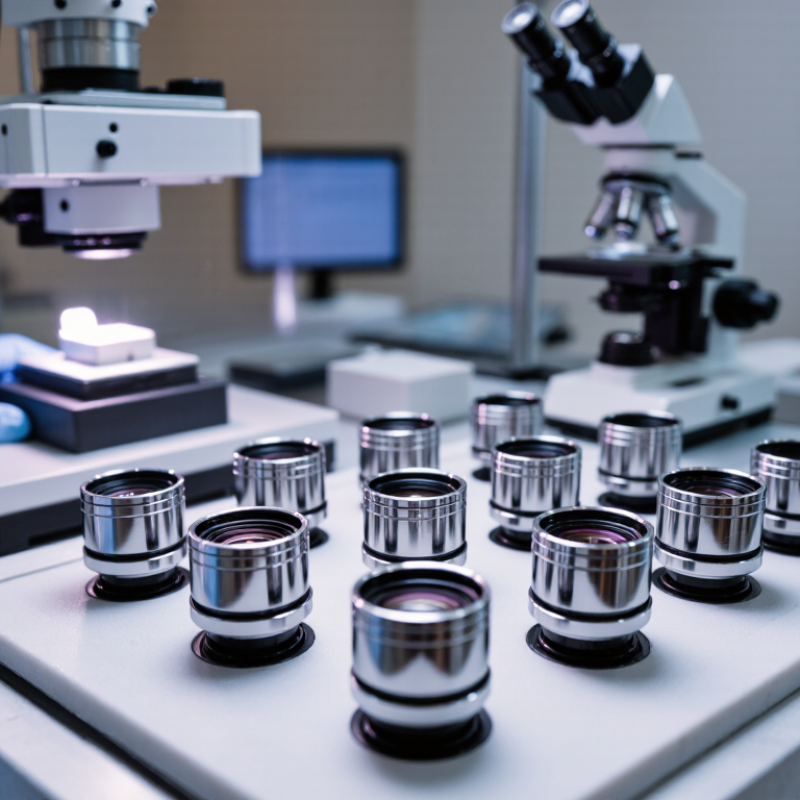
China Top Endoscope Lens Manufacturers How to Choose?

Endoscope Lens Basics and Their Role in Medical Imaging

Endoscope lenses are small, but their optical decisions shape medical imaging quality. A lens system gathers light, controls field of view, and transfers tissue detail to the camera sensor. In narrow anatomy, a few blurred millimeters can hide inflammation, bleeding, or a small lesion. Working distance matters too. A lens focused for the distal tip may fail when the operator moves slightly farther away.

MarketsandMarkets’ 2024 Endoscopy Devices report estimated the market at about USD 37 billion in 2024, with continued growth through 2029. This expansion increases demand for compact, high-resolution optical assemblies. However, market growth does not prove every lens manufacturer offers dependable performance. That assumption deserves review. During supplier evaluation, compare resolution charts, distortion data, illumination uniformity, scratch resistance, and sterilization compatibility. Ask for test conditions, not only attractive sample images. ISO 8600 standards also provide useful guidance for endoscope optical and mechanical testing.

A practical choice balances image clarity with durability, assembly tolerance, and traceability. Medical imaging is unforgiving. Slight lens decentering may create edge softness or uneven brightness. The supplier should document inspection methods, coating consistency, clean-room controls, and batch records. Grand View Research has reported that minimally invasive procedures continue to support endoscopy market expansion, yet clinical reliability still depends on details hidden inside the distal tip. A lower-cost lens can become expensive after repeated repairs, poor images, or rejected assemblies. The specification sheet is never the whole story.


Key Quality Standards for Evaluating Chinese Lens Manufacturers

When evaluating Chinese endoscope lens manufacturers, quality begins with documented process control, not attractive sample images.

ISO 13485 certification should cover the actual production site and relevant optical processes. Ask for MTF data at working distance, field curvature, distortion, and illumination wavelengths. Resolution charts alone can hide edge softness. Request test conditions and calibrated equipment records.

WHO reports that about one in ten patients experiences harm during healthcare, with more than half considered preventable. This makes reliability testing essential. Review ISO 14971 risk files, incoming glass inspection, coating adhesion tests, and cleaning-cycle validation. For patient-contacting components, check applicable ISO 10993 biological evaluation evidence. Also examine traceability. Can the supplier link each lens to a coating batch, operator, inspection result, and shipment date? That detail matters during a failure investigation.

A practical audit should include sample testing after repeated sterilization or cleaning cycles. Measure image brightness, color shift, focus stability, and scratch resistance. Ask for failure rates by production lot, not only pass certificates. According to ISO 13485 principles, corrective actions should show root cause and effectiveness checks. A weakness remains common: some suppliers provide excellent prototypes but inconsistent mass production. Therefore, compare pilot samples with later lots. Visit the factory if possible. Documentation can still look perfect.

Manufacturing Capabilities, Technologies, and Product Customization

China Top Endoscope Lens Manufacturers: How to Choose?

Choosing an endoscope lens manufacturer requires more than comparing catalog prices. Examine its optical design, machining, coating, assembly, and inspection capabilities. A reliable factory should explain how it controls lens centering, surface accuracy, distortion, and image contrast. Ask for measured MTF data at different field angles. Ask for inspection records.

Small dimensions matter. Lens diameter, focal length, field of view, and working distance must match the endoscope structure. Manufacturers with in-house CNC machining can adjust housings more accurately. Precision alignment equipment also reduces image blur during assembly. For medical applications, ask about compatible materials, cleaning methods, sterilization exposure, and traceability. Request material certificates and batch records.

Customization should include more than changing the outer diameter. Discuss optical glass, anti-reflective coatings, illumination paths, sealing methods, and temperature limits. A useful supplier will provide drawings, samples, and a verification plan before mass production. Confirm how design changes affect cost and delivery time. Do not rely on attractive samples alone. A polished prototype may hide unstable coating performance or inconsistent assembly. I have seen projects fail because the lens passed visual inspection but missed its working-distance target. Manufacturing is rarely perfect. The important question is how quickly the supplier identifies, documents, and corrects deviations. Ask to review failure analysis, calibration methods, and final inspection standards before approving production.

How to Compare Suppliers, Pricing, and Quality Assurance

China Top Endoscope Lens Manufacturers: How to Choose?

Comparing endoscope lens suppliers requires more than checking factory photos and unit prices. MarketsandMarkets estimated the global endoscopy devices market at about USD 28.4 billion in 2023, with continued growth through 2028. This expansion increases supplier choices, but it also increases quality differences. Request optical data for resolution, modulation transfer function, distortion, numerical aperture, and edge clarity. Ask for test samples, not only certificates. A useful sample should show fine text, curved surfaces, and low-light details. Small differences become obvious during assembly.

Price needs a complete calculation. Compare lens cost, tooling, coating, inspection, packaging, rejected units, and lead time. A cheaper quotation may exclude sterilization-cycle testing or custom alignment. According to Grand View Research, the endoscopy devices market is expected to grow steadily through 2030, creating pressure for reliable, scalable production. Suppliers should therefore explain capacity, process controls, traceability, and corrective-action procedures. Check ISO 13485 certification, material records, coating thickness reports, and biocompatibility evidence where applicable. Ask how many inspection points each lens receives. Ask again.

I would not treat a polished audit file as proof. Manufacturing reality can change between samples and volume orders. Run a pilot batch, repeat the optical tests, and inspect packaging after transport simulation. This costs time. It can prevent expensive clinical-device rework. Supplier communication matters too; delayed technical answers often signal future production friction.

How to Choose China Endoscope Lens Manufacturers

A practical supplier comparison model should prioritize optical performance and quality assurance before price. The chart shows a 100-point evaluation framework for comparing anonymous suppliers without relying on company or brand names.

Use the same scoring criteria for every supplier. Verify optical specifications, inspection records, traceability, applicable ISO 13485 and risk-management processes, delivery capability, and total cost before making a purchasing decision.

Choosing the Right Chinese Endoscope Lens Manufacturer Step by Step

Choosing the right Chinese endoscope lens manufacturer requires a disciplined, step-by-step review. Market data explains why this matters. Fortune Business Insights estimated the global endoscopy devices market at about USD 45 billion in 2024. Demand is growing, but quality differences remain significant.

Start with the lens specification. Confirm diameter, focal length, field of view, distortion, coating, and light transmission. Ask for measured results, not only catalog values. A 0.5-degree viewing error can affect image alignment during assembly. Request optical drawings, tolerance tables, and sample images under identical lighting. Then examine production capability. Check clean assembly areas, calibration equipment, incoming inspection, and final inspection records. ISO 13485 certification is useful, but it should not replace an on-site audit.

Next, test samples through a controlled process. Inspect edge clarity, color consistency, scratches, fogging, and repeated sterilization performance. Request lot traceability and corrective-action records. Confirm packaging, lead time, minimum order quantity, and engineering support in writing. Grand View Research has reported strong long-term growth in endoscopy devices, increasing pressure on component suppliers. That growth can encourage rushed promises.

Be skeptical of unusually low prices. They may reflect thinner coatings or weaker inspection. I have seen comparison tables hide important tolerances. That is a warning. A better decision combines data, physical samples, factory evidence, and communication quality. One overlooked issue remains after-sales response. Test it before signing.

China Top Endoscope Lens Manufacturers How to Choose? - Choosing the Right Chinese Endoscope Lens Manufacturer Step by Step

Step Evaluation Dimension Suggested Weight What to Verify Practical Benchmark or Decision Rule Required Evidence
1 Application and optical configuration 10% Confirm whether the lens is intended for rigid endoscopes, flexible endoscopes, imaging modules, illumination paths, or custom optical assemblies. The supplier should provide a design proposal matching the required field of view, working distance, image circle, and mechanical envelope. Optical drawing, application questionnaire, preliminary tolerance analysis, and sample design.
2 Optical performance 20% Review resolution, distortion, relative illumination, chromatic aberration, transmission, numerical aperture, and field of view. Use application-specific acceptance limits; do not compare suppliers using field of view alone. Performance should be confirmed across the specified wavelength range and temperature range. Measured optical test report, MTF data where applicable, spectral transmission curve, and inspection method.
3 Dimensional and mechanical compatibility 12% Check outer diameter, lens length, clear aperture, thread or bonding interface, concentricity, angular alignment, and allowable assembly tolerance. All critical dimensions must be listed on a controlled drawing with explicit tolerances and an agreed inspection datum. 2D/3D drawings, tolerance stack-up, first-article inspection report, and compatibility sample.
4 Material and coating selection 10% Verify optical glass or polymer grade, coating type, coating durability, chemical resistance, and compatibility with cleaning or sterilization procedures. The selected materials and coatings must withstand the endoscope’s documented cleaning, disinfection, or sterilization process without unacceptable optical or mechanical degradation. Material certificates, coating specification, chemical-resistance data, and sterilization compatibility test results.
5 Quality management system 12% Assess process control, document control, nonconformance handling, corrective action, traceability, calibration, and internal audits. For medical-device supply chains, ISO 13485 certification is a strong qualification signal when the supplier’s certified scope covers the relevant activity. Certification should be independently verified. Current certificate, certification scope, audit summary, quality manual index, and corrective-action procedure.
6 Prototype and sample validation 10% Review the supplier’s ability to produce engineering samples, pilot batches, and production-equivalent prototypes. Approve samples only after testing the same critical characteristics required for mass production, including optical, dimensional, cosmetic, and environmental performance. Sample approval record, inspection report, test fixtures, and signed acceptance criteria.
7 Manufacturing capability and capacity 8% Evaluate polishing, centering, coating, bonding, alignment, cleaning, assembly, inspection, and packaging capabilities. The supplier should have controlled processes for every critical operation and sufficient equipment capacity for the forecast volume, including planned maintenance. Process flow chart, equipment list, capacity plan, maintenance records, and facility audit findings.
8 Inspection and measurement systems 8% Confirm the availability of calibrated equipment for dimensional, optical, surface, coating, cleanliness, and alignment inspection. Critical measuring equipment should have current calibration records and a defined measurement method. Measurement-system suitability should be demonstrated for critical characteristics. Calibration certificates, inspection standards, test-method documents, and measurement-system study where applicable.
9 Regulatory and product documentation support 5% Determine whether the supplier can provide technical files, change notifications, material declarations, risk-related information, and traceability records. Documentation must be available in a controlled format and remain consistent with the approved drawing, bill of materials, process, and inspection plan. Document register, change-control procedure, lot-traceability example, and supplier questionnaire.
10 Commercial, logistics, and after-sales support 5% Compare quotation structure, minimum order quantity, lead time, packaging, export experience, payment terms, warranty handling, and communication response time. Choose the supplier with the best total cost and supply reliability, not simply the lowest unit price. Lead times and quality responsibilities should be written into the purchase agreement. Formal quotation, delivery schedule, packaging specification, warranty terms, and quality agreement.

Recommended selection method: Score each qualified supplier from 1 to 5 for every dimension, multiply each score by the corresponding weight, and require successful prototype validation before making a production decision. Application-specific requirements should take priority over generic benchmarks.

Article Source:

Wordpress Social Share Plugin powered by Ultimatelysocial
Facebook
X (Twitter)
YouTube
LinkedIn
Share

Purchase Product Request

Request Pricing