How to Choose the Best Circuit Board Manufacturing Partner?
Choosing the right partner for circuit board manufacturing can be daunting. The success of your electronics project often hinges on this decision. Mark Thompson, a seasoned expert in the circuit board industry, once remarked, "The right manufacturing partner is more than a supplier; they're a collaborator."
Your choice impacts quality, cost, and lead times. Every project has unique demands. Finding a manufacturer that aligns with your specific needs is essential. Look for partners with a proven track record. They should understand advanced technologies and industry standards. A solid reputation reflects reliability and commitment.
Yet, not all manufacturers will meet your expectations. Underestimating this can lead to costly errors. It’s wise to evaluate multiple options. Seek feedback from previous clients. This can reveal strengths and weaknesses. A thoughtful approach will guide you to a partner who can meet your circuit board manufacturing needs effectively.

Understanding Your PCB Manufacturing Needs
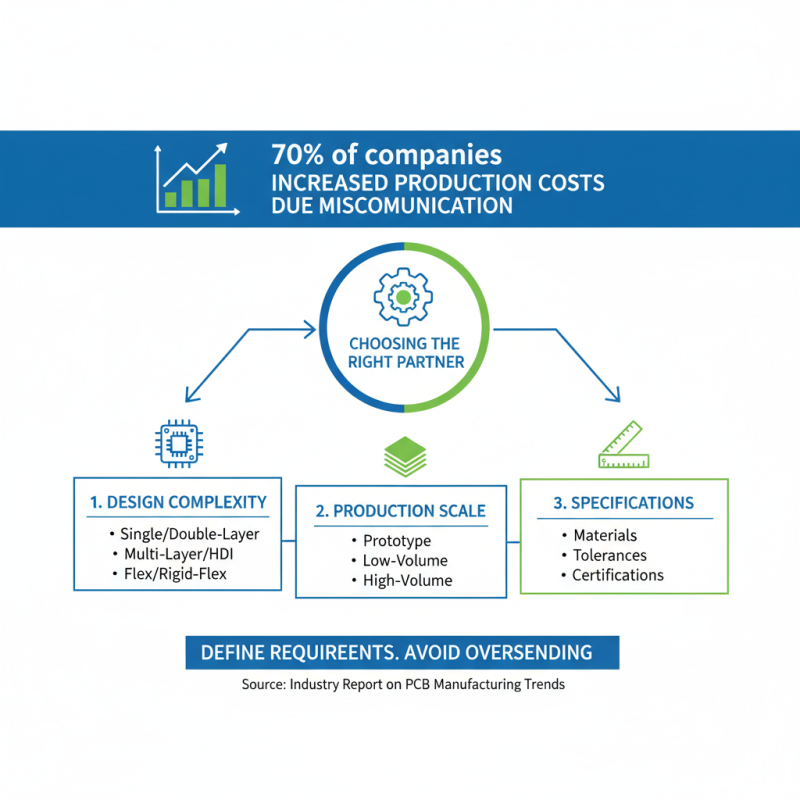
Choosing the right PCB manufacturing partner starts with a clear understanding of your needs. Each project comes with unique specifications, from design complexity to scale. According to a recent industry report, 70% of companies see a significant increase in production costs due to miscommunication in early stages. Defining your requirements is critical to avoid overspending.
Consider technical capabilities, such as layer count, material options, and tolerances. Some manufacturers excel in certain areas but may lack others. Data shows that companies often overlook their long-term scalability. This can lead to issues when trying to scale production up or down based on demand. Assess your current and future needs carefully, ensuring that potential partners can adapt.
Quality control is another major aspect. Reliable partners implement strict testing protocols to maintain high standards. A survey found that 65% of failed projects could have been avoided with better quality checks early on. Be proactive in discussing warranties and processes for addressing flaws. No manufacturer is flawless, but a partner committed to quality will minimize risks.
Evaluating Potential Circuit Board Manufacturers
Choosing a circuit board manufacturer requires careful evaluation. Start by assessing their experience in your specific industry. Companies with a track record of successful projects can often provide better insights. According to a recent report, over 70% of successful partnerships stem from shared industry knowledge.
Consider the manufacturing capabilities of each potential partner. Look for modern equipment and technologies. It is essential to ensure they can meet your production volume and timeline. A study found that 60% of production delays are linked to outdated machinery.
Tips: Visit their facility if possible. This gives you an idea of their operational efficiency and cleanliness. Don’t shy away from asking tough questions about their quality control practices.
Finally, check customer reviews and testimonials. These can provide valuable information about reliability. Trust is crucial, but it should be backed by more than just positivity. A well-rounded view often reveals areas for improvement in their service.
How to Choose the Best Circuit Board Manufacturing Partner? - Evaluating Potential Circuit Board Manufacturers
| Criteria |
Description |
Rating Scale (1-5) |
| Experience |
Years of experience in PCB manufacturing |
4 |
| Technology |
Types of technology used (e.g., SMT, through-hole) |
5 |
| Quality Certifications |
ISO, IPC certifications |
5 |
| Customer Reviews |
Feedback from previous clients |
4 |
| Lead Time |
Time taken from order to delivery |
3 |
| Cost |
Competitiveness of pricing |
4 |
| Support Services |
Availability of technical support and services |
5 |
Assessing Quality Standards and Certifications
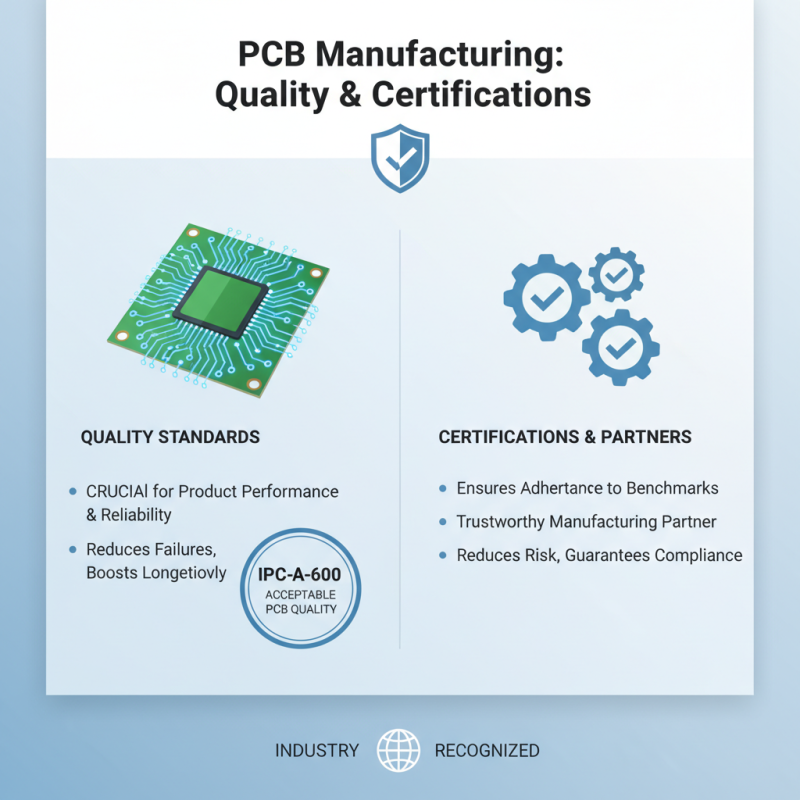
Choosing a circuit board manufacturing partner involves assessing their quality standards and certifications. Quality is crucial, as it directly impacts the performance and reliability of your product. The IPC-A-600 standard outlines acceptable quality for printed circuit boards and is widely respected in the industry. Adhering to this standard can improve product longevity and reduce failure rates.
Certifications like ISO 9001 and IPC-6012 demonstrate a manufacturer's commitment to quality management and consistent delivery. According to a report by the Institute of Printed Circuits, companies with ISO certifications show a 20% reduction in defect rates. This statistic highlights how stringent quality standards can enhance overall production efficiency.
However, it’s essential to approach these certifications critically. Not all manufacturers maintain their certifications rigorously. Regular audits and updates to standards are necessary to ensure ongoing compliance. Potential partners may initially appear credible due to certifications, but an in-depth review is vital. It is important to ask for proof of recent audits and customer testimonials, as these can shed light on their true quality practices.
Analyzing Cost vs. Value in PCB Production
Choosing the right partner for circuit board manufacturing is not just about the price. Analyzing
cost versus value is crucial. A lower initial price might lead to higher long-term costs. Quality issues could result in significant losses later.
Investing more upfront can save money over time.
Consider factors like manufacturing capabilities and quality certifications. A company with experience in your industry may offer
more tailored solutions. This knowledge can reduce errors. Cheaper options sometimes cut corners on materials or quality checks. This could affect functionality and reliability.
Even small defects can lead to failure in critical applications.
Communication is essential in this process. A partner who listens to your needs and concerns can greatly improve the outcome.
Evaluate their responsiveness and support. Clear communication can prevent misunderstandings.
Be wary of partners that seem too eager to reduce costs without proper explanations. Ask for references and case studies to assess their credibility.
Your choice affects your project's success significantly.
Reviewing Customer Support and Communication Practices
When selecting a circuit board manufacturing partner, effective customer support is crucial. Clear communication can make or break your project. It’s important to assess how responsive the manufacturer is to queries. Quick replies indicate their commitment to customer satisfaction. In contrast, slow responses can lead to frustration and misunderstandings.
Consider how they handle technical questions. Are their engineers available for consultations? Can they explain complex processes clearly? These points matter significantly. A knowledgeable team boosts your confidence in their capabilities. Additionally, look for flexibility in communication methods. Some prefer emails while others favor phone calls or video chats. A manufacturer that adapts to your preferred style shows dedication.
Lastly, reflect on their feedback process. Do they encourage client suggestions? Continuous improvement is essential in manufacturing. A partner that values your input fosters a collaborative atmosphere. While no manufacturer is perfect, the willingness to listen and adapt can lead to a successful partnership.