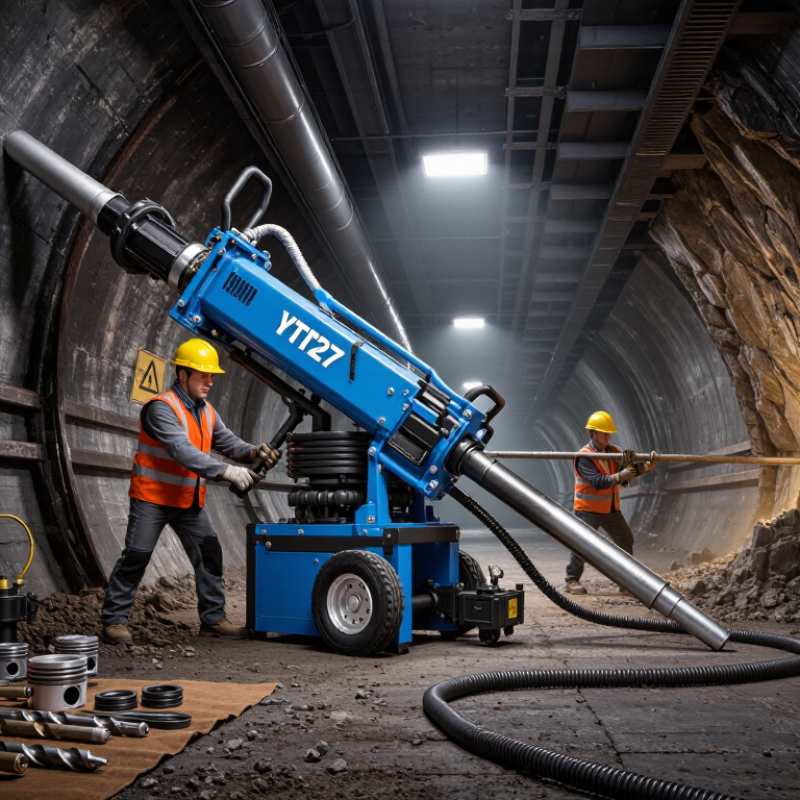
How to Choose a YT27 Air Leg Rock Drill for Mining?

Choosing a YT27 Air Leg Rock Drill for mining requires more than comparing prices and drilling specifications. The right model must match the rock formation, tunnel space, air supply, and daily workload. A drill that performs well in hard granite may feel inefficient in fractured stone. That difference matters underground.

Mining equipment specialist Zhang Wei explains, “A reliable rock drill should fit the working condition before it fits the budget.” This practical view highlights an often-missed point. The YT27 Air Leg Rock Drill depends on steady compressed air, proper lubrication, and a stable air leg. Check the available air pressure and pipe diameter before ordering. Weak airflow can reduce impact energy and slow drilling.

Weight also deserves attention. A lighter drill may improve operator movement, but excessive vibration can increase fatigue during long shifts. Examine the feed length, drilling angle, hole diameter, and compatibility with current drill rods. Spare-part availability is important, especially for valves, pistons, seals, and shank adapters. Delays underground are expensive.

The choice is not always neat. Product brochures rarely show muddy floors, limited ventilation, or awkward roof angles. I may be overly cautious, but a site trial can reveal problems that specifications hide. Ask suppliers for maintenance guidance, service records, and verified performance data. Avoid claims without evidence.

A suitable YT27 Air Leg Rock Drill should deliver stable drilling, manageable operation, and dependable service over time. The best decision balances productivity with safety, maintenance, and real working conditions. Small details matter.

How to Choose a YT27 Air Leg Rock Drill for Mining?

YT27 Air Leg Rock Drill: Purpose, Design, and Typical Mining Uses

Choosing a YT27 air leg rock drill starts with the work face, not the catalog. This pneumatic machine is designed for hard-rock drilling in underground headings, stopes, and small quarry faces. Compressed air drives the piston, while the air leg supports feed pressure and helps the operator hold a steady bore. Its typical purpose is drilling blast holes, drainage holes, or anchor holes where portable power matters. It is not a universal solution.

Its design combines a reciprocating piston, rotation mechanism, water-flushing passage, and adjustable air leg. The piston delivers impact energy to the drill steel. Rotation helps the bit cut a round hole. Water flushing suppresses dust and carries cuttings outward, but poor drainage can create slippery ground. Check air pressure, hose diameter, and leg reach against site conditions. A mismatch reduces impact and increases fatigue. Keep hands clear.

In practical mining, crews use this format for medium-depth holes in narrow working areas. It can suit roof bolting preparation, secondary breaking, and face drilling, depending on local procedures and rock hardness. Experienced operators listen for a sharp impact rhythm and watch for steel wandering. That judgment helps, though it cannot replace measurements. The tool may feel powerful while drilling unevenly. Inspect the shank, chuck, lubricator, and water line before each shift. Record penetration rate and air consumption. These records often reveal whether the drill, bit, or ground is the real problem.

Key Specifications to Match With Your Drilling Requirements

How to Choose a YT27 Air Leg Rock Drill for Mining?

Key Specifications to Match With Your Drilling Requirements

Choosing an air leg rock drill starts with the rock, hole size, and working position. A typical YT27-style drill suits medium-hard rock and underground development work. Check the required hole diameter before reviewing power. Common drilling ranges sit near 34–45 millimeters, but actual results depend on bit condition and rock structure. Small details matter.

Match the drill’s working pressure with your compressor output. Many units operate around 0.63 MPa, while air consumption may exceed 60 liters per second. Measure pressure at the drill, not only at the compressor. Long hoses, narrow fittings, and leaks can reduce impact strength. That mistake is common. It is also expensive.

Review impact frequency, rotation speed, stroke length, and drilling depth together. A high impact rate may improve penetration, but it can increase vibration and tool wear. Confirm the drill’s shank size, leg extension, and total weight for your operators. A heavier unit may feel stable, yet it becomes tiring during angled drilling. In field inspections, I also check the water-feed system, silencer, lubrication method, and spare-part access. Catalog specifications are useful, but they rarely reflect dusty headings, wet rock, or inconsistent air supply. Test the drill under realistic conditions when possible. Then compare productivity, maintenance time, and operator control rather than power alone.

How to Evaluate Rock Conditions and Required Drilling Performance

How to Choose a YT27 Air Leg Rock Drill for Mining?

Choosing a YT27 air leg rock drill starts with the rock, not the catalog. Examine hardness, abrasiveness, fractures, moisture, and bedding direction at the working face. A hard, abrasive formation can quickly wear drill bits and rods. Fractured rock may cause hole deviation or sudden jamming. These details affect drilling speed, tool life, and operator control.

Measure the required hole diameter and depth before comparing models. Check whether the available air pressure and flow match the drill’s operating requirements. Weak airflow can reduce impact energy and create slow, uneven drilling. The air leg should also provide stable feed force on sloped or rough ground. Watch the machine during a trial shift. Excessive vibration, overheating, or frequent rod changes suggest a poor match. My field experience is that productivity estimates are often too optimistic. Real rock rarely behaves like a test sample.

Tips: Record drilling time, bit wear, air pressure, and hole deviation for several shifts. Compare results across different rock zones. Keep the drill aligned with the planned hole direction. Inspect hoses, joints, and lubrication points before each use. Ask operators for feedback; they notice balance problems first. If moisture is present, improve drainage and check for blocked air passages. A short field test may reveal more than a detailed specification sheet.

How to Choose a YT27 Air Leg Rock Drill for Mining?

Compare typical rock conditions with indicative drilling requirements. Unconfined compressive strength (UCS) and rock quality designation (RQD) help estimate drilling difficulty, while the target penetration rate indicates the required drilling performance.

Softer rock generally permits higher penetration rates, while hard or highly fractured formations require better bit selection, stable feed pressure, effective flushing, and careful control of drilling speed. The values shown are representative field-planning ranges rather than equipment specifications.

Air Supply, Air Leg, and Accessory Compatibility Checks

How to Choose a YT27 Air Leg Rock Drill for Mining?

Air Supply, Air Leg, and Accessory Compatibility Checks

Before selecting a YT27 air leg rock drill, verify the site’s actual air supply. Many units require about 0.63 MPa working pressure, but the manual remains the controlling reference. Measure pressure at the drill, not only at the compressor outlet. Long hoses, sharp bends, and undersized couplings can reduce impact energy. The U.S. Department of Energy reports that compressed air may consume 10–15% of industrial electricity. A leaking line can therefore waste power while weakening drilling performance. I have seen pressure gauges look normal until the trigger opened.

Check the air leg’s extension range, mounting thread, feed force, and retraction speed. The leg must support the drill without twisting on uneven rock. Confirm the hose diameter and coupling standard before delivery. Compatibility is often missed here. A small fitting can become a serious bottleneck. Water flushing also needs attention. Match the water pressure, inlet thread, valve position, and drainage method. Dirty water can damage valves and restrict the flushing passage.

Accessories should fit the planned hole diameter, depth, and rock hardness. Confirm shank dimensions, drill rods, bits, lubricator capacity, and spare seal availability. Noise protection is not optional. NIOSH recommends limiting occupational exposure to 85 dBA over eight hours. Measure noise during real drilling, because empty-air tests can mislead. One overlooked issue remains vibration. Inspectors should record hand-arm vibration, hose movement, and operator posture during a complete drilling cycle.

Safety, Maintenance, and Supplier Selection Considerations

How to Choose a YT27 Air Leg Rock Drill for Mining?

Safety, Maintenance, and Supplier Selection Considerations

Choosing a YT27 air leg rock drill requires more than checking drilling speed. In underground work, I would inspect the air leg, throttle, hose, and couplings before reviewing output. Safety comes first. The drill should feel stable against the rock, while controls must respond without sticking. Confirm that guards, shut-off functions, and operating instructions suit the working environment. Ask for test records and traceable quality documents. Do not guess.

Maintenance directly affects reliability. Use clean, dry compressed air at the specified pressure, and check lubrication before each shift. Inspect the drill steel, chuck, seals, and air lines for wear. Small leaks can reduce impact power and increase compressor demand. Keep a simple service log with dates, replaced parts, and unusual vibration. My practical concern is often overlooked: workers may accept gradual performance loss as normal. It is not always normal.

Tips: Compare suppliers by technical support, spare-part availability, training, and response time, not only price. Request a clear parts list and maintenance schedule. Ask whether replacement components are consistently available. A responsible supplier should explain limitations honestly and provide inspection guidance. Check packaging and documentation when the equipment arrives. If the first demonstration feels rushed, pause the purchase. A reliable supplier welcomes detailed questions and supports safe operation after delivery.

How to Choose a YT27 Air Leg Rock Drill for Mining? - Safety, Maintenance, and Supplier Selection Considerations

Category Evaluation Dimension Typical YT27-Class Reference or Recommended Requirement Why It Matters What to Verify Before Purchase
Technical Fit Machine type Pneumatic handheld rock drill with an integrated air leg, generally used for drilling downward, horizontal, or inclined blast holes. Confirms suitability for underground development, tunneling, and small-to-medium-diameter blasting work. Match the drill to the mine layout, drilling direction, face access, and available compressed-air system.
Machine weight Approximately 25–30 kg for the drill assembly, excluding hoses, drill steel, and accessories. Affects operator fatigue, positioning time, transport, and productivity in confined headings. Request the net weight and the operating weight with air leg, lubricator, hose, and drill steel installed.
Drilling diameter Typically about 34–42 mm, depending on rock hardness, bit design, and drill-rod selection. The hole diameter determines explosive loading, fragmentation, stemming requirements, and drilling speed. Confirm the recommended bit range, rod diameter, shank specification, and intended rock class.
Shank and drill-steel compatibility Common configurations use a 22 mm shank diameter with approximately 108 mm shank length; exact dimensions must be confirmed. Incorrect shank dimensions can cause poor impact transfer, premature wear, vibration, or unsafe tool ejection. Check technical drawings and measure the existing rods, bits, chuck, and retaining components.
Impact frequency Commonly around 35–40 Hz at the rated operating condition. Higher frequency does not automatically mean higher productivity; rock type, feed pressure, bit sharpness, and air quality also control drilling performance. Ask for test data at the stated air pressure and compare it with the mine’s actual operating conditions.
Air consumption and pressure Often designed around approximately 0.63 MPa operating pressure, with air consumption commonly about 70–85 L/s, depending on configuration. Insufficient pressure or flow reduces impact energy, increases drilling time, and may cause unstable operation. Verify free-air delivery from the compressor, pressure losses through hoses, hose internal diameter, and simultaneous equipment demand.
Safety Water flushing and dust control Prefer wet drilling with a functional water-feed system; use dust suppression, drainage, and suitable respiratory protection where required. Reduces respirable crystalline silica exposure and improves visibility at the work face. Inspect water seals, passages, valves, hose connections, and the site’s water pressure and quality.
Noise and vibration exposure Use the supplier’s measured noise and vibration data; provide hearing protection, anti-vibration gloves where appropriate, job rotation, and exposure-time controls. Pneumatic rock drilling can create substantial hand-arm vibration and high noise levels. Request test methods, declared values, and operating limits; compare them with local occupational exposure regulations.
Air-line and hose safety Use correctly rated hoses, locking couplings, whip checks or safety cables, shut-off valves, and fittings secured against accidental separation. A pressurized hose failure can cause hose whip, impact injuries, and uncontrolled equipment movement. Check hose pressure rating, coupling retention, inspection intervals, and emergency isolation procedures.
Operator controls and ergonomics Controls should be clearly marked, easy to reach, and capable of shutting down air and water quickly; handles and air-leg controls should permit stable two-hand operation. Good ergonomics reduce loss of control, awkward postures, and unintended start-up. Conduct a hands-on trial with the intended PPE and verify the emergency shut-off procedure.
Inspection before use Inspect handles, trigger, air leg, chuck, retainer, hoses, fittings, water system, lubrication system, and drill steel before every shift. Early detection prevents failures caused by loose parts, worn retainers, blocked passages, or damaged hoses. Use a documented pre-start checklist and remove defective equipment from service.
Maintenance Air-line lubrication Use the lubricant specified for the pneumatic motor and maintain a correctly adjusted in-line oiler; never operate with a dry air motor. Correct lubrication reduces piston, cylinder, valve, and rotation-component wear. Confirm oil type, oiler capacity, adjustment method, and daily lubrication requirements in the service manual.
Water and air cleanliness Use clean compressed air, drain moisture from the system, and prevent abrasive particles from entering air, water, or lubrication passages. Contamination accelerates valve sticking, seal damage, corrosion, and loss of impact performance. Check filtration, separators, water quality, hose cleanliness, and routine drain procedures.
Wear parts and serviceability Key wear parts include piston, cylinder, valve components, seals, chuck, retainer, rifle bar, rotation parts, and air-leg seals. Availability and ease of replacement directly affect downtime and maintenance cost. Request a parts list, exploded drawing, recommended replacement intervals, and special-tool requirements.
Daily and periodic maintenance Daily: clean, lubricate, inspect, and drain. Periodically: check fasteners, seals, rotation mechanism, impact components, air leg, and water passages. A scheduled maintenance plan maintains drilling performance and reduces unplanned failures. Obtain a maintenance schedule based on operating hours, drilling conditions, and contamination level.
Storage and transport Clean and drain the drill, protect air and water ports, prevent corrosion, and secure the machine during transport. Moisture and impact damage during storage can shorten the service life of internal components. Verify storage instructions, protective plugs, corrosion-control recommendations, and lifting or carrying requirements.
Supplier Selection Technical documentation Complete manual, dimensional drawing, rated operating conditions, parts breakdown, lubrication instructions, and safety guidance. Clear documentation supports safe commissioning, maintenance, and operator training. Reject incomplete quotations that provide only headline performance figures without test conditions.
Quality and conformity evidence Look for documented quality-control procedures, material traceability, pressure testing, functional testing, and conformity documents applicable to the destination. Evidence of controlled manufacturing reduces the risk of inconsistent dimensions and premature failure. Request sample inspection records, test reports, and applicable certificates rather than relying only on marketing statements.
Spare-parts availability Critical service parts should be available with clear part numbers, interchangeability information, and stated lead times. A low purchase price can be outweighed by long downtime or unavailable wear parts. Obtain a recommended two- to six-month spare-parts list based on expected drilling hours.
Warranty and after-sales support Prefer written warranty terms covering duration, exclusions, claim evidence, response time, and technical support channels. Defined support reduces disputes and helps restore production after equipment problems. Confirm who handles troubleshooting, replacement decisions, training, and field-service escalation.
Factory acceptance and field trial Use a documented acceptance test covering air pressure, air consumption, rotation, impact operation, water flushing, leakage, controls, and noise or vibration observations. A controlled trial confirms that the drill performs with the mine’s compressor, hoses, rods, bits, and rock conditions. Agree on measurable acceptance criteria before placing the order.
Total cost of ownership Compare purchase price, air consumption, drill-steel and bit wear, lubricant use, spare parts, labor, downtime, training, and transport. Operating cost and availability usually have a greater effect on mine productivity than initial price alone. Calculate cost per drilled meter using the same rock type, hole diameter, shift length, and maintenance assumptions.
Important: YT27-class specifications can vary according to configuration, manufacturing tolerances, drill-steel dimensions, and test conditions. Confirm the final values from the supplier’s current technical drawing, test report, and operating manual before purchase.

Article Source:

Wordpress Social Share Plugin powered by Ultimatelysocial
Facebook
X (Twitter)
YouTube
LinkedIn
Share

Purchase Product Request

Request Pricing