China Top 10 Meat Processing Equipment Manufacturers?

China’s meat-processing sector is shaped by scale, automation, and demanding production schedules. FAO’s Food Outlook 2023 estimated global meat production at about 364 million tonnes that year. That volume helps explain the need for dependable cutting, mixing, filling, chilling, and packaging lines. But machinery alone does not guarantee consistent output.

Grand View Research estimated the global Meat Processing Equipment market at USD 11.4 billion in 2022, with projected growth through 2030. Such figures offer useful context, not a direct measure of Chinese manufacturers’ quality. Market definitions vary, and forecasts can change. A market estimate is not a factory audit. That distinction matters when comparing suppliers by hygiene-focused design, throughput, service access, spare-parts support, and performance under real operating conditions.

Animal handling is also part of responsible plant design. Temple Grandin, a professor and livestock-handling specialist, has said, “I think using animals for food is an ethical thing to do, but we have to do it right.” Her words are not a machine specification. Still, they remind buyers to examine how equipment fits into humane, orderly workflows. This guide introduces ten Chinese manufacturers and the evidence buyers should check, including product range, engineering capability, certifications, and after-sales support. Company rankings can be imperfect. Verify claims directly, request relevant references, and assess equipment against your actual line requirements.
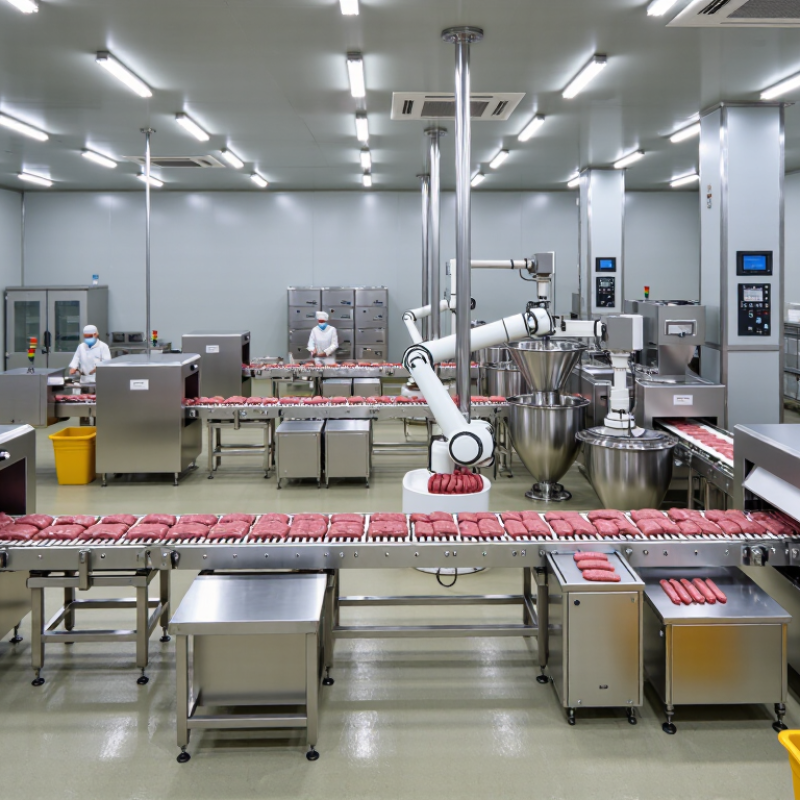
China Top 10 Meat Processing Equipment Manufacturers?

What Meat Processing Equipment Includes and Where It Is Used

Meat processing equipment includes the machines and tools used to prepare meat for sale or further cooking. Common examples include cutting tables, band saws, grinders, mixers, slicers, portioning machines, and vacuum packers. Each serves a different task. A grinder reduces trimmed meat to a consistent texture, while a mixer distributes seasonings evenly through a batch.

These machines appear in butcher shops, food-processing plants, restaurant kitchens, and institutional catering facilities. Small shops may rely on a slicer, a grinder, and sturdy stainless-steel work surfaces. Larger facilities often connect several machines into a production line, moving products from cutting to mixing, forming, and packaging. The right setup depends on product type, daily volume, available floor space, and cleaning needs. A line may look efficient on paper, yet awkward access for washing can slow work and leave hard-to-check areas.

Tips: Match machine capacity to realistic daily demand, not peak estimates alone. Check that food-contact surfaces are easy to clean, and confirm guards and emergency stops are practical for operators. Ask staff to review the layout before installation. Small workflow details matter.


Safe Minimum Internal Cooking Temperatures for Meat

Meat processing equipment includes grinders, mixers, portioning machines, smokehouses, ovens, and chillers. Cooking equipment is used in the heat-processing stage; verify product temperature at the center with a food thermometer. USDA guidance specifies a 3-minute rest for whole cuts of beef, pork, and lamb.

How China’s Meat Processing Equipment Industry Is Structured

How China’s Meat Processing Equipment Industry Is Structured

China’s meat-processing equipment industry is best understood by function, not by a simple ranking. The National Bureau of Statistics reported 97.53 million tonnes of meat production in 2023. That scale supports demand across slaughtering, cutting, portioning, conveying, and packaging. Yet production volume alone does not reveal how many facilities need upgrades or what equipment they require.

Manufacturers generally fall into three groups: complete-line suppliers, specialists in individual machines, and engineering firms that integrate equipment into existing plants. Complete-line suppliers coordinate workflows, while specialists may focus on cutters, mixers, or chilling systems. Integrators handle layout, installation, and commissioning. The boundaries overlap. A supplier’s catalog may look comprehensive, but service access and compatibility matter on the factory floor. A narrow passage can slow trolley movement; poor line balancing can leave workers waiting beside a full conveyor. These details are easy to overlook.

Tips: Compare throughput using the same product and operating conditions. Ask about cleaning time, spare-part availability, and operator training. The 2023 production figure is useful context, not a direct measure of equipment demand. A cleaner industry map would be convenient, but probably misleading.

Criteria for Comparing Chinese Meat Equipment Manufacturers

When comparing Chinese meat processing equipment manufacturers, look beyond advertised capacity. Ask how throughput was measured: with which product, cut size, and shift length? A line that handles 1,000 kilograms per hour with uniform frozen blocks may perform differently with mixed fresh cuts. Real operating conditions matter.

Review food-contact materials, weld quality, drainage, and access for cleaning. Request drawings and a live demonstration, if available. Check whether equipment settings can be adjusted for different products, and ask for documented test results. Numbers matter. Also compare delivery scope, installation support, spare-part availability, and response times. A polished brochure is useful, but it cannot prove reliable service.

Tips: Send each supplier the same sample-product details and production target. Ask for a written quotation that separates equipment, installation, training, and optional features. Speak with a comparable user when possible. Keep notes; small differences in scope can distort a price comparison. A neat specification still leaves questions, and buyers sometimes overlook the cost of downtime.

Profiles of Ten Leading Chinese Meat Processing Equipment Manufacturers

China’s meat-processing equipment sector serves plants handling pork, poultry, beef, and mixed products. FAO’s Statistical Yearbook 2024 reports global meat production of roughly 361 million tonnes in 2022. That scale helps explain demand for dependable cutting, grinding, mixing, and packaging lines. A useful profile of ten Chinese manufacturers should compare practical capabilities, not just catalog breadth.

Look closely at stainless-steel fabrication, line capacity, cleaning access, and spare-parts support. Ask how a grinder performs with chilled meat, or whether a slicer holds thickness across a full shift. Small details matter. The OECD-FAO Agricultural Outlook 2024–2033 projects continued growth in global meat production, but that does not guarantee every factory will need the same equipment. Some suppliers specialize in compact machines; others integrate complete lines. Buyers should request test data, service terms, and references from comparable facilities. A brochure is not proof. Published capacity can also differ from real operating output, a point worth checking before investment.

How to Evaluate Equipment Range, Compliance, and After-Sales Support

China Top 10 Meat Processing Equipment Manufacturers?

Comparing suppliers means checking the full process, not just the headline machine. Map your needs from grinding and mixing to filling, chilling, and cleaning. Confirm each machine’s rated capacity, product-contact materials, washdown design, and fit with existing line controls. WHO estimates that unsafe food causes 600 million illnesses and 420,000 deaths worldwide each year (WHO, Estimates of the Global Burden of Foodborne Diseases, 2015). Hygiene features and documented sanitation procedures deserve close review. A polished brochure is not proof.

Compliance depends on the destination market and your product. Request current certificates, test reports, material declarations, and a clear explanation of which standards each document covers. FAO estimated that 14% of food is lost between harvest and retail (The State of Food and Agriculture, 2019); this is not a meat-equipment measure, but it highlights why reliability and process control matter. Compare service response times, spare-part lead times, commissioning, operator training, and warranty exclusions. Vendors may define capacity differently. The comparison can get messy.

Tips: Ask for a factory acceptance test plan, a sample maintenance schedule, and two customer references with similar production lines. Check the details, not promises.

China Top 10 Meat Processing Equipment Manufacturers? - How to Evaluate Equipment Range, Compliance, and After-Sales Support

This is an equipment-focused evaluation matrix, not a verified ranking of manufacturers. Compare suppliers using documented specifications, applicable regulatory requirements, and references for the intended application.

Equipment category Typical range to evaluate Key specification checks Compliance evidence to request After-sales checks
Meat preparation and cutting Saws, cutters, dicers, and portioning equipment Product dimensions, throughput basis, blade-change procedure, guarding, and cleanability Risk assessment and machine documentation; assess hygiene design against applicable requirements Blade and wear-part availability, maintenance instructions, and operator training
Grinding and mincing Grinders, mincers, and associated feed systems Specified output conditions, particle-size options, product temperature considerations, and disassembly for cleaning Food-contact material documentation and electrical and machinery safety documentation for the destination market Spare plates, knives, seals, and a defined service contact route
Mixing and blending Meat mixers, paddle mixers, and vacuum mixers Batch size, mixing cycle, loading and discharge method, vacuum specification where applicable, and cleaning access Hygienic design information, operating instructions, and applicable electrical safety records Preventive-maintenance schedule, seal and bearing supply, and troubleshooting support
Emulsifying and fine reduction Emulsifiers and fine-grinding systems Intended product, target texture, feed conditions, cleaning procedure, and performance-test method Documented materials, safety measures, and validation information relevant to the proposed process Access to wear components, service guidance, and support for commissioning and process setup
Sausage filling and linking Fillers, portioners, and linking equipment Casing compatibility, portion-control method, changeover time, and integration requirements Machine risk documentation and food-contact documentation for product-contact parts Training for setup and changeover, plus availability of seals and filling components
Forming and portioning Patty formers, portioners, and molding systems Product shape and size range, repeatability method, change parts, and cleaning access Food-contact material declarations and machine safety documentation for the relevant market Supply of molds and wear parts, setup guidance, and documented response arrangements
Marinating and tumbling Tumblers, marinators, and brine-injection systems Batch capacity, process controls, cleaning method, and product-specific trial results Hygiene and food-contact documentation; verify controls against the buyer’s food-safety plan Commissioning support, maintenance instructions, and access to pumps, seals, and other service parts
Thermal processing Smokehouses, cookers, and chilling systems Usable load, temperature and humidity controls, airflow, process records, and installation utilities Control-system documentation and evidence that process validation is appropriate for the product and jurisdiction Controls support, calibration guidance, installation assistance, and availability of critical components
Slicing and packaging preparation Slicers, conveyors, and product-loading systems Product and slice specifications, line speed basis, guarding, and line-interface requirements Risk assessment, operating instructions, and applicable electrical and machinery compliance records Blade servicing, software or controls support where relevant, and operator training
Integrated processing lines Connected equipment, conveyors, controls, and line-level automation Documented line capacity, product flow, interface responsibilities, utilities, and acceptance-test criteria System-level risk review and clearly assigned compliance responsibilities for integrated machinery Written commissioning scope, warranty terms, remote-support conditions, spare-parts plan, and escalation process

Reference points for due diligence include ISO 12100 for machinery risk assessment, IEC 60204-1 for electrical equipment of machines, Codex CXC 1-1969 for general food hygiene principles, and—where applicable—EU food-contact material Regulations (EC) No 1935/2004 and (EC) No 2023/2006. Confirm the current legal requirements for the destination market and the specific machine; a standard or certificate alone does not establish compliance with every applicable law.

Wordpress Social Share Plugin powered by Ultimatelysocial
Facebook
X (Twitter)
YouTube
LinkedIn
Share

Purchase Product Request

Request Pricing