China’s oil spray gun industry serves automotive repair, machinery maintenance, agriculture, and industrial coating applications. Demand is growing with wider investment in factory automation and surface protection. Grand View Research’s industrial coatings analysis identifies manufacturing, transportation, and infrastructure as major coating-demand sectors. Those sectors create steady opportunities for reliable Oil Spray Gun suppliers.
Market reports offer useful direction, but they do not replace factory verification. Mordor Intelligence’s spray equipment research highlights efficiency, material compatibility, and application control as important purchasing factors. In practice, a buyer should inspect nozzle machining, trigger response, cup sealing, and spray-pattern consistency. A clean fan pattern matters more than attractive catalog images. Ask for test videos, technical drawings, and batch inspection records.
This guide evaluates China’s leading manufacturers through practical sourcing criteria. These include production experience, export capability, quality systems, customization support, and after-sales responsiveness. ISO 9001 registration can support confidence, although it does not guarantee every shipment is perfect. Some suppliers provide impressive samples but weaker follow-up service. That difference deserves attention. Buyers should also compare air consumption, fluid delivery, working pressure, replacement-part availability, and minimum order quantities. Compliance with relevant regional safety and chemical-handling requirements remains essential. No supplier ranking is permanent. Product lines change, factories improve, and data can become outdated. Therefore, this guide combines published industry research with observable manufacturing evidence, helping distributors and professional users make a more defensible decision.
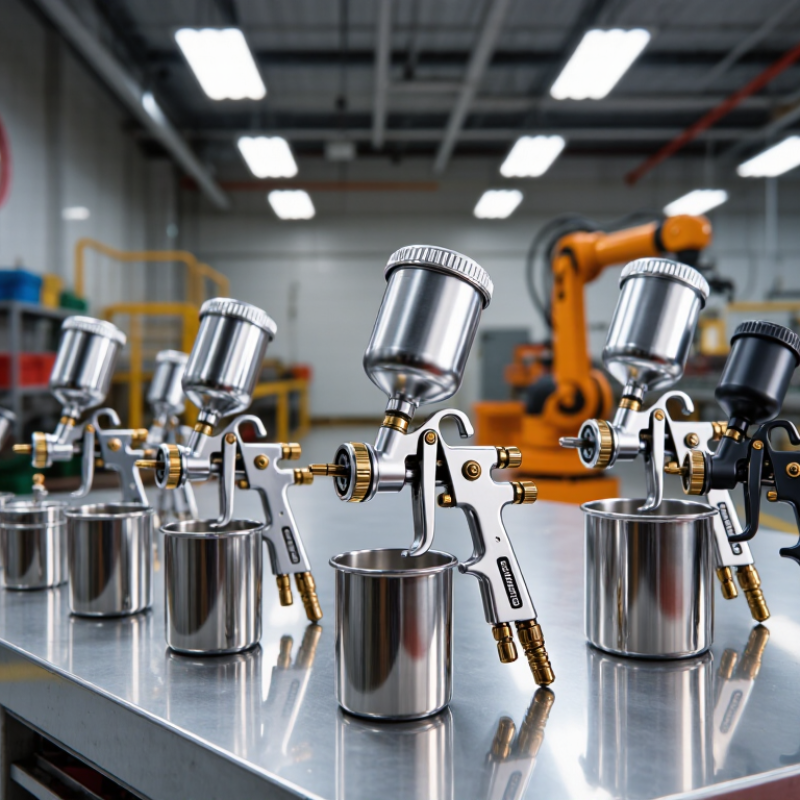
An oil spray gun is a handheld tool that applies oil as a controlled mist or narrow stream. It uses compressed air, mechanical pressure, or both to move liquid through a small nozzle. The nozzle breaks the oil into droplets. These droplets create an even coating on metal, machinery, or moving parts.
Inside the gun, a trigger opens the fluid path and controls airflow. Air pressure carries oil toward the nozzle, where the liquid becomes atomized. A wider spray pattern covers large surfaces, while a narrow pattern reaches joints and recessed areas.
Viscosity matters. Thick oil may need a larger nozzle or higher pressure. Excessive pressure can create overspray and uneven coverage. Practical testing shows that small adjustments often change the finish. The process is not perfectly forgiving.
For buyers comparing oil spray gun manufacturers, check nozzle materials, seal compatibility, pressure ranges, and adjustment accuracy. Clear technical data is more useful than attractive claims. A dependable design should resist leaks after repeated trigger use and allow simple cleaning. Test the gun with the intended oil before production work. A setting that works on flat steel may waste oil on a curved surface. This limitation is easy to overlook. Good ventilation, eye protection, and careful storage also support reliable operation.

China’s oil spray gun manufacturers often combine high-volume production with flexible engineering support. Many factories use CNC machining for nozzles, needles, and fluid passages. This helps maintain stable spray patterns during repeated use. Stainless steel, aluminum alloy, and reinforced polymers are common material choices. Each option affects weight, corrosion resistance, and service life. Small details matter.
A reliable manufacturer should provide clear data on working pressure, flow rate, nozzle size, and compatible fluids. Practical testing should include leakage checks, trigger response, spray uniformity, and surface coverage. Some facilities use pressure benches and aging tests before shipment. Factory audits can also verify calibration records, worker training, and batch traceability. Documents matter, but physical samples reveal more.
Ergonomic handles reduce hand fatigue during long spraying sessions. Adjustable controls help users manage thin coatings and heavier oils. Custom colors or fittings may be available, but customization can increase lead time. A low quoted price looks attractive. It may hide weaker seals or inconsistent machining. Buyers should compare samples under identical conditions and inspect replacement-part access. One overlooked issue is cleaning difficulty; narrow passages can retain residue and shorten operating life. Even experienced purchasing teams sometimes focus too heavily on price. Supplier communication should remain specific, documented, and easy to verify.
Evaluate performance before comparing prices. Request a sample with your actual oil, not a standard test liquid. Record spray width, flow rate, operating pressure, and leakage after continuous use. A practical trial should include cold starts, nozzle cleaning, and at least several hours of repeated spraying. Ask for viscosity limits and material compatibility. Stainless steel, solvent-resistant seals, and stable threads matter more than polished packaging.
Check the factory’s quality system and production evidence. The ISO Survey 2023 recorded more than 1.26 million ISO 9001 certificates worldwide, but certification alone proves little. Request the certificate number, audit scope, calibration records, and recent inspection reports. Verify whether testing covers every batch or only pre-shipment samples. Ask for an ISO 12100-based risk assessment, pressure-test records, and traceable component codes. Details expose weak control.
Do not ignore delivery reliability. Compare sample lead time, defect handling, spare-nozzle availability, and packaging drop-test results. A supplier should explain its incoming inspection rate and corrective-action process with actual records. I would also verify HS 8424 trade data through UN Comtrade before judging export experience. My checklist is not perfect. Factory visits can still miss hidden subcontracting. Use a third-party inspection for the first bulk order, and keep acceptance limits in the purchase contract.
Choosing among China’s best oil spray gun manufacturers requires more than comparing prices or polished catalogs. Manufacturing standards should cover material selection, machining accuracy, sealing design, and safe pressure control. In factory audits, I check whether stainless steel parts resist corrosion and whether trigger movement remains smooth after repeated testing. Small defects often appear here.
Quality control should follow a documented process. Incoming materials need inspection, while finished spray guns require leak, spray-pattern, pressure, and durability tests. Random sampling is useful, but it cannot replace consistent process monitoring. A manufacturer may hold ISO 9001 certification, yet certification alone does not prove every batch is reliable. Test records, calibration dates, and traceability matter more than attractive paperwork. This is where buyers sometimes overlook practical evidence.
Tips: Request recent inspection reports and ask how failed units are handled. Check whether pressure gauges and test equipment are regularly calibrated. Confirm the factory’s certifications directly with the issuing organization when possible. Ask for sample testing under your intended oil viscosity and working pressure. Do not rely only on a demonstration video. It may show the best unit. A careful supplier should explain limits clearly, even when the answer is inconvenient. I have found that transparent manufacturers sometimes admit weaknesses, but that honesty can reveal stronger engineering control.