China Best Expandable House Manufacturer for Global Buyers?

Choosing the China best Expandable House manufacturer requires more than comparing factory prices. Global buyers need dependable engineering, transparent communication, and proven production experience. An attractive quotation means little if the unit arrives with weak hinges, poor insulation, or unclear installation guidance. Real decisions begin with evidence.

A reliable manufacturer should explain its steel frame, folding mechanism, wall panels, roof structure, and utility connections clearly. Buyers should request factory photographs, production records, material specifications, and independent inspection options. They should also examine packing methods, shipping dimensions, delivery schedules, and after-sales support. Small details matter. A damaged corner can delay an entire project.

Compliance must remain central. The supplier should help buyers review local requirements for fire safety, electrical systems, wind loads, thermal performance, and foundation design. Certifications are useful, but certificates alone cannot prove long-term quality. References from completed projects offer stronger insight. So do video inspections and sample-unit evaluations.

No manufacturer is perfect. This guide may not identify one universal winner, because project needs differ by climate, budget, transport route, and intended use. Some factories offer faster customization, while others provide stronger technical documentation. Careful buyers should compare these differences before signing contracts. They should confirm responsibilities in writing. A trustworthy Expandable House partner welcomes detailed questions, admits limitations, and improves solutions through measurable feedback. That is where experience becomes confidence.

China Best Expandable House Manufacturer for Global Buyers?

What Defines an Expandable House Manufacturer in China?

A reliable expandable house manufacturer in China is defined by more than a low quotation.

It combines structural engineering, controlled production, and clear communication for overseas projects. The factory should explain its steel grade, wall insulation, electrical layout, waterproofing method, and folding mechanism.

Technical drawings should match the delivered unit, not only the sales presentation. Experienced manufacturers provide material records, inspection photos, load calculations, and installation guidance. They also ask about climate, transport limits, local permits, and intended occupancy.

That questioning shows professional judgment. It reduces expensive surprises. The manufacturer should also identify applicable Chinese and destination-country standards.

Quality is visible in small details.

Doors should close evenly after expansion.

Floor joints should remain level.

Sealant lines must be continuous around windows and roof edges.

A dependable supplier uses incoming-material checks, weld inspections, dimensional testing, and final water testing. Independent inspection can add useful confidence.

Documentation matters too: test reports, packing lists, manuals, and warranty terms should be understandable.

Yet no manufacturer is perfect. A rushed customization may expose weak coordination between design and production. Honest suppliers admit such risks and record corrective actions.

That is more credible than promising zero problems.

Tips:

Request a sample wall section or factory video before ordering.

Compare drawings with the quotation line by line.

Ask who handles damaged components during shipping.

Confirm electrical specifications with a qualified local professional.

Keep written approval records for every change.

One overlooked socket can delay installation.

How Chinese Expandable House Manufacturers Design and Build Homes

China Best Expandable House Manufacturer for Global Buyers?

How Chinese Expandable House Manufacturers Design and Build Homes

Chinese expandable house manufacturers usually begin with climate, transport, and occupancy requirements. They review local wind loads, insulation needs, rainfall, and available installation space. Experienced engineering teams then create a compact layout that expands into bedrooms, kitchens, or work areas.

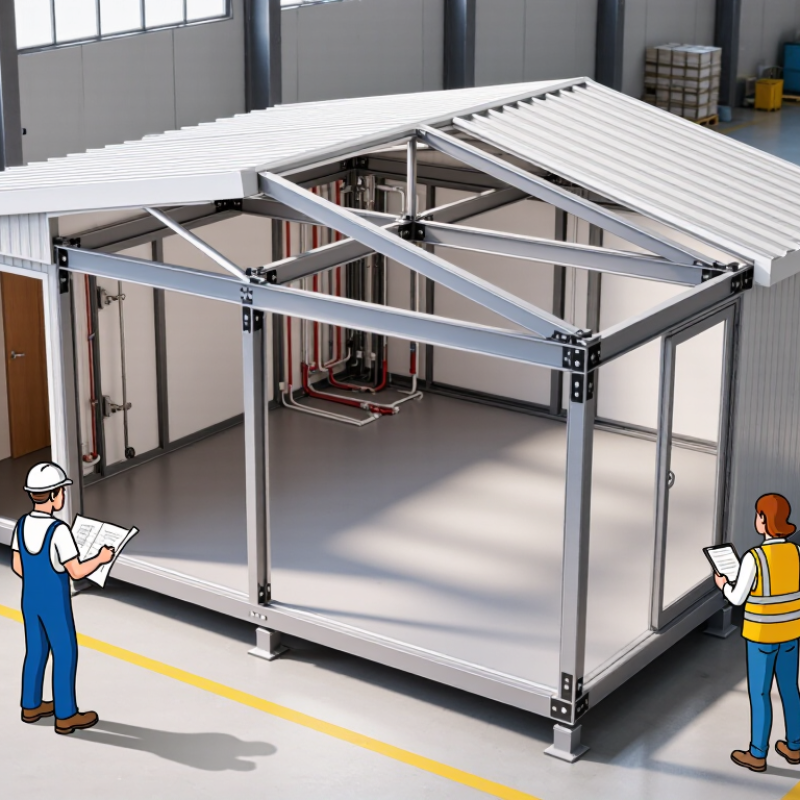
The structure often uses a reinforced steel frame, insulated wall panels, sealed joints, and durable floor systems. Designers test folding hinges, lifting points, electrical routes, and plumbing connections before production. Factory workers assemble key sections indoors, where measurements and welding quality receive closer control. Each unit should pass dimensional checks, waterproofing inspections, and functional tests before shipment. It looks simple. It is not.

In practice, projects do not always run perfectly. A small transport limit can force a major layout change. Some buyers also underestimate foundation preparation and local utility connections. Reliable manufacturers document materials, provide installation drawings, and communicate realistic delivery conditions. Independent inspections can improve confidence, especially when buyers cannot visit the factory.

Tips: Ask for structural drawings, material specifications, loading information, and inspection records. Confirm the folded dimensions before arranging transport. Request sample details for windows, seals, floors, and electrical components. Discuss local building approval early. A beautiful unit may still fail if the site preparation is weak.

How Chinese Expandable House Manufacturers Design and Build Homes

Expandable homes are commonly engineered around a transportable 20-foot module. The reference calculation below uses a standard external length of 6.06 m, a folded width of 2.44 m, and side expansion sections of approximately 1.22 m on each side.

Reference geometry: 6.06 m × 2.44 m folded footprint; one-side expansion uses an estimated 3.66 m width; two-side expansion uses an estimated 4.88 m width. Actual dimensions vary by design and local building requirements.

Key Materials, Technologies, and Quality Standards

China Best Expandable House Manufacturer for Global Buyers?

Choosing an expandable house manufacturer requires more than checking price and delivery time. The core structure should use galvanized steel with verified coating thickness and accurate welded joints. Insulated sandwich panels need stable cores, sealed edges, and tested fire performance. Mineral wool may improve fire resistance, while polyurethane can offer stronger thermal insulation. Each option has trade-offs.

Practical quality checks matter. Inspect folding hinges, hydraulic parts, locks, roof joints, and drainage channels before shipment. A reliable factory should provide material certificates, production records, dimensional reports, and traceable inspection photos. Testing may include wind resistance, water-tightness, electrical safety, and repeated expansion cycles. ISO 9001 supports process control, but it does not replace product testing or local building-code approval. Requirements differ by destination. Never assume one certificate fits every market.

Tips: Ask for a sample wall cross-section. Request independent inspection before loading. Check thermal bridges around windows and folding corners. Confirm replacement-part access. Small omissions become expensive later.

No factory is perfect. Even a well-controlled design may need adjustment for local humidity, snow loads, or transport damage. Buyers should review drawings with qualified engineers and keep a written inspection checklist. A clear correction process is often more valuable than impressive factory claims.

How to Evaluate Chinese Manufacturers for Global Projects

China Best Expandable House Manufacturer for Global Buyers?

How to Evaluate Chinese Manufacturers for Global Projects

Choosing a Chinese expandable house manufacturer requires more than comparing factory prices. Global buyers should verify production experience, engineering capability, and documented quality controls. Ask for recent project photos, factory videos, material specifications, and customer references. A reliable supplier should explain insulation values, steel grades, waterproofing methods, and expected service life in clear language.

Tips: Request a live factory inspection or an independent audit. Check welding areas, panel storage, electrical testing, and final assembly. Review certificates carefully, because some documents may cover materials rather than the complete house. Confirm whether the proposed design meets your destination’s building, fire, energy, and electrical requirements. Also inspect sample joints, door seals, floor finishes, and drainage details. Small defects often become expensive overseas.

Communication is another serious test. Professional manufacturers provide revised drawings, packing lists, loading plans, and installation instructions. They should identify who handles technical questions after delivery. Request a prototype or sample room when the project is complex. It costs more, but it can expose design problems early. No evaluation method is perfect. I have seen attractive factories deliver weak after-sales support. Therefore, assess responsiveness over several weeks, not one impressive meeting. A strong supplier accepts reasonable criticism and records every change before production begins.

Export, Customization, Installation, and After-Sales Support

China Best Expandable House Manufacturer for Global Buyers?

For global buyers, export capability begins with accurate documentation. An experienced manufacturer prepares commercial invoices, packing lists, certificates, and loading photos. Each unit should receive clear labels before shipment. Container planning also matters. Folded houses must be protected from moisture, impact, and shifting during ocean transport. Reliable teams confirm port details and destination requirements early. However, buyers should verify local building rules independently. Export experience does not replace local approval.

Customization should be practical, not decorative. Buyers can adjust floor plans, insulation, windows, wiring, plumbing, colors, and interior finishes. A detailed drawing prevents expensive changes later. Installation guidance should include foundation dimensions, lifting points, connection diagrams, and electrical layouts. Remote video support can help local crews solve common issues. On larger projects, trained technicians may supervise assembly on site. Small mistakes still happen. A missed measurement can delay installation.

After-sales support reveals the manufacturer’s real reliability. A professional team provides spare parts lists, maintenance instructions, warranty terms, and direct technical communication. Response times should be agreed in writing. Support may cover leaking seals, door alignment, electrical faults, or damaged panels. Photos and short videos can speed up diagnosis. Some suppliers promise too much before signing contracts. Buyers should request reference projects, inspection records, and a clear service process. Careful communication builds trust more effectively than impressive brochures.

China Best Expandable House Manufacturer for Global Buyers? - Export, Customization, Installation, and After-Sales Support

Indicative industry reference ranges for evaluating expandable-house suppliers; actual specifications, costs, and schedules depend on project design, destination, regulations, and order quantity.
Evaluation Dimension Typical Industry Data or Requirement What Global Buyers Should Verify
Primary Structure Welded or bolted steel frame with corrosion-protection treatment; common structural materials include galvanized or painted carbon steel. Steel grade, coating system, weld quality, connection details, and structural calculations for local wind, snow, and seismic loads.
Folded Shipping Configuration The unit is shipped in a compact folded form and expanded on site; the exact folded dimensions depend on the model and accessories. Request packed dimensions, gross weight, lifting points, and a container-loading plan before confirming freight costs.
Typical Usable Area Many expandable modular units provide approximately 25–40 m² of usable floor area after deployment, depending on the configuration. Confirm internal dimensions, ceiling height, room layout, built-in furniture, and allowable occupancy.
Customization Options Common options include room layouts, doors, windows, insulation, flooring, electrical systems, plumbing, kitchens, bathrooms, and exterior finishes. Check whether customized drawings, material samples, shop drawings, and approval revisions are included in the quotation.
Thermal Insulation Mineral wool, glass wool, EPS, or polyurethane-based insulation may be used; thermal performance varies by thickness and construction. Request the insulation type, thickness, declared thermal conductivity, fire classification, and local energy-code compliance.
Electrical Compatibility Electrical systems should be configured for the destination country’s voltage, frequency, socket type, protection devices, and wiring regulations. Confirm voltage and frequency, circuit-breaker specifications, earthing, cable standards, testing records, and local inspection requirements.
Plumbing and Sanitary Systems Factory-installed bathrooms and kitchens can include water supply, drainage, sanitary ware, water heaters, and pre-routed connections. Verify pipe materials, drainage slope, connection locations, pressure testing, winterization, and compatibility with local utilities.
Export Documentation A standard international shipment generally requires a commercial invoice, packing list, transport document, and applicable customs or origin documents. Confirm HS classification, export packing, certificate requirements, customs responsibilities, and the selected Incoterm.
Shipping and Incoterms Common arrangements include EXW, FOB, CFR, CIF, and DAP; ocean freight is often used for overseas modular-building projects. Compare the same Incoterm, destination port, cargo dimensions, insurance coverage, unloading method, and destination charges.
Production Lead Time A typical production window is approximately 20–45 days after drawing approval, deposit receipt, and confirmation of material availability. Obtain a milestone schedule covering design approval, production, inspection, packing, dispatch, and possible delays.
Factory Quality Control Recommended controls include incoming-material inspection, dimensional checks, weld inspection, electrical testing, water testing, and final pre-shipment inspection. Ask for inspection checklists, material certificates, test reports, nonconformity procedures, and photo or video records.
Installation Method Installation usually requires a prepared foundation, lifting equipment, a trained crew, utility connections, sealing, leveling, and final safety checks. Clarify whether installation is self-installation, remote guidance, or on-site service and identify all excluded site works.
Installation Duration A prepared site may allow the main expansion and assembly work to be completed in approximately 1–3 days per unit, excluding foundation and utility works. Confirm crew size, crane or forklift requirements, weather limitations, commissioning steps, and local labor conditions.
Foundation Requirements Common solutions include concrete slabs, strip foundations, concrete pads, or adjustable supports, subject to soil and structural conditions. Require foundation loads, anchor locations, tolerances, drainage provisions, and confirmation by a qualified local professional.
Compliance and Certification Compliance may involve building, fire, electrical, plumbing, energy, accessibility, and transport requirements that differ by destination. Treat management-system certificates as separate from product approval and verify acceptance by the destination authority.
Warranty Coverage Commercial warranties commonly distinguish between the main structure, waterproofing, electrical components, appliances, and consumable parts. Review warranty duration, exclusions, claim evidence, response times, spare-parts availability, and responsibility for labor and freight.
After-Sales Support Useful support normally includes installation manuals, maintenance schedules, remote technical assistance, replacement parts, and troubleshooting guidance. Confirm support channels, working hours, multilingual documentation, spare-parts lead time, and escalation procedures.
Total Cost of Ownership The delivered project cost may include the unit, customization, packaging, inland transport, ocean freight, insurance, duties, foundation, installation, utilities, and permits. Compare complete landed-cost quotations rather than factory unit prices alone, using identical specifications and delivery assumptions.
Wordpress Social Share Plugin powered by Ultimatelysocial
Facebook
X (Twitter)
YouTube
LinkedIn
Share

Purchase Product Request

Request Pricing