What Is the Best Van Truck for Global Buyers?

Choosing the best Van Truck for global buyers is not simply a matter of price or engine size. It requires careful judgment.

A delivery operator in Nairobi may value ground clearance and simple maintenance. A contractor in Berlin may need low emissions, advanced safety systems, and quiet urban operation. Meanwhile, a distributor in Southeast Asia may prioritize payload capacity, cooling performance, and reliable parts access. These differences make one universal winner unlikely.

Hans Schep, CEO of Ford Pro, has described the van as “the backbone of businesses everywhere.” His view reflects practical experience across commercial transport markets. A strong Van Truck must support daily work, not merely look impressive in a showroom. Buyers should examine payload, cargo volume, fuel or battery range, chassis strength, driver comfort, warranty coverage, and service availability.

Real operating conditions matter.

A vehicle that performs well on smooth highways may struggle on unpaved roads or in extreme heat. A high-capacity battery may also lose useful range under heavy loads. These details are easy to overlook. I would not choose a Van Truck from brochure figures alone.

Testing local routes, checking dealer response times, and speaking with current fleet operators can reveal uncomfortable truths. Some attractive models have limited parts support outside major cities. Others offer excellent durability but lack modern cabin comfort. That trade-off deserves honest attention.

This guide compares leading Van Truck options for global buyers through practical, technical, and ownership-focused criteria. The goal is not to declare one perfect model. It is to identify the right vehicle for each market, workload, road condition, and long-term business plan.
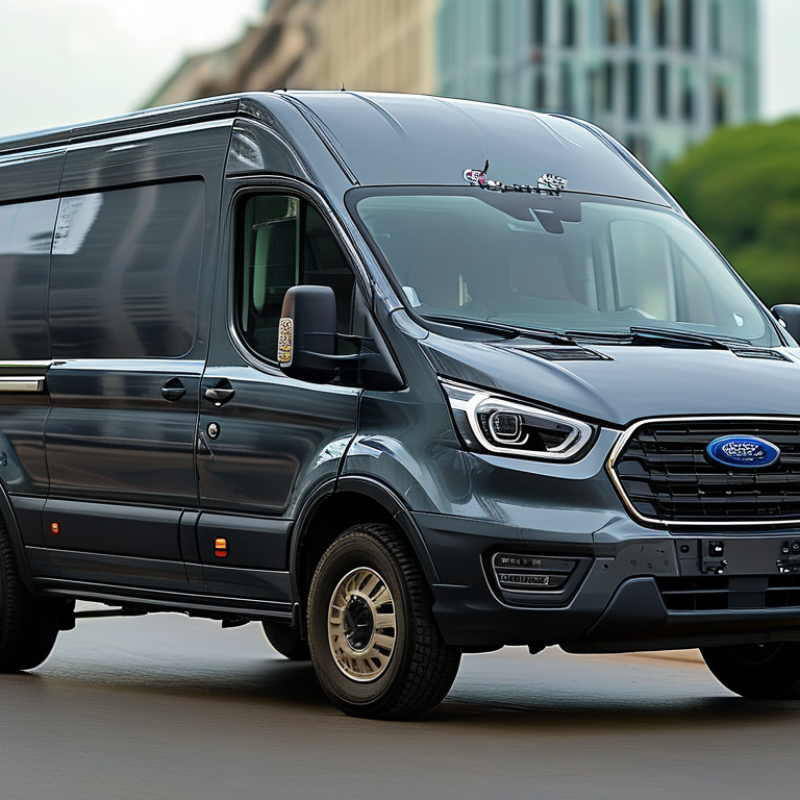
What Is the Best Van Truck for Global Buyers?

Van Truck Basics: Definition, Types, and Main Commercial Uses

A van truck is a commercial vehicle built to move goods or equipment in an enclosed body. Unlike a passenger van, it usually prioritizes cargo volume, payload, and daily operating durability. Common types include panel vans, refrigerated vans, box vans, and high-roof delivery vans. Some models use a separate chassis, while others combine the body and frame.

Each type serves a different working environment. Panel vans suit parcels, tools, spare parts, and routine urban deliveries. Refrigerated vans support food, medicine, and other temperature-sensitive cargo when stable cooling is essential.

Box vans offer taller loading space for furniture, retail stock, and distribution work. High-roof versions improve standing access, but they may face parking and height-limit problems.

Use matters more than appearance. A global buyer should examine payload, internal dimensions, turning radius, fuel or energy use, service access, and climate performance. In practical fleet assessments, door width and floor strength often matter more than advertised cargo volume.

Small details matter. A van that fits narrow streets can outperform a larger vehicle every day. However, specifications do not tell the whole story. Road quality, driver habits, local maintenance skills, and seasonal temperatures can change results.

I have seen buyers focus heavily on purchase price, then overlook downtime and replacement parts. That decision can become expensive. The best van truck is therefore the one matched to its route, cargo, loading method, and available support network.


Key Selection Factors: Cargo Space, Payload, Power, and Fuel Efficiency

What Is the Best Van Truck for Global Buyers?

For global buyers, the best van truck depends on its working conditions, not its appearance. Cargo space should match typical freight, while leaving room for safe loading and movement. Measure the cargo floor, door opening, and interior height before comparing specifications. A high roof is useful for bulky goods, but it can increase wind resistance and parking limits.

Payload requires careful calculation. The advertised figure may exclude passengers, tools, spare wheels, and optional equipment. Do not trust the headline number alone. A van carrying dense machinery needs stronger suspension and stable weight distribution. Overloading also affects braking, tire wear, and long-distance control. In my experience, buyers often choose too much body volume and too little usable payload.

Power matters on steep roads, highways, and poorly surfaced routes. A smaller engine may reduce fuel use, yet it can struggle under constant heavy loads. Fuel efficiency should be judged through realistic tests with cargo, air conditioning, and stop-and-go traffic. A vehicle that performs well when empty may disappoint during daily work. Service access, fuel quality, climate, and spare-part availability also influence operating costs. Before choosing, compare local repair support and total ownership expenses. This step is easy to overlook.

What Is the Best Van Truck for Global Buyers? – Key Selection Factors: Cargo Space, Payload, Power, and Fuel Efficiency

Vehicle Type Typical Cargo Space
(m³)
Typical Payload
(kg)
Power Range
(kW / hp)
Fuel or Energy
Consumption
Typical Gross Vehicle
Weight (kg)
Best Operating Environment Overall Suitability
Compact Panel Van 5–8 800–1,200 55–90 / 75–120 6–8 L/100 km
or 18–24 kWh/100 km
2,000–3,000 Urban delivery, narrow roads, and short routes Best for low operating cost
Medium Panel Van 8–14 1,000–1,600 75–120 / 100–160 7–10 L/100 km
or 20–27 kWh/100 km
2,800–3,500 Mixed urban and regional distribution Best all-round balance
Large Panel Van 14–20 1,200–2,500 100–180 / 135–245 8–12 L/100 km
or 24–32 kWh/100 km
3,500–5,000 High-volume freight and longer regional routes Best for maximum enclosed volume
Light Cab-Over Box Truck 16–30 1,500–3,500 100–190 / 135–255 10–15 L/100 km 3,500–7,500 Palletized goods, wholesale distribution, and rougher roads Best for payload and body flexibility
Electric Delivery Van 6–15 700–1,500 70–150 / 95–200 18–32 kWh/100 km
Typical range: 150–350 km
2,500–4,250 Predictable urban routes with depot charging Best for zero tailpipe emissions
All-Wheel-Drive Utility Van 8–16 900–1,800 90–160 / 120–215 9–13 L/100 km 3,000–4,500 Mountainous, unpaved, snowy, or low-traction routes Best for difficult terrain
Selection note: The figures are representative international market ranges for common vehicle configurations. Actual specifications vary by body length, roof height, engine, battery size, axle layout, local regulations, road conditions, cargo density, and optional equipment. Fuel figures are approximate combined-use values; electric consumption and driving range depend strongly on temperature, load, speed, and charging conditions.

Regional Requirements: Regulations, Road Conditions, and Climate Differences

What Is the Best Van Truck for Global Buyers?

Regional requirements often decide whether a van truck performs well after delivery. Buyers should check local limits for vehicle width, height, weight, lighting, and emissions. A truck approved in one market may require costly changes elsewhere. Traffic direction also matters. Steering position, mirror design, door layout, and headlight alignment should match local road rules.

Road conditions reveal differences quickly. Smooth highways favor fuel efficiency and moderate suspension tuning. Rural routes may demand higher ground clearance, stronger sidewalls, and better underbody protection. A fully loaded vehicle should be tested on uneven roads, not only inspected in a showroom. Small details matter. Braking performance can change significantly with heavy cargo, steep slopes, or frequent stops.

Climate creates another layer of risk. Hot regions need dependable cooling, strong air conditioning, and heat-resistant interior materials. Cold areas require reliable starting systems, suitable fluids, and flexible seals. Coastal markets may need stronger corrosion protection because salt air reaches hidden metal surfaces. High-altitude routes can reduce engine response and cooling efficiency. Heat changes everything.

A practical evaluation should include local service access, spare-part availability, and trained technicians. These factors often matter more than a slightly lower purchase price. Buyers should request verified load tests and maintenance records. Some specifications may look impressive on paper but disappoint in daily work. I would also leave room for uncertainty, because seasonal weather and road quality rarely follow brochures perfectly.

Global Comparison: How Leading Van Truck Designs Meet Buyer Needs

Global buyers rarely need the same van truck. A coastal distributor may prioritize corrosion protection, while an inland builder needs stronger suspension and greater ground clearance. The best design depends on cargo, roads, climate, and service access.

During fleet evaluations, payload balance often reveals more than brochure figures. A low-floor cargo body speeds loading, especially with hand carts and narrow warehouse ramps. A longer wheelbase carries more volume, but it may struggle on tight urban streets. Smaller turning circles matter. So does driver visibility.

Leading designs now combine efficient diesel or electric systems with modular bodies and practical safety equipment. Battery models can reduce noise and local emissions, but range drops in heavy traffic or cold weather. Conventional powertrains may travel farther between stops, yet maintenance costs can rise with intensive use. Buyers should check charging access, spare-part availability, and technician training before choosing.

Durability is not only about steel thickness. Door hinges, floor coatings, cooling systems, and wiring need equal attention. In dusty regions, sealed connectors and washable filters can prevent small faults from becoming expensive delays. Some designs look impressive but provide limited support after delivery. That weakness deserves honest scrutiny.

A perfect van truck does not exist.

Buying Framework: Total Cost, Reliability, Service Access, and Resale Value

What Is the Best Van Truck for Global Buyers?

Buying Framework: Total Cost, Reliability, Service Access, and Resale Value

Global buyers should judge a van truck by operating cost, not showroom price. The purchase price is only one part of ownership. Calculate fuel use across typical routes, including traffic, hills, heavy loads, and seasonal weather. Include tires, scheduled maintenance, insurance, registration, financing, and expected downtime. Small errors matter. My first estimate was too optimistic because I ignored delivery delays and emergency repairs. A low-cost vehicle can become expensive when one week of downtime affects customer contracts.

Reliability depends on design, workload, and local repair capability. Ask for maintenance intervals, common failure points, and realistic payload limits. Check the cooling system, braking components, suspension, and electrical diagnostics before purchase. Service access also matters. A capable local workshop may be more valuable than a distant specialist. Confirm parts availability, technician training, warranty procedures, and average repair times in your operating region. In remote areas, simple components can reduce business risk.

Resale value reflects market confidence. Keep complete service records, inspection reports, and repair invoices. Clean interiors, undamaged body panels, and consistent maintenance support stronger resale prices. One warning: projected resale values are uncertain. Currency changes, import rules, fuel prices, and local demand can shift quickly. A practical buyer should compare three-year ownership costs under optimistic and difficult conditions. The best choice may not be the newest van truck, but the one that remains useful, repairable, and recognizable in the next market.

Wordpress Social Share Plugin powered by Ultimatelysocial
Facebook
X (Twitter)
YouTube
LinkedIn
Share

Purchase Product Request

Request Pricing