What Are the Best UWB Beacons Made in China?

Uwb Beacons made in China are moving from laboratory demonstrations into warehouses, hospitals, factories, and visitor-management systems. Their value is practical: a worker’s badge can trigger a precise location update near a loading gate, often within a few dozen centimeters. Yet precision depends on installation, calibration, antenna design, and software integration.

Industry data supports this growing attention. MarketsandMarkets has projected strong expansion for the global ultra-wideband market, estimating growth from about USD 1.1 billion in 2023 to USD 3.1 billion by 2028. Its forecast indicates a compound annual growth rate above 20%. Grand View Research also identifies real-time location systems as a major UWB application area. These figures differ by methodology, so they should guide research, not replace testing. The FiRa Consortium further emphasizes interoperability, security, and standardized UWB ranging across compatible devices.

This article examines Chinese-made Uwb Beacons through an engineering and purchasing lens. It considers ranging accuracy, battery life, enclosure strength, firmware support, API access, certification documentation, and after-sales service. A beacon that performs well on a quiet test bench may struggle beside metal racks or concrete walls. That detail matters. Product pages can look remarkably similar, while field results differ sharply.

The evaluation also distinguishes manufacturers, contract producers, and trading suppliers. This distinction is sometimes overlooked. We will compare suitable options for asset tracking, indoor navigation, personnel safety, and industrial positioning. No single model fits every site. Readers should verify performance with a pilot deployment, recorded measurements, and local compliance checks before committing to a larger order.
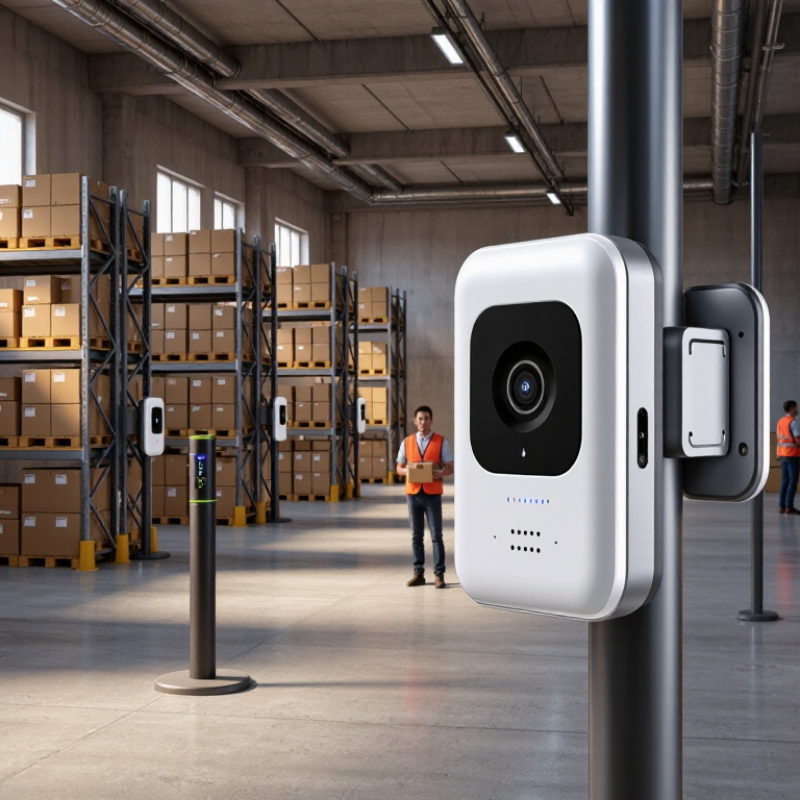
What Are the Best UWB Beacons Made in China?

What Are UWB Beacons and How Do They Work?

Ultra-wideband (UWB) beacons are compact radio devices that transmit precisely timed pulses. A compatible receiver measures signal travel time and estimates distance, often within a few centimeters under suitable conditions.

They do more than broadcast an identity. The beacon and receiver exchange synchronized packets through IEEE 802.15.4z-based ranging methods. Several beacons can support position calculation through time-difference or multilateration techniques. Metal shelves, concrete walls, and human bodies can still weaken accuracy. Real environments are untidy.

According to MarketsandMarkets, the UWB market is projected to grow from about USD 1.6 billion in 2023 to USD 3.2 billion by 2028. This growth reflects demand in logistics, industrial tracking, access control, and indoor navigation. ABI Research has also reported expanding UWB adoption in connected devices and location systems. These figures describe market potential, not guaranteed field performance.

For China-made UWB beacons, engineering quality depends on antenna design, clock stability, calibration, firmware, and factory testing. Ask for measured accuracy, update rate, battery life, and performance beside metal. A strong device should record ranging results across changing temperatures and crowded rooms. Certification and secure device provisioning matter too. Cheaper hardware may look attractive, but unstable timing can ruin positioning data. I would test prototypes in the actual building before approving a large order. That step is often skipped.

What Are the Best UWB Beacons Made in China? — What Are UWB Beacons and How Do They Work?

UWB Beacon Type Recommended Use Common UWB Standard Typical Frequency Channels Typical Positioning Accuracy Typical Operating Range Power Source Best Selection Criteria
Fixed Indoor UWB Anchor Real-time location systems, warehouses, factories, and hospitals IEEE 802.15.4z HRP UWB Channel 5 or Channel 9; regional approval required About 10–30 cm in favorable line-of-sight conditions; commonly 30–100 cm in real indoor deployments Approximately 30–100 m indoors, depending on walls, interference, antenna design, and installation height USB, Ethernet, or low-voltage DC power Stable time synchronization, PoE support, ceiling or wall mounting, and reliable network connectivity
Battery-Powered UWB Tag Personnel tracking, worker safety, indoor navigation, and access control IEEE 802.15.4z HRP UWB with optional Bluetooth Low Energy Commonly Channel 5 or Channel 9 About 10–50 cm under suitable conditions Approximately 30–100 m in open indoor areas Rechargeable lithium battery or replaceable coin-cell battery Battery life, motion detection, emergency button, BLE configuration, and comfortable enclosure design
Industrial Asset UWB Beacon Pallets, tools, vehicles, equipment, and work-in-progress tracking IEEE 802.15.4z HRP UWB; BLE often included for setup Channel 5 or Channel 9, subject to local regulations Typically 20–100 cm in operational environments Approximately 50–150 m in open areas; shorter through dense structures Long-life lithium battery, replaceable battery, or external DC power Long battery life, strong mounting method, tamper detection, configurable transmission interval, and fleet-management support
Rugged Outdoor UWB Beacon Construction sites, ports, mining areas, logistics yards, and outdoor vehicle tracking IEEE 802.15.4z HRP UWB Channel selection depends on spectrum regulations and deployment design Approximately 20–100 cm with suitable anchor placement and clear signal paths Around 100–300 m in open line-of-sight conditions; less in obstructed areas High-capacity battery or external industrial power IP65 or higher enclosure, wide operating-temperature range, impact resistance, and outdoor antenna performance
Compact Consumer UWB Beacon Precise item finding, smart-home interaction, device proximity, and indoor wayfinding IEEE 802.15.4z HRP UWB with Bluetooth Low Energy Usually Channel 5 or Channel 9, depending on the device and market About 10–50 cm in favorable indoor conditions Approximately 10–50 m indoors Coin-cell battery or small rechargeable battery Small size, low energy consumption, mobile-device compatibility, privacy controls, and simple commissioning
How UWB Beacons Work: A UWB beacon sends very short radio pulses across a wide bandwidth. A compatible tag or anchor measures the signal's time of flight, and the positioning system calculates distance from the travel time. With three or more accurately placed anchors, the system can estimate a tag's position through trilateration. Accuracy depends on anchor geometry, antenna calibration, synchronization, multipath reflections, obstacles, installation height, and local radio regulations.
Data note: The figures above are typical engineering ranges for UWB device categories rather than specifications for a particular manufacturer or brand. Actual performance should be verified through product documentation and an on-site test.

Which Features Define High-Quality Chinese UWB Beacons?

High-quality Chinese UWB beacons are defined by dependable positioning, not attractive specifications alone.

In practical deployments, accurate ranging should remain stable near metal shelves, concrete walls, and moving equipment. A strong beacon uses calibrated antennas, controlled pulse timing, and reliable interference management. Small timing errors can create visible location drift.

Build quality matters in daily operations. Look for a sealed enclosure, secure battery contacts, and clear protection ratings for dust or moisture. Long battery life is useful, but predictable performance matters more than an impressive laboratory number. Replaceable batteries, low-power sleep modes, and visible status indicators simplify maintenance. Firmware should support secure updates, event logs, and adjustable transmission intervals. Documentation must explain calibration, installation height, and expected accuracy under real conditions.

Tips: Test a sample batch before a full purchase. Place beacons beside metal racks and near doorways. Record accuracy, battery use, and reconnection time for several days. Ask for test reports, production traceability, and quality-control procedures. A supplier should explain failures honestly, not promise perfect precision everywhere. I would also check whether configuration software is easy for technicians to use. One overlooked setting can weaken an otherwise capable system.

How Do Leading Chinese UWB Beacon Brands Compare?

Chinese UWB beacon makers differ less in marketing claims than in engineering details. In field trials, leading suppliers usually compete on ranging stability, battery life, enclosure quality, and software support. Some focus on compact beacons for warehouses. Others build rugged units for factories, hospitals, and outdoor sites. The strongest products maintain reliable positioning near metal racks and moving equipment. That is where laboratory accuracy can become disappointing.

A practical comparison should include antenna design, update rate, mounting options, and firmware access. Better suppliers publish test conditions instead of showing one impressive accuracy figure. They also provide calibration guidance, sample APIs, and responsive technical support. Hardware quality matters, but integration often decides the project’s real cost. A beacon with a lower purchase price may require more installation work. I have seen promising systems lose value because replacement batteries were difficult to source.

Tips: Request a live demonstration in your environment. Test corners, elevators, reflective surfaces, and crowded aisles. Ask how accuracy changes after months of use. Check local compliance documents and warranty terms. Confirm whether firmware updates can be controlled by your team. Do not trust a perfect number. Real sites are rarely perfect.

What Industries Use UWB Beacons Made in China?

What Are the Best UWB Beacons Made in China?

UWB beacons made in China serve several industries where location accuracy matters. Manufacturing plants use them to track tools, pallets, and mobile equipment. A beacon fixed beside a production line can support location updates within a few dozen centimeters. Warehouses use the same approach for forklift guidance, worker positioning, and faster asset searches. These systems can reduce manual scanning, but results depend heavily on installation quality.

Healthcare is another important field. Hospitals may attach beacons to infusion pumps, beds, and emergency equipment. Staff can locate movable devices instead of checking every corridor. Construction companies also use UWB for worker safety zones and machinery monitoring. In underground mining, compatible equipment can help estimate personnel locations when ordinary satellite positioning fails. The signal matters.

Market data supports this expansion. Grand View Research has projected strong growth for the global UWB market through 2030, with industrial tracking among its key applications. A 2024 report from Mordor Intelligence also estimated annual UWB market growth above 20% during its forecast period. These figures show demand, not guaranteed performance. That distinction is often missed.

When evaluating Chinese-made beacons, buyers should test anchor density, battery life, interference resistance, software integration, and local support. Metal racks can weaken practical accuracy. Concrete walls can create unexpected reflections. A factory trial is wiser than relying only on a product sheet. The best beacon is not always the cheapest one. Sometimes, it is the device that remains dependable after months of dust, movement, and imperfect installation.

How Should Buyers Select the Right Chinese UWB Beacon?

Selecting the right Chinese UWB beacon requires more than comparing prices. Grand View Research estimated the global UWB market at about USD 1.1 billion in 2023, with strong growth expected through 2030. This expansion increases supplier choice, but also creates uneven quality. Buyers should request test records for ranging accuracy, latency, packet loss, and channel stability. A practical trial should place beacons near metal shelves, concrete walls, and moving equipment. Laboratory results alone can mislead.

Check compatibility with IEEE 802.15.4z and the selected positioning method, such as TDoA or AoA. FiRa technical guidance highlights secure, interoperable UWB ecosystems, so open interfaces and documented firmware matter. Ask for SDK examples, API limits, update procedures, and calibration tools. Battery life should be tested under the intended transmission interval, not only under standby conditions. A beacon claiming two years may last far less when reporting every second.

Physical design also deserves close inspection. Confirm IP protection, operating temperature, mounting strength, and enclosure materials. Request production traceability, incoming inspection records, and failure-rate data from recent batches. One sample is not enough. No checklist is perfect. I would personally test at least twenty units before a large order. Compare accuracy after several days, not just during the first hour. A reliable supplier should explain weaknesses clearly, provide replacement policies, and support integration after delivery. Cost matters, but unstable firmware can cost more than the beacon itself.

Wordpress Social Share Plugin powered by Ultimatelysocial
Facebook
X (Twitter)
YouTube
LinkedIn
Share

Purchase Product Request

Request Pricing