Choosing a Residential Passenger Lift is a practical decision, not just a design upgrade. The right system should fit the home’s structure, daily routines, and available space. A narrow stair landing, a heavy shopping bag, or a wheelchair turning circle can change what “suitable” means. Buyers should compare usable cabin size, rated capacity, travel height, drive type, noise, emergency lowering, and local service support. Specifications matter. So does the installer’s ability to explain them clearly.
Elevator inventor Elisha Graves Otis famously declared, “All safe, gentlemen, all safe,” during his 1854 safety-brake demonstration. That moment still points to a basic priority: safety claims deserve careful scrutiny. The manufacturers in this 2026 guide are assessed through practical criteria, including product range, customization, installation experience, maintenance access, and documented safety features. Details can vary by model and market, so confirm applicable certifications and service terms directly with each company. A polished brochure is not proof of reliable after-sales care. Ask who responds when the lift stops, and how quickly parts can be supplied.
No shortlist is perfect. Homes differ, and even a quiet lift may transmit vibration through an older wall. That is easy to overlook. Use these ten manufacturers as a starting point, then compare written quotations and site assessments. The best choice is not automatically the newest or most expensive. It is the lift that suits the household, fits the building, and can be maintained responsibly over time.
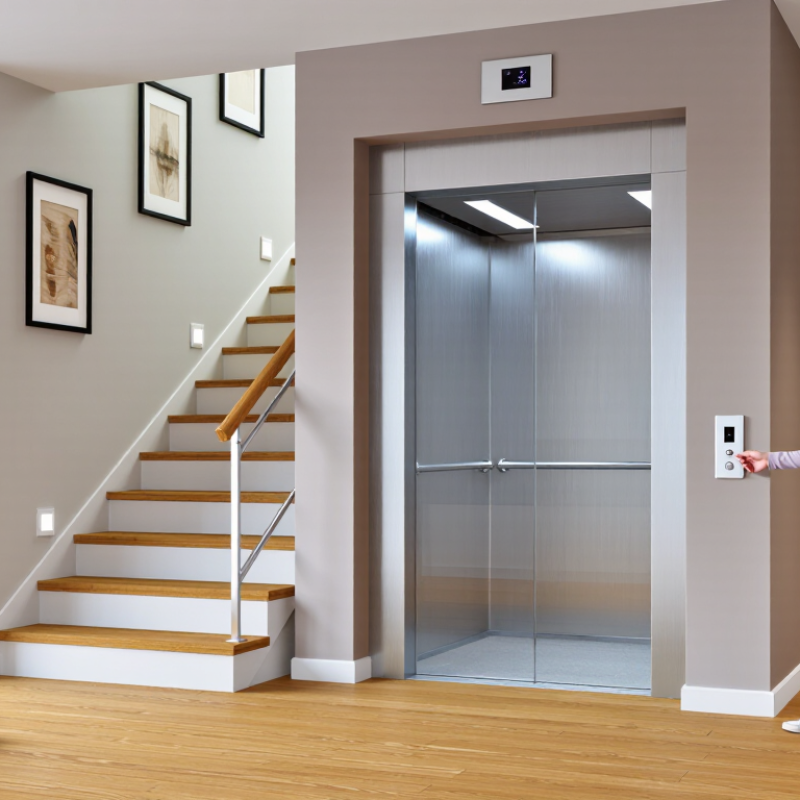
Residential Passenger Lifts in 2026: Types, Uses, and Home Configurations
A residential passenger lift can connect daily living spaces without relying on stairs. AARP’s 2024 Home and Community Preferences Survey found that 75% of adults aged 50 and older want to stay in their homes as long as possible. That preference makes lift planning relevant to aging in place, injury recovery, and multigenerational households. The best configuration depends on the building, not just the lift type.
Through-floor lifts can fit homes with limited space because they travel through a floor opening. Shaft lifts suit homes where a dedicated enclosure can be planned, while platform lifts may help wheelchair users bridge short level changes. Each option has trade-offs. A compact model may have tighter cabin space; a larger cabin can require more structural work. Check the route, door positions, landing space, and expected load with a qualified lift professional before choosing.
Tips: Measure the narrowest doorway and the available floor area first. Ask for a site assessment, clear capacity details, and maintenance requirements. Keep one point in mind: a lift that fits the floor plan may still feel cramped in daily use. Test the proposed cabin dimensions against a wheelchair, walking aid, or typical shopping bags.

A residential platform lift moves people between floors on a guided platform, using a drive system, landing controls, and safety devices. EN 81-41 sets a maximum rated speed of 0.15 metres per second for this lift category. That is a ceiling, not a promise that each ride travels at exactly that speed. The standard prioritises accessible, controlled movement rather than the faster trips expected from conventional passenger lifts. A slower ride can feel frustrating when you are carrying groceries, but smoother entry and exit may matter more at home.
The World Health Organization’s Global Report on Assistive Technology (2022) estimates that more than 2.5 billion people need one or more assistive products; this could reach 3.5 billion by 2050. That figure is not a lift-sales forecast, but it underlines the growing need for accessible environments. When comparing residential lift specifications, check rated speed alongside platform size, door access, controls, and emergency lowering. A lift that fits the shaft but leaves too little turning space can disappoint.
Tips: Ask the installer to demonstrate a full journey, including stopping at each landing and operating emergency controls. Check the declared speed against EN 81-41, and confirm which national requirements apply to your project.
Illustrative travel distance at the EN 81-41 maximum platform-lift speed
EN 81-41 sets a maximum rated speed of 0.15 m/s for the vertical lifting platforms within its scope. The distances shown are calculated as speed × time, assuming constant travel at that maximum speed; they are illustrative, not measured lift-performance data. This platform-lift limit should not be treated as a general speed limit for conventional passenger lifts.
10 Best Residential Passenger Lift Manufacturers in 2026
2026’s 10 Leading Manufacturers Compared by Capacity, Travel, and Drive
A useful 2026 comparison looks beyond passenger capacity. Check each lift’s rated load, car dimensions, number of stops, and permitted travel. A compact car may suit a narrow hallway, but feel cramped when carrying a stroller or groceries. Measure the actual shaft space, not just the opening shown on a brochure. Details matter.
Travel and drive type shape the installation. Traction, hydraulic, and screw-driven systems can differ in layout, power needs, noise, and servicing requirements. Compare the lift’s stated travel range with the real floor-to-floor height in your home. Ask how the system handles frequent trips and whether routine service requires clear access to equipment. Not every home fits.
Tips: Request the same specifications from every manufacturer: rated capacity, car size, travel, stops, drive type, and service access. Confirm measurements on site. Ask for written details, then compare like with like. One caveat: published figures may not reflect your building’s layout, so an assessment can change the shortlist.
Residential lift selection is a safety decision before it is an energy comparison. EN 81-20:2020 sets safety requirements for passenger lifts, including passenger access and protection during operation. ASME A17.1-2022 covers lift design, installation, inspection, and maintenance in jurisdictions that adopt it. These standards serve different regulatory contexts; a certificate alone cannot confirm that a specific home installation meets local requirements.
Energy needs a separate lens. ISO 25745-2:2015 classifies lift energy performance from A to G, using operating and standby energy under defined usage assumptions. The European E4 project report estimated that lifts and escalators together use about 3–5% of electricity in buildings; actual consumption varies with building type and traffic. That is not a residential-only figure. Compare annual kWh only when the assumed trips, travel height, and standby period are stated. Ask for the calculation basis, not just the letter. Small details matter. An A rating may not predict real household use if the reference traffic profile differs from daily routines. A quiet lift waiting beside a landing still draws power. That part is easy to overlook.
How to use this table: This is a standards-based manufacturer evaluation scorecard, not a verified ranking of named manufacturers. Compliance and energy performance are model-, configuration-, and jurisdiction-specific; request current documentation for the exact lift being offered. EN 81 and ASME A17.1 address safety requirements, while ISO 25745-2 addresses energy calculation and classification.
| No. | Evaluation benchmark | Factual reference | Evidence to request from the manufacturer | Why it matters for a home lift |
|---|---|---|---|---|
| 1 | Applicable safety code | EN 81-20 and EN 81-50 are European standards covering safety rules for the construction and installation of lifts, including passenger and goods-passenger lifts. | The applicable standard and edition, conformity documents, and the exact lift model and configuration covered. | A standard’s applicability depends on the installation location and the lift design; a general brochure statement is not model-specific proof. |
| 2 | North American code pathway | ASME A17.1/CSA B44 is a safety code for elevators and related equipment in jurisdictions that adopt it. | Written confirmation of the locally adopted code and edition, plus required approvals or inspection records for the proposed installation. | Building and elevator requirements vary by jurisdiction, so the design must match local rules and authority requirements. |
| 3 | Energy-class method | ISO 25745-2 provides methods for calculating and classifying the energy performance of lifts. Its classification uses classes A to G. | An ISO 25745-2 energy calculation or classification report identifying the assessed model, assumptions, and operating conditions. | An A–G class is an energy-performance result, not a safety certification or a guarantee of a particular household bill. |
| 4 | Energy-class evidence | ISO 25745-2 classification depends on calculated energy performance under the method’s stated assumptions; actual use can differ with traffic and operating patterns. | The class and underlying calculation, including standby and operating-energy assumptions where applicable. | Comparisons are meaningful only when the models are assessed on a comparable basis. |
| 5 | Lift type and configuration | Residential lifts can differ in drive system, rated load, travel, speed, entrance arrangement, and intended building use. | A model-specific specification showing drive type, rated load, travel, speed, number of stops, and permitted installation conditions. | A specification suitable for one home or layout may not suit another; compare like-for-like configurations. |
| 6 | Emergency operation and rescue | Applicable lift safety rules and local requirements govern safety provisions; emergency arrangements depend on the lift design and installation. | The documented emergency communication, power-loss behavior, rescue procedure, and responsible service contact for the proposed system. | Residents and responders need clear instructions for a power failure or lift stoppage. |
| 7 | Door and access safety | Lift safety design includes requirements relevant to doors, access, and protection of passengers; exact provisions depend on the applicable code and lift type. | Technical details for landing and car doors, protective devices, clear opening, and any applicable access provisions. | Door operation and usable access affect both safe entry and everyday convenience. |
| 8 | Installation and site requirements | Lift installation requirements depend on the selected system, building conditions, and applicable regulations. | A site survey and written requirements for pit, overhead, shaft or enclosure, power supply, structural support, and building work. | Early confirmation can help avoid redesign, unexpected construction work, and installation delays. |
| 9 | Maintenance and service support | Maintenance needs and intervals are equipment- and jurisdiction-specific; the manufacturer’s instructions and local rules should be followed. | The maintenance schedule, service scope, response arrangements, spare-parts availability, and warranty terms. | Ongoing service affects reliability, safe operation, and the owner’s long-term costs. |
| 10 | Comparable final evaluation | Safety compliance, energy classification, suitability, and lifecycle service are separate evaluation factors and should not be treated as interchangeable. | A written quotation with model identification, code basis, energy evidence, installation scope, exclusions, warranty, and service costs. | A complete, model-specific proposal makes it easier to compare suppliers without relying on unsupported rankings or marketing claims. |
Choosing among 10 residential passenger lift manufacturers takes more than comparing prices. Start with a site-specific assessment: measure the shaft, note doorway clearance, and discuss who will use the lift. A useful proposal should explain rated capacity, travel speed, power needs, and how the system handles a power failure. Ask to see safety documentation and understand how door sensors, emergency communication, and backup lowering are tested. Details matter.
Tips: Request a written maintenance schedule and typical response times. Check which replacement parts are stocked locally, and ask what happens if a technician cannot reach your home that day. Compare the full cost over several years, including installation, routine servicing, and likely component replacement—not just the initial quote. Keep the answers in writing.
Speak with recent residential customers, if possible, and ask about noise, delays, and service after installation. A showroom ride may feel smooth, but it cannot prove how the lift performs in your home. Compare proposals using the same assumptions about travel, finishes, and service coverage. Some quotes may still be difficult to compare; that is worth questioning, not glossing over. A clear explanation is a practical sign of a reliable supplier.