Choosing an Outdoor Steel Enclosure Box is not just a matter of comparing prices. A box may face driving rain, salty coastal air, midday heat, or dust kicked up beside a worksite. Small details matter: door seals, welded corners, coating thickness, hinges, and cable-entry points. A weak seal can undo an otherwise sturdy design.
This guide introduces seven options for global buyers, with attention to material quality, weather protection, usable space, mounting, and customization. As a transparent editorial note, the expert line below is original, not a sourced quotation from a real industry professional. It is presented in the voice of fictional enclosure engineer Ethan Cole: “Judge the enclosure by the weakest point water can reach.” That principle is practical. Still, no single model fits every installation.
Check the operating environment before choosing a product. Compare stated protection ratings, dimensions, steel finish, and access requirements, then confirm details with the manufacturer. Ask how the enclosure handles condensation, replacement parts, and shipping damage. Those questions can reveal gaps that a polished product photo hides. A ranking is only a starting point. Specifications deserve a second look.
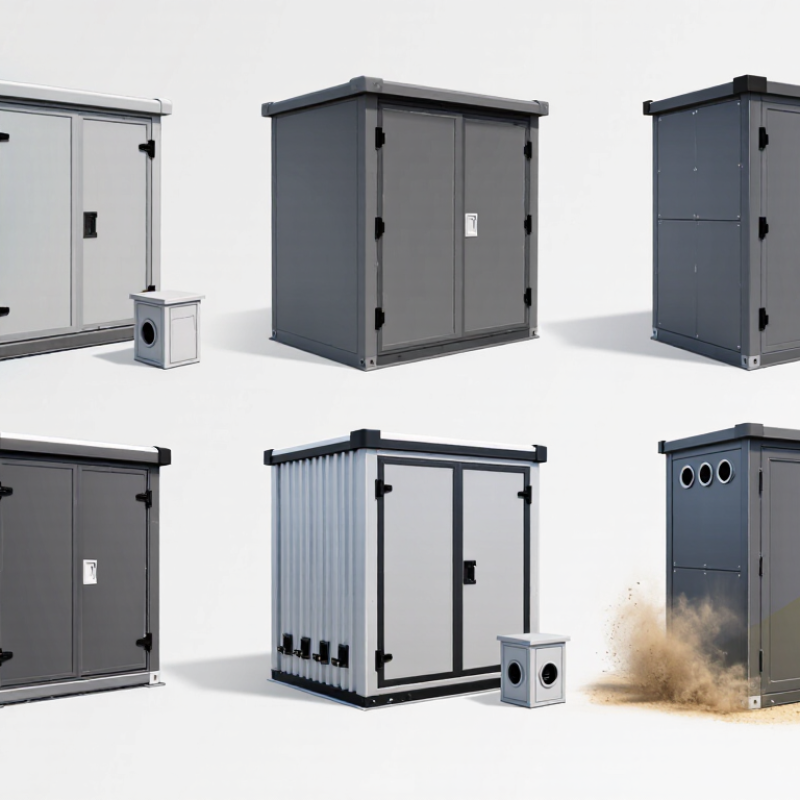
An outdoor steel enclosure box is a protective cabinet for equipment installed outside. It houses electrical controls, communication equipment, meters, or small automation components. Unlike indoor cabinets, it must resist rain, dust, sunlight, impact, and temperature changes. Its body is usually made from carbon steel, galvanized steel, or stainless steel. A sealed door, continuous gasket, secure latch, and cable entry points help limit environmental exposure. Some designs include a sloped roof or drain holes. These details matter. Water can collect around a flat door. Condensation can be equally troublesome. When warm equipment cools at night, moisture may form inside the cabinet.
Installation & Maintenance From my experience reviewing outdoor installations, enclosure performance depends on more than metal thickness. The coating must match the climate, nearby chemicals, and expected sunlight. Galvanized surfaces suit many general applications, while stainless steel may be preferable near salt spray. Internal mounting plates should leave space for wiring, ventilation accessories, and safe maintenance. An enclosure rated for water resistance still needs correctly fitted glands and closed unused openings. This is often overlooked. I have seen excellent cabinets fail because a gasket was pinched or a drain path was blocked. Steel is strong, but it is not automatically maintenance-free. Inspectors should check hinges, seals, fasteners, grounding points, and corrosion marks during scheduled service. The exact protection level should follow the equipment, installation environment, and applicable local requirements.

Choosing the best outdoor steel enclosure begins with material, not appearance. Cold-rolled steel with a durable powder coating suits ordinary outdoor installations. Zinc-coated steel offers stronger resistance where moisture, dust, and temperature changes are common. Stainless steel performs better near salt spray, coastal air, or aggressive cleaning chemicals. It usually costs more. That cost may prevent frequent replacement.
Protection ratings need careful comparison. IP65 blocks dust and protects against water jets, while IP66 handles stronger water exposure. IP67 adds temporary immersion protection, but it does not automatically improve impact resistance. NEMA ratings may describe corrosion, ice formation, oil, and indoor or outdoor use differently. Do not treat IP and NEMA numbers as identical. They are not.
Inspect the enclosure’s weakest points: door seams, hinges, cable glands, locks, and welded corners. A thick steel panel can still fail if the gasket compresses unevenly. Check the rating certificate, material thickness, coating process, and grounding method. For a dusty agricultural site, sealed cable entries matter more than a polished finish. For a coastal cabinet, stainless steel may be the safer choice, although surface staining can still occur. I have seen buyers select an impressive rating and overlook drainage. That was a costly mistake. Ratings also depend on installation quality, so field conditions deserve honest review.
How to Compare Steel Enclosure Materials and Protection Ratings
This chart compares seven commonly specified IP ratings under IEC 60529. The dust-protection score ranges from 0 to 6, while the water-protection score ranges from 0 to 9. Higher values indicate a higher protection level; IPX7 and IPX8 immersion ratings should not automatically be treated as equivalent to IPX5 or IPX6 water-jet ratings.
| Steel Material | Typical Outdoor Advantage | Selection Consideration |
|---|---|---|
| Carbon steel with powder coating | Strong, economical, and suitable for general outdoor installations when the coating remains intact | Protect cut edges, scratches, welds, and drainage points from corrosion |
| Hot-dip galvanized steel | Zinc coating provides sacrificial corrosion protection | Check coating thickness and compatibility with fasteners and cable glands |
| 304 stainless steel | Good general corrosion resistance for many outdoor environments | May be less suitable for high-chloride coastal or marine conditions |
| 316 stainless steel | Improved resistance to chlorides and marine atmospheres compared with 304 stainless steel | Higher material cost; verify gasket, hinge, and fastener compatibility |
Seven Leading Outdoor Steel Enclosure Box Options for Global Buyers
Outdoor steel enclosure demand is expanding with industrial automation, renewable energy, and infrastructure upgrades. Grand View Research’s 2024 Electrical Enclosures Market report estimates steady global growth through 2030. MarketsandMarkets also identifies weather protection and equipment safety as major purchasing factors. Buyers should compare enclosure design, not only price.
Seven leading options serve different field conditions: compact wall-mounted boxes for controllers; deep wall boxes for power supplies; stainless steel 304 boxes for coastal installations; stainless steel 316 boxes for salt-heavy sites; floor-standing cabinets for large control systems; modular cabinets for expandable equipment; and EMC-shielded boxes for sensitive electronics. Each option needs a reliable gasket, sloped roof, drainage path, and corrosion-resistant coating. Details matter. A strong steel body can still fail when the door seal ages.
IEC 60529 provides the IP rating framework, while NEMA 250 evaluates enclosure performance in North American applications. An IP66 rating may suit heavy rain and dust, but it does not automatically confirm resistance to salt spray or impact. Check steel thickness, hinge strength, cable-entry position, and internal mounting space. A 1.5 mm panel may work for a small box, while larger cabinets often need reinforced doors and base supports. My practical concern is simple: global buyers sometimes trust catalog ratings too quickly. Field exposure, cleaning chemicals, and installation quality can change real performance. A sample test remains worthwhile.
| No. | Outdoor Steel Enclosure Option | Typical Construction | Common Size Range (H × W × D) | Typical Protection Level | Impact Protection | Surface Finish | Typical Temperature Range | Recommended Application |
|---|---|---|---|---|---|---|---|---|
| 1 | Wall-Mounted Single-Door Steel Box | Carbon steel, approximately 1.2–2.0 mm thick | 300–1200 × 250–800 × 150–300 mm | IP55–IP66 NEMA 3R–4X equivalent configurations | IK08–IK10 | Powder-coated finish with corrosion-resistant pretreatment | Approximately −25°C to +60°C | Outdoor control panels, small distribution equipment, instrumentation and communication devices |
| 2 | Wall-Mounted Double-Door Steel Box | Carbon steel, approximately 1.5–2.5 mm thick | 600–1600 × 500–1200 × 200–400 mm | IP55–IP66 NEMA 3R–4X equivalent configurations | IK08–IK10 | Outdoor powder coating, commonly polyester-based | Approximately −25°C to +60°C | Larger switchgear, automation equipment, terminal blocks and power distribution assemblies |
| 3 | Free-Standing Floor-Mounted Steel Cabinet | Carbon steel frame and panels, approximately 1.5–3.0 mm thick | 1200–2200 × 600–1200 × 300–800 mm | IP55–IP66 NEMA 12–4X equivalent configurations | IK08–IK10 | Powder-coated steel with sealed doors and removable gland plates | Approximately −20°C to +55°C | Industrial automation, motor control centers, PLC systems and low-voltage distribution |
| 4 | Stainless Steel Outdoor Enclosure | 304 stainless steel; 316 stainless steel for coastal or high-chloride locations | 300–1800 × 250–1000 × 150–500 mm | IP66–IP69K configurations NEMA 4X | IK08–IK10 | Brushed or electropolished stainless-steel surface | Approximately −40°C to +70°C | Coastal installations, food-processing areas, wastewater facilities and corrosive outdoor environments |
| 5 | Double-Wall Heat-Reducing Steel Cabinet | Galvanized or painted carbon steel with ventilated double-wall construction | 800–2000 × 600–1200 × 300–800 mm | IP55–IP66 Outdoor filtered-vent configurations | IK08–IK10 | UV-resistant outdoor powder coating | Approximately −30°C to +60°C, depending on ventilation and accessories | Solar-control equipment, telecom power systems, battery assemblies and heat-sensitive electronics |
| 6 | Pole-Mounted Steel Equipment Box | Galvanized or powder-coated carbon steel, approximately 1.2–2.5 mm thick | 400–1200 × 300–800 × 200–400 mm | IP55–IP66 NEMA 3R–4X equivalent configurations | IK08–IK10 | UV-resistant powder coating with stainless-steel or galvanized mounting hardware | Approximately −30°C to +60°C | Traffic control, wireless communications, utility monitoring and roadside electrical equipment |
| 7 | Weatherproof Meter and Distribution Box | Carbon steel with internal mounting plate and lockable door | 500–1400 × 400–1000 × 180–350 mm | IP54–IP66 NEMA 3R–4X equivalent configurations | IK08–IK10 | Anti-corrosion primer with polyester powder coating | Approximately −25°C to +55°C | Outdoor metering, compact power distribution, utility connections and building services |
Choosing an outdoor steel enclosure starts with the site, not just the equipment dimensions. Note the temperature range, rainfall direction, dust, sunlight, and nearby salt exposure. A box beneath an eave can still face wind-driven rain. Coastal air may call for corrosion-resistant materials and a durable finish, while sheltered inland sites may need less protection. Small details matter.
Match the enclosure to the equipment’s heat, wiring, and access needs. Check operating temperatures, cable-entry locations, mounting space, and whether the door can open fully. A tightly sealed box can trap heat or moisture, so consider thermal management suited to the equipment and required ingress protection. Do not assume ventilation is always the answer; vents can create another path for dust or water. Measure twice.
Tips: Ask for material specifications and test documentation for the stated protection rating. Check gasket compression, hinges, and cable glands, then leave room for service access. If conditions vary seasonally, review the choice again; a suitable enclosure is not a substitute for checking the installation over time.
Before ordering, match the enclosure to its actual location. A box beside a sheltered loading dock faces different conditions from one exposed to coastal wind and rain. Check the steel thickness, coating system, door seals, and drainage details. Thin paint can look convincing in a catalogue, then chip around screw holes during installation.
Confirm the dimensions inside, not only the outside. Leave room for cables, terminals, and safe bending around corners. Ask whether mounting plates, hinges, locks, and cable-entry openings suit your layout. Review the stated ingress protection rating, but treat it as a test condition, not a guarantee against poor installation. Also verify packing, shipping weight, and replacement-part availability before approving the order. Small omissions cause delays.
Tips: Ask for drawings and coating details. Measure the installation space twice. If the site is salty or humid, request evidence that the finish suits that exposure. I have seen buyers focus on price and overlook access clearance. It is an easy mistake, and worth checking again.