7 Best Aeration Diffusers for Wastewater Treatment

Choosing the right Aeration Diffuser can determine whether a wastewater plant runs efficiently or wastes energy. A diffuser must deliver fine, even bubbles while resisting clogging, scaling, and chemical attack. It must also suit the basin depth, airflow range, wastewater strength, and maintenance plan.

Dr. David G. Stensel, a respected wastewater treatment researcher, emphasizes a practical principle: “Aeration performance must be judged in the process, not in isolation.” That view matters. A diffuser that performs well in clean-water testing may struggle in activated sludge containing grease, fibers, grit, or changing solids levels. Real conditions are rarely tidy.

This guide examines seven leading Aeration Diffuser options for wastewater treatment. It compares membrane materials, bubble size, oxygen transfer, fouling resistance, pressure demand, service life, and total operating cost. Field details matter here. A fine-pore membrane may lower energy use, yet it can require stronger cleaning routines. A coarse-bubble diffuser may tolerate harsher solids, but it usually transfers oxygen less efficiently.

No diffuser is perfect.

The best choice depends on the plant’s biology, basin layout, blower controls, and operator experience. We also recognize an uncomfortable point: published efficiency figures do not always predict long-term performance. Aging membranes stretch. Air headers collect moisture. Poorly balanced airflow creates dead zones. These seven selections are therefore evaluated with both laboratory data and practical installation concerns in mind, helping engineers and plant managers make a more defensible decision.
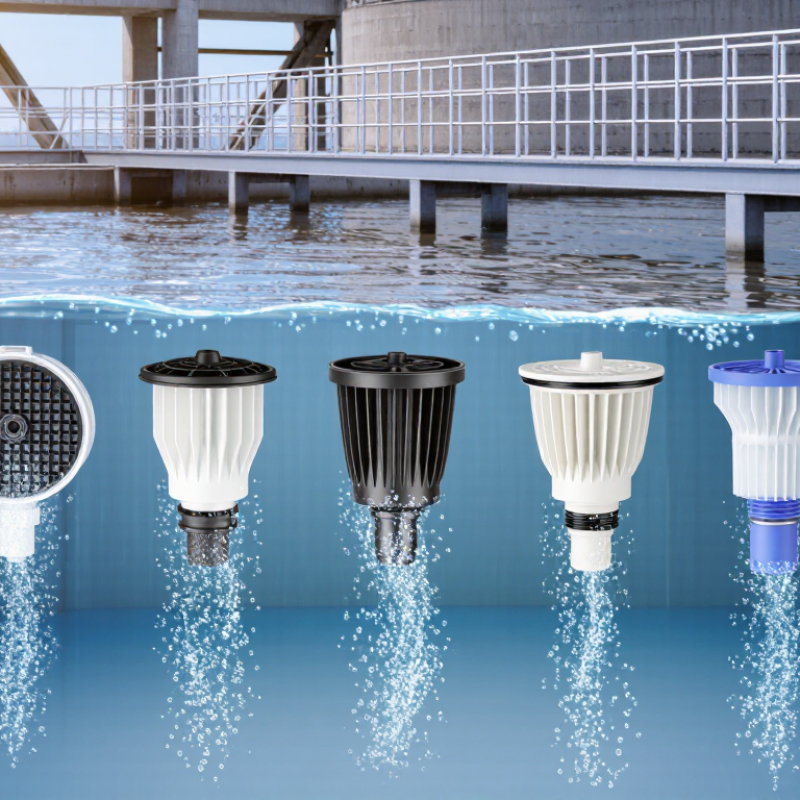
7 Best Aeration Diffusers for Wastewater Treatment

What Aeration Diffusers Do in Wastewater Treatment

What Aeration Diffusers Do in Wastewater Treatment

Aeration diffusers release air below the mixed liquor in an activated sludge tank. Their bubbles transfer oxygen to microorganisms, which consume organic pollutants and support ammonia conversion. Fine bubbles usually provide more surface area and better oxygen transfer. Coarse bubbles can improve mixing and resist clogging in difficult wastewater. Other options include disc, tube, panel, ceramic, jet, and membrane designs. The best choice depends on tank depth, solids concentration, airflow, and maintenance access.

The U.S. Environmental Protection Agency reports that aeration may consume about 45–75% of a wastewater plant’s total energy. That makes diffuser performance a major operating concern. A clean fine-bubble system can reduce blower demand, but laboratory oxygen-transfer results may not match field conditions. Wastewater contains surfactants, grease, and biological solids. These materials can reduce the alpha factor and weaken oxygen transfer. Operators should track dissolved oxygen, airflow, pressure, and basin mixing together. One reading rarely tells the full story.

Tips: Check bubble patterns during normal loading, not only after cleaning. Compare oxygen-transfer performance with blower power. Inspect membranes for hardening, tearing, and uneven discharge. Do not choose the smallest bubble automatically. A diffuser with excellent catalog efficiency may foul quickly in real wastewater. EPA energy guidance and Water Environment Federation design practice both support site-specific testing, though testing budgets are often too small. That is an uncomfortable limitation.


7 Best Aeration Diffusers for Wastewater Treatment

Typical clean-water standard oxygen transfer efficiency (SOTE) ranges by diffuser type

Fine-bubble disc, tube, and panel diffusers generally provide higher oxygen-transfer efficiency because their smaller bubbles offer greater gas–liquid contact area. Coarse-bubble, jet, and perforated-pipe systems can provide stronger mixing and better resistance to fouling, but usually transfer oxygen less efficiently. Actual performance varies with wastewater characteristics, submergence depth, airflow rate, diffuser fouling, and tank geometry.

Key Criteria for Evaluating Aeration Diffuser Performance

7 Best Aeration Diffusers for Wastewater Treatment

Key Criteria for Evaluating Aeration Diffuser Performance

Selecting an aeration diffuser requires more than comparing advertised oxygen transfer rates. Start with bubble size and distribution. Fine bubbles usually provide greater surface area, but they can increase pressure loss and clogging risk. Measure oxygen transfer efficiency under wastewater conditions, not only in clean water. Temperature, suspended solids, salinity, and surfactants can change results.

Airflow must remain even across the basin. Uneven distribution leaves quiet zones and forces other diffusers to work harder. Check pressure drop at the intended airflow range. A diffuser operating near its limit may consume more energy and age faster. Inspect membrane flexibility, pore stability, and resistance to biological growth. Materials should tolerate cleaning chemicals and repeated operating cycles.

Field experience matters.

Ask for independent test data.

Laboratory results can mislead.

Maintenance access deserves equal attention. A diffuser that performs well but takes hours to remove may create costly downtime. Review fouling history from similar wastewater, especially where grease or filamentous growth is common. Monitor dissolved oxygen profiles at several basin locations, then compare them with airflow and power readings. One reading can hide a problem.

Do not judge performance from bubbles alone. Large visible bubbles may look active while transferring oxygen poorly. I have found that modest airflow adjustments sometimes improve mixing more than replacing equipment. Still, site conditions vary, and no selection method is perfect. Pilot testing remains valuable when energy use, cleaning frequency, or seasonal wastewater changes are significant.

Seven Leading Aeration Diffuser Options for Treatment Systems

Seven Leading Aeration Diffuser Options for Treatment Systems

Fine bubble disc diffusers suit activated sludge basins that need efficient oxygen transfer. Their flexible membranes release small bubbles across broad tank areas. Fine bubble tube diffusers provide similar performance, but their long shape can fit narrow channels. Both require clean air and careful air balancing. Dirty membranes waste energy.

Coarse bubble disc diffusers create larger bubbles with stronger mixing action. They can help in equalization tanks, grit chambers, and systems with heavier solids. Coarse bubble tube diffusers offer extended coverage along long lanes. Panel diffusers provide a low-profile layout and can simplify installation beneath walkways. They are not ideal for every basin depth.

Ceramic diffusers tolerate some demanding conditions and offer a rigid air-release surface. However, they may need more cleaning when biological growth blocks the pores. Retractable diffuser assemblies allow maintenance without fully draining the basin. That benefit matters during winter operation or high wastewater flow. Still, moving parts add inspection needs.

Field selection should match oxygen demand, basin geometry, solids content, and blower capacity. Operators should check bubble patterns, pressure readings, and dissolved oxygen near the tank floor. A clear bubble trail is useful evidence, but it does not prove equal oxygen distribution. I have seen a well-designed layout underperform after uneven air valves were adjusted. Small installation errors matter.

7 Best Aeration Diffusers for Wastewater Treatment - Seven Leading Aeration Diffuser Options for Treatment Systems
Aeration Diffuser Option Diffuser Type Typical Bubble Size Recommended Airflow per Unit Typical Standard Oxygen Transfer Efficiency Main Advantages Best-Fit Treatment Applications Key Design Considerations
Fine-Bubble Membrane Disc Diffuser Round flexible membrane disc with molded air-release perforations 1–3 mm 1–8 m³/h 4–8% per metre of submergence High oxygen-transfer efficiency, low air demand, compact installation, and automatic slit closure when air is off Activated-sludge basins, sequencing batch reactors, and municipal wastewater plants Requires suitable pretreatment and periodic cleaning to control fouling and scaling; membrane material must match the wastewater chemistry
Fine-Bubble Membrane Tube Diffuser Flexible tubular membrane mounted on a supporting air pipe 1–3 mm 3–15 m³/h 4–8% per metre of submergence Long aeration coverage, good floor utilization, flexible layout, and relatively even air distribution Large aeration tanks, oxidation ditches, and retrofit projects with long diffuser rows Needs adequate tube support and correctly balanced air headers to prevent uneven airflow
Fine-Bubble Panel Diffuser Rectangular or elongated flexible membrane panel 1–3 mm 5–25 m³/h 4–8% per metre of submergence High active membrane area, efficient basin coverage, and fewer individual connections than small disc units New-build biological treatment basins and high-capacity aeration systems Panel alignment, support frames, access for maintenance, and header pressure balancing are important
Coarse-Bubble Disc Diffuser Rigid or flexible disc producing larger air bubbles 4–8 mm 5–30 m³/h 1–3% per metre of submergence Strong mixing, lower fouling sensitivity, and better resistance to solids accumulation than fine-bubble systems Equalization tanks, grit-prone wastewater, sludge holding tanks, and mixing zones Uses more blower air for the same oxygen duty; bubble rise velocity and mixing pattern should be checked
Coarse-Bubble Tube Diffuser Perforated rigid tube or tubular coarse-bubble air distributor 4–10 mm 10–50 m³/h 1–3% per metre of submergence Robust construction, high air-handling capacity, and effective tank mixing Industrial wastewater, sludge digestion, equalization, and applications with high suspended solids Lower oxygen efficiency makes blower sizing and energy consumption especially important
Porous Ceramic Disc Diffuser Rigid porous ceramic element with fine interconnected pores 1–3 mm 0.5–5 m³/h 3–7% per metre of submergence Good temperature and chemical resistance, stable shape, and suitability for selected harsh environments Specialty industrial treatment, laboratory systems, and smaller treatment basins Can be brittle, heavier than membrane units, and more vulnerable to irreversible pore fouling in dirty wastewater
PTFE-Membrane Fine-Bubble Diffuser Fine-bubble disc or tube using a chemically resistant fluoropolymer membrane 1–3 mm 1–10 m³/h 3–7% per metre of submergence High resistance to many chemicals, oils, and difficult industrial wastewater constituents Industrial wastewater systems where chemical compatibility is more important than minimum capital cost Confirm chemical compatibility, operating temperature, pressure loss, and membrane durability before selection
Typical ranges are indicative design values for clean-water or standard-test conditions. Actual oxygen transfer depends on diffuser submergence, wastewater characteristics, fouling, air flux, tank geometry, temperature, salinity, and process demand. Final selection should be based on site-specific testing and hydraulic calculations.

How to Match a Diffuser to Wastewater Treatment Needs

Choosing the best aeration diffuser starts with wastewater conditions, not catalogue rankings. Fine-bubble diffusers usually transfer oxygen efficiently, but grease, fibers, and scaling can block their pores. Coarse-bubble units create stronger mixing and tolerate dirtier basins, although they often require more air. The U.S. Environmental Protection Agency reports that aeration can consume 45–75% of a wastewater plant’s electricity. That makes oxygen-transfer efficiency important, but not decisive.

Measure the basin depth, airflow range, dissolved oxygen target, and seasonal loading. A diffuser must operate near its design airflow, not only during peak demand. Consider the alpha factor, which reflects wastewater’s lower oxygen-transfer performance than clean water. The EPA’s Energy Efficiency in Water and Wastewater Treatment Facilities guidance warns that field conditions can significantly reduce expected savings. Small details matter. Uneven air distribution can create dead zones beside tank walls.

Membrane diffusers suit many activated-sludge systems because they offer efficient transfer and flexible turndown. However, their pores may foul when maintenance is weak. Ceramic or coarse-bubble designs can be more forgiving in industrial wastewater, especially where solids and fats are persistent. I would not select a diffuser from clean-water test data alone. Those tests are useful, but incomplete. Review airflow turndown, fouling history, cleaning access, and blower control together. Independent performance testing under representative wastewater conditions provides stronger evidence than a single headline efficiency value. Performance can still disappoint. That is why a pilot test, even a modest one, often reveals problems hidden by a polished specification sheet.

Installation, Operation, and Maintenance Considerations

7 Best Aeration Diffusers for Wastewater Treatment

The seven strongest diffuser choices include fine-bubble discs, tube diffusers, plate diffusers, strip diffusers, coarse-bubble units, ceramic elements, and membrane designs. The right choice depends on basin depth, oxygen demand, solids concentration, and cleaning access. Fine bubbles transfer oxygen efficiently, but they may clog faster in poorly screened wastewater. Coarse bubbles resist fouling better and provide stronger mixing. Efficiency is not the only measure.

Installation begins with accurate air-header sizing and level placement. Keep diffuser grids parallel to the basin floor. Uneven spacing can create dead zones and unstable dissolved oxygen readings. Use corrosion-resistant supports and flexible connections where vibration occurs. Check every joint before flooding the tank. A small leak can waste substantial air over time.

During operation, track airflow, pressure, dissolved oxygen, and blower performance together. Rising pressure often signals fouling, damaged membranes, or blocked piping. Inspect the basin when bubbles become uneven. Do not rely on appearance alone. Seasonal temperature changes can alter oxygen transfer and biological demand. Maintenance should include scheduled air-line draining, diffuser cleaning, and membrane inspection. Chemical cleaning may help, but the method must match the diffuser material and wastewater chemistry. I have seen operators clean too aggressively and shorten membrane life. That mistake is easy to repeat. Keep baseline readings after commissioning, then compare monthly trends. Replace damaged components promptly, even when oxygen levels still appear acceptable.

Wordpress Social Share Plugin powered by Ultimatelysocial
Facebook
X (Twitter)
YouTube
LinkedIn
Share

Purchase Product Request

Request Pricing