Top 10 Benefits of Printed Circuit Board Assembly for Electronics Industry?
The electronics industry thrives on innovation and efficiency. At the heart of this evolution is printed circuit board assembly (PCBA). This process is critical for manufacturing reliable and compact electronic devices. It connects various components, facilitating their functions in an intricate network.
Printed circuit board assembly offers numerous benefits. These advantages notably enhance production timelines and product consistency. For instance, automated assembly lines can significantly reduce labor costs and minimize errors. Efficient PCBAs lead to faster product development cycles, allowing companies to adapt quickly to market demands. However, the dependence on technology can also present challenges, such as the need for constant updates and maintenance.
Despite these obstacles, the benefits of printed circuit board assembly outweigh the drawbacks. The ability to streamline processes while improving quality sets a new standard in electronics manufacturing. Adopting PCBA practices can elevate a company’s competitiveness. Thus, exploring the advantages of PCBA becomes essential for anyone in the electronics field.
Advantages of Cost Efficiency in PCB Assembly for Electronics
Printed Circuit Board (PCB) assembly offers numerous cost-efficiency advantages for the electronics industry. One key factor is the reduction in manufacturing costs. By utilizing automated processes, companies can produce PCBs at a lower cost compared to manual methods. This leads to faster production and decreased labor expenses. However, automation requires a significant upfront investment, which can be a drawback for smaller companies.
Another essential advantage is the minimization of material waste. Modern PCB assembly techniques help manufacturers optimize their use of raw materials. This not only lowers costs but also supports sustainability. Yet, there is a risk of over-engineering, leading to unnecessary complexity in designs. In some cases, simpler designs could suffice and save even more.
Additionally, streamlined workflows in PCB assembly enhance productivity. Shorter lead times mean quicker delivery to market. However, too much focus on speed may compromise quality. Striking the right balance is crucial. The overall benefits of cost efficiency in PCB assembly are compelling, but there are challenges that require careful consideration. The goal should always be quality alongside cost savings.
Improved Design Flexibility through Advanced PCB Assembly Techniques
Advanced PCB assembly techniques offer improved design flexibility for the electronics industry. These techniques allow engineers to integrate various components with precision. With tighter tolerances and advanced materials, designers can create smaller and more efficient boards. This flexibility is essential for today's compact and multifunctional devices.
Different assembly methods, like surface mount technology (SMT), enable complex designs. Engineers can place components on both sides of the PCB, maximizing space. However, challenges exist. High-density designs can complicate thermal management. This complexity may lead to overheating if not addressed properly.
Moreover, innovations such as multi-layer boards further enhance design options. They support more intricate connections. Yet, as designs become more sophisticated, manufacturing processes must adapt. Engineers often grapple with balancing cost, efficiency, and performance. It is crucial to keep refining approaches to overcome these limitations. Addressing these challenges ensures that products continue to evolve effectively.
Streamlined Production Process Enhancements with PCB Assembly
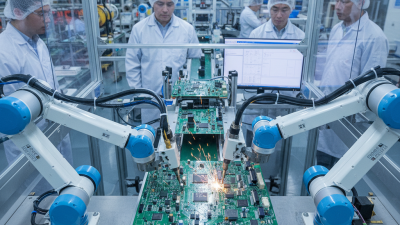
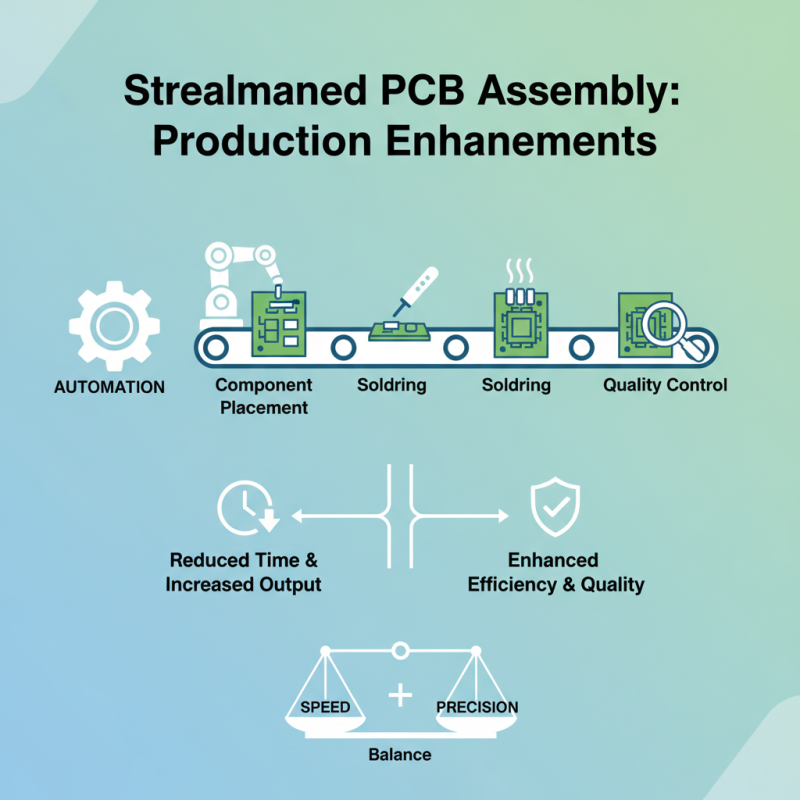
The printed circuit board (PCB) assembly process is essential in modern electronics. It streamlines production and enhances efficiency. By automating tasks, manufacturers reduce the time needed to produce complex electronic assemblies. This efficiency leads to increased output without sacrificing quality. However, there are challenges in balancing speed with precision.
Moreover, optimized workflows in PCB assembly can significantly cut costs. Less manual handling means fewer errors and lower labor expenses. But, it’s crucial to ensure consistent quality control. Any oversight can lead to defects that are costly to repair later. Implementing robust testing procedures can help mitigate such risks.
Another benefit lies in the flexibility that PCB assembly offers. Designers can experiment with different layouts and components easily. Rapid prototyping enables quick iterations, allowing for innovation in design. Yet, this can also lead to information overload. Engineers must carefully evaluate design changes to avoid complicating the assembly process. This reflection on workflow and design choices can lead to better decisions in future projects.
Quality Assurance Benefits of Utilizing PCB Assembly Services
Printed Circuit Board (PCB) assembly plays a vital role in the electronics industry.
Quality assurance is one of its most significant benefits. A study revealed that over
50% of electronic device failures can be traced back to assembly issues. This highlights the need for meticulous
attention to detail.
Utilizing professional PCB assembly services ensures rigorous testing and inspection processes. Industry standards, like IPC-A-610, set benchmarks for quality.
These standards help reduce defects and ensure operational performance. With a well-assembled PCB, devices achieve higher reliability and longevity.
Tip: Before selecting an assembly service, inquire about their quality control processes and certifications.
Investing in quality PCB assembly can lower costs in the long run. A report from Gartner suggests that reworking defective products can lead to losses of up to
30% of total production costs. Consistency in quality can prevent these issues.
Tip: Regularly review performance metrics from your assembly provider. A proactive approach leads to continuous improvement.
Attention to detail now can save significant trouble later.
Faster Time-to-Market Achieved via Efficient PCB Assembly Solutions
When it comes to bringing electronic products to market, time is of the essence. Efficient PCB assembly solutions can significantly reduce time-to-market. This speed allows companies to respond quickly to industry demands. Companies can test designs sooner and make necessary adjustments on the fly. The right assembly process can shrink production timelines and deliver products faster.
However, speed shouldn't compromise quality. Poorly assembled PCBs can lead to malfunctions. Regular quality checks and efficient communication within teams can help mitigate this risk. Focus on selecting the right materials and assembly techniques. It pays off in the long run.
Tips: Always consider potential delays in the PCB assembly process. Ensure you have contingency plans. Clear communication with suppliers can prevent misunderstandings. Educate your team on common pitfalls in assembly. This awareness can boost overall efficiency.