What is Alloy Steel vs Stainless Steel for Global Buyers?
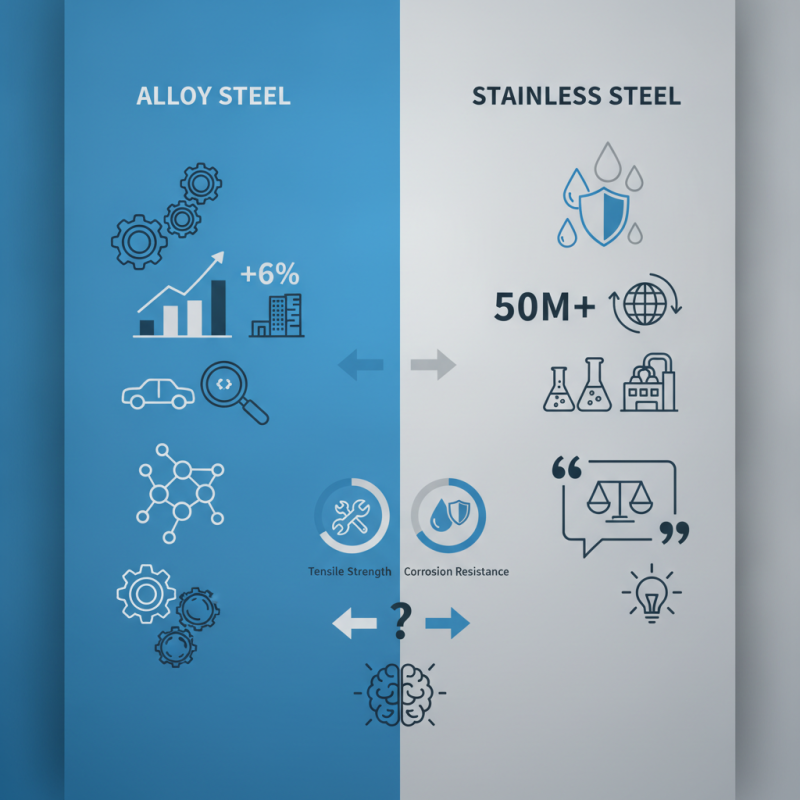
In the competitive landscape of today's manufacturing, understanding the differences between Alloy Steel and Stainless Steel is crucial for global buyers. According to a recent report by the International Steel Association, the demand for Alloy Steel is projected to grow by 6% annually through 2025. This growth is underpinned by its versatility in various applications, such as automotive and construction. Conversely, Stainless Steel remains favored in industries requiring corrosion resistance, with annual global production exceeding 50 million tons.
Expert metallurgist Dr. Emily Carter emphasizes the significance of choosing the right material: "The choice between Alloy Steel and Stainless Steel can make or break a project’s success." This statement highlights the necessity for buyers to conduct thorough market research before making decisions.
Regional variations in material availability and price fluctuations also warrant careful consideration. While some regions may offer cheaper Alloy Steel, the long-term benefits of Stainless Steel in specific applications could outweigh initial costs. Familiarity with factors such as tensile strength, corrosion resistance, and application requirements is key. Buyers must consider these complexities in their purchasing strategy, ensuring they make informed choices amidst an ever-evolving market.
Definition and Composition of Alloy Steel
Alloy steel is defined as a type of steel that contains additional elements beyond iron and carbon. These elements can include chromium, nickel, and molybdenum. The composition of alloy steel is crucial. It influences the metal's mechanical properties, including its strength, ductility, and resistance to wear. For instance, adding chromium increases corrosion resistance, making alloy steel suitable for various applications.
According to a report by the World Steel Association, the global consumption of alloy steel is projected to reach 1.5 billion tons by 2025. This surge is driven by demand in the automotive and construction industries. However, accuracy in the composition is vital. An alloy steel's strength can vary significantly with slight changes in its elements. A miscalculation can lead to product failures, which pose safety risks and economic losses.
In contrast, stainless steel comprises at least 10.5% chromium, giving it notable corrosion resistance. While both steel types have their benefits, understanding their compositions is essential. Even small variations can impact performance. Hence, global buyers must evaluate their needs carefully. This ensures that the chosen steel type aligns with specific application requirements.
Definition and Composition of Stainless Steel
Stainless steel is an essential material in numerous industries. It primarily consists of iron, chromium, and nickel. The chromium content must be at least 10.5% for the steel to be classified as "stainless." This blend offers resistance to corrosion and staining, making it ideal for various applications.
However, the quality of stainless steel can vary significantly based on its composition. Data from the Global Stainless Steel Market Report (2022) highlights that approximately 70% of stainless steel is produced in the austenitic grades. These grades are known for their strength and formability, but they may not be suitable for high-temperature applications. A common issue arises when improper alloying elements reduce the resistance to sensitization, potentially compromising its safety.
Beyond composition, environmental factors can affect the durability of stainless steel. Exposure to chemicals and harsh conditions may lead to pitting or other forms of degradation. For instance, studies show that elevated chloride levels can significantly increase the risk of corrosion. Users must consider these factors when selecting stainless steel for specific applications, ensuring both performance and longevity.
What is Alloy Steel vs Stainless Steel for Global Buyers? - Definition and Composition of Stainless Steel
| Property | Alloy Steel | Stainless Steel |
| Definition | Steel alloyed with elements to improve strength and resistance | Steel alloyed with a minimum of 10.5% chromium, providing corrosion resistance |
| Composition | Iron, Carbon, and other alloying elements like manganese, nickel, molybdenum | Iron, Chromium, Nickel, and sometimes Molybdenum or Titanium |
| Corrosion Resistance | Lower than stainless steel; requires further treatment | High corrosion resistance due to chromium content |
| Strength | High strength; often used in construction and heavy machinery | Good strength but generally lower than high-strength low-alloy steels |
| Applications | Automobile components, industrial tools, and equipment | Kitchen utensils, medical devices, and piping systems |
| Cost | Generally more affordable than stainless steel | Higher cost due to alloying elements and production processes |
Key Differences Between Alloy Steel and Stainless Steel
Alloy steel and stainless steel are both essential materials in various industries. The key differences between them lie in composition and properties. Alloy steel contains elements like chromium, nickel, and molybdenum. These additions enhance its strength and wear resistance. Stainless steel includes chromium, which provides corrosion resistance. This makes it suitable for environments exposed to moisture.
The manufacturing processes differ as well. Alloy steel is often heat-treated to improve toughness. This process can introduce inconsistencies. Stainless steel's production typically involves a more controlled method, ensuring uniform quality. However, this doesn't eliminate possible defects or variations in performance.
Applications vary widely. Alloy steel is frequently used in construction and automotive industries due to its strength. Stainless steel is prevalent in kitchen appliances and medical equipment, where hygiene is crucial. Yet, the choice between the two can be complex, depending on specific project needs and environmental factors. Users must assess the pros and cons carefully.
Comparison of Alloy Steel and Stainless Steel Properties
This chart illustrates the key differences in properties between alloy steel and stainless steel, focusing on tensile strength, corrosion resistance, and carbon content.
Applications and Uses of Alloy Steel and Stainless Steel
When considering alloy steel and stainless steel, it's essential to understand their applications. Alloy steel is highly versatile. It combines iron with elements like chromium, nickel, and vanadium. This blend enhances strength and resistance to wear. Industries like automotive and construction widely use it. Tools, gears, and even pipelines often rely on alloy steel for durability.
On the other hand, stainless steel is known for its corrosion resistance. The chromium content creates a protective layer. This makes it ideal for food processing, kitchenware, and medical instruments. Many buildings use stainless steel components for aesthetic appeal and weather resistance. However, it can be more expensive and challenging to work with.
Both materials serve critical roles. Selecting the right one requires careful consideration. Users must weigh factors like cost, strength, and corrosion resistance. That's why understanding their properties is vital. Knowledge in this area empowers buyers to make informed decisions. It avoids costly mistakes that could arise from improper applications.
Advantages and Disadvantages of Each Steel Type
Alloy steel and stainless steel serve different purposes in various industries. Alloy steel contains additional elements, like manganese or chromium, to enhance its properties. This steel is often stronger and more durable. However, it might lack resistance to corrosion, making it less suitable for moist environments.
Conversely, stainless steel is renowned for its corrosion resistance. A high chromium content offers protection against rust. This makes it ideal for kitchen appliances and medical equipment. Yet, its cost can be a drawback. Stainless steel is typically more expensive. Additionally, while it is resistant, it can still tarnish over time under harsh conditions.
Both steel types have their pros and cons. Alloy steel may be less expensive but requires protective coatings in corrosive settings. Stainless steel’s durability is excellent, yet it may not be ideal for all structural applications. Buyers must weigh these facts carefully, as each steel type has its own unique set of challenges.