7 Tips for Choosing Folding Blind Rivets?

Choosing the right Folding Blind Rivets can determine whether an assembly remains secure or loosens after repeated use. These fasteners are useful when only one side of a panel is accessible. However, selection requires more than matching a rivet to a hole. Grip range, body material, mandrel design, head style, and installation force all affect performance.

A practical evaluation begins with the joint itself. Measure the combined material thickness, then compare it with the rivet’s recommended grip range. Check the hole diameter carefully. A loose hole may allow movement, while an undersized hole can damage the rivet during setting. Aluminum rivets may suit lightweight panels, but steel or stainless steel options can provide greater strength and corrosion resistance. The surrounding materials matter too.

Small details often decide the result.

This guide presents seven useful tips for choosing Folding Blind Rivets with greater confidence. It considers load requirements, environmental exposure, visible finish, tool compatibility, and quality control. Experienced installers also inspect the formed backside after setting. It should expand evenly and hold the sheets firmly without crushing them. A rivet can look correct and still perform poorly under vibration. That is why sample testing remains valuable, especially for machinery, vehicle panels, and outdoor equipment. Some recommendations may need adjustment after testing. Real assemblies rarely behave exactly like a product catalog suggests. Reliable choices come from verified dimensions, reputable manufacturers, and careful installation records.
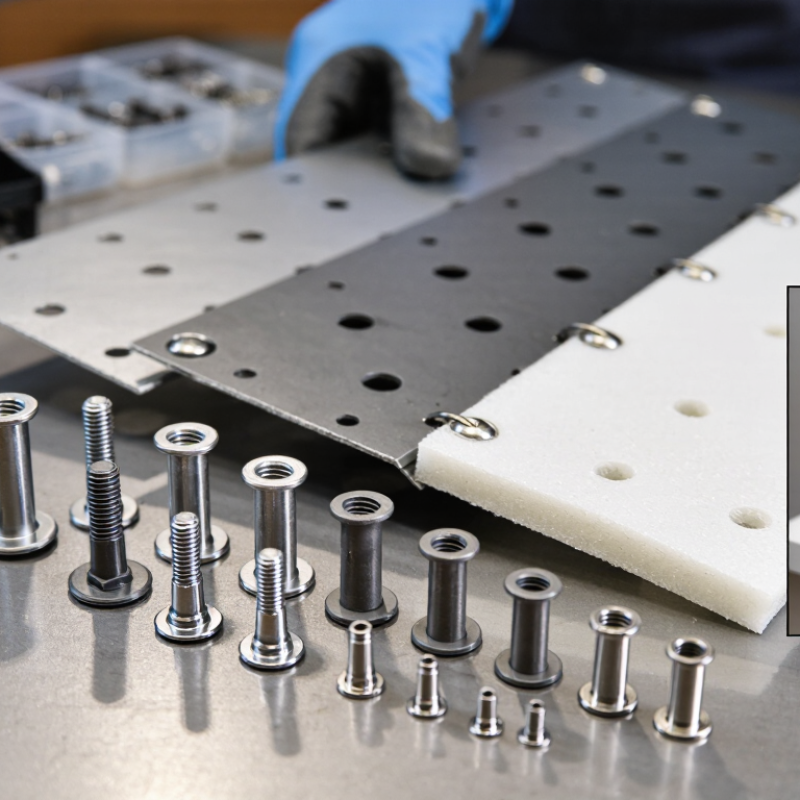
7 Tips for Choosing Folding Blind Rivets?

Understanding Folding Blind Rivet Structure and Applications

Folding blind rivets use a hollow body, mandrel, head, and folding legs. During installation, the mandrel pulls the body inward. Its legs then expand behind the rear sheet, creating a broad load-bearing footprint. This design suits thin, brittle, or inaccessible materials. The International Aluminium Institute reported 70.6 million tonnes of primary aluminium production in 2023. That scale supports aluminium’s continued use in lightweight assemblies, but material selection still needs care. Aluminium rivets can reduce weight, while steel offers higher shear strength. Mixed metals may create galvanic corrosion.

Tip 1: Match the rivet to the joint. Check grip range, hole diameter, shear strength, and tensile strength. Do not guess. A rivet that is too short cannot fold correctly. One that is too long may leave unstable legs.

Tip 2: Inspect the folded side. It should contact the rear sheet evenly, without sharp gaps or tilted legs. ISO 14589 pull-through testing provides a useful reference for verifying installation performance. In practice, I recheck sample joints because real sheet thickness often varies slightly.

Tip 3: Consider the application environment. Folding blind rivets work well in ventilation panels, vehicle interiors, appliances, and lightweight enclosures. They are less suitable where continuous vibration or high structural loads demand controlled preload. The U.S. Geological Survey’s 2024 Mineral Commodity Summaries recorded about 70 million metric tonnes of aluminium smelter production in 2023, yet recycled content and coating choices still affect durability. The weak point is often not the rivet. It is poor hole preparation. Remove burrs, keep panels aligned, and test a few joints before full production.


Checking Material Compatibility and Rivet Strength Requirements

7 Tips for Choosing Folding Blind Rivets

Material compatibility should guide the selection before appearance or price. An aluminum rivet in a steel panel can create a galvanic corrosion path when moisture enters the joint. The risk increases around scratches, salt, and trapped water. AMPP’s IMPACT study estimated global corrosion costs at about $2.5 trillion annually, equal to roughly 3.4% of global GDP. That figure makes a small washer look less insignificant.

Check the rivet body, mandrel, and parent materials separately. Similar metals usually reduce electrochemical conflict, but coatings can change the result. Avoid relying on a coating name alone. Ask for salt-spray data, coating thickness, and compatibility evidence. ISO 9227 supports standardized salt-spray testing, although laboratory exposure cannot fully copy a wet vehicle frame or outdoor enclosure. That limitation matters.

Strength calculations need more than the published pull-out number. NASA-RP-1228 emphasizes evaluating tensile load, shear load, bearing stress, and joint margins. Measure the actual grip range with both sheets clamped tightly. A rivet that is too short may leave weak folds; one that is too long can create uneven expansion. Use the expected service load, then apply a suitable safety factor required by your engineering procedure. Test representative assemblies, not loose rivets. Small details matter. I have seen specifications fail because they ignored hole clearance and edge distance. That is an uncomfortable reminder: rivet strength belongs to the complete joint, not the fastener alone.

Selecting the Correct Rivet Size and Grip Range

7 Tips for Choosing Folding Blind Rivets

Selecting the Correct Rivet Size and Grip Range

Choosing folding blind rivets starts with two measurements: hole diameter and material thickness. Measure the actual joint, not the drawing alone. A 4.8 mm rivet may fit a 5 mm hole, but the fit should follow the fastener specification. The rivet body must pass cleanly through every layer. Paint, washers, and slight burrs can change the stack-up. Easy to overlook.

Grip range is the combined thickness the rivet can clamp reliably. Add all sheets, seals, coatings, and washers before selecting it. Do not choose a rivet at the extreme end of its range. A small allowance helps when surfaces vary. For example, a 6–10 mm grip suits a measured 7.5 mm joint better than a 4–8 mm option. The longer option is not automatically safer. Excess length can leave an awkward folded tail or poor expansion. Check the technical data carefully.

Before production, test one rivet in the real materials. Test one first. Inspect the folded legs from the rear, not just the visible head. They should spread evenly and hold the joint without crushing soft sheet. If the joint rattles, the grip may be too large, the hole oversized, or installation incomplete. Use calipers and record the measured stack. I once treated a nominal thickness as exact; the coating changed the result. Measure twice.

7 Tips for Choosing Folding Blind Rivets

Selecting the Correct Rivet Size and Grip Range

The chart shows common blind-rivet nominal diameters and a practical starting hole diameter. A frequently used installation starting point is a hole approximately 0.1 mm larger than the rivet diameter; always verify the required clearance against the applicable specification and tool guidance.

Measure the complete material stack before choosing the rivet. Select a grip range that contains the measured thickness, use the smallest diameter that provides adequate strength, confirm the correct head style and material compatibility, keep the hole aligned and clean, and test the joint when vibration, sealing, or pull-out resistance is important.

Evaluating Installation Tools and Accessibility

Tip 1: Match the tool to the workspace, not only the rivet size. Folding blind rivets often need a suitable nosepiece and enough clearance around the head. Measure the access area before choosing a manual, pneumatic, or battery-powered tool. A compact tool may reach a narrow frame, but its shorter handle can reduce pulling force. I have misjudged this balance before.

Tip 2: Check operator accessibility during real installation. Can the user hold the tool steadily overhead? Is there room to align the rivet without twisting the wrist? For repeated work, a powered tool may reduce fatigue, but it still needs controlled air pressure or battery capacity. Test the tool on scrap material first. Small adjustments matter.

Tip 3: Inspect the blind side, especially in enclosed sections. The folding legs must open properly behind the panel, without striking cables, insulation, or nearby hardware. A long nosepiece can improve reach, yet it may limit visibility. Use lighting and a simple depth check. Do not rely on feel alone. That shortcut sometimes fails.

Confirm the tool’s recommended rivet range and mandrel handling method from reliable technical documents. After installation, inspect the folded legs, rivet head, and panel contact. A loose joint may indicate poor alignment, excessive material thickness, or an unsuitable tool setting. Accessibility is practical, not cosmetic. It affects accuracy, fatigue, and final joint reliability.

Comparing Corrosion Resistance, Cost, and Quality Standards

7 Tips for Choosing Folding Blind Rivets

Corrosion resistance should match the installation environment, not just the price tag. The 2016 NACE IMPACT study estimated global corrosion costs at US$2.5 trillion, equal to 3.4% of global GDP. For coastal panels, humid machinery, or outdoor enclosures, compare base metal, coating thickness, and galvanic compatibility. ISO 9223 corrosivity categories can help define exposure conditions. A bright finish alone proves little.

Salt-spray results need careful reading. ASTM B117 supports comparative testing, but it does not predict exact field life. Ask for test duration, red-rust criteria, and the tested rivet configuration. Shorter tests may hide weak coatings. This matters.

Cost includes installation time, rejected fasteners, and future repairs. A low unit price can become expensive when mandrels break or folded legs fail to clamp thin sheets. Check grip range, head diameter, shear strength, and pull-out data. Request batch traceability and inspection records. ISO 14589 provides mechanical test methods for blind rivets, giving buyers a more reliable quality reference.

Do not accept vague claims. Compare identical sizes and test conditions. A supplier should provide material certificates, coating information, and dimensional tolerances. In my experience, samples often reveal more than polished brochures. Still, one sample is not enough. Test several batches, especially when the joint faces vibration, moisture, or dissimilar metals. Quality standards reduce uncertainty, but they cannot replace practical assembly trials.

Wordpress Social Share Plugin powered by Ultimatelysocial
Facebook
X (Twitter)
YouTube
LinkedIn
Share

Purchase Product Request

Request Pricing