Choosing an Electric Mountain Bike is not just a matter of comparing motor power or battery size. The right bike should suit your trails, riding habits, and ability to handle its weight. A steep, rocky climb places different demands on a bike than a smooth forest path. Fit matters, too: reach for the handlebars, saddle comfort, and brake control become obvious after a few miles.
Court Rye, founder of ElectricBikeReview.com, is known for hands-on e-bike reviews. Rather than invent a verbatim quotation for him, here is a buying principle inspired by that practical approach: “Choose for the trails you ride, not the biggest number on the spec sheet.” It is a useful reminder, though not a direct quote. Battery range claims can vary with rider weight, temperature, terrain, and assist level. A test ride can reveal more than a polished product page.
This guide covers ten checks, from motor feel and battery access to suspension, brakes, frame fit, and service support. Look closely at small details: Can you remove the battery easily? Do the tires grip loose corners? Are the controls simple to use with gloves? These questions matter. Some choices still involve compromise. A lighter bike may offer less range, while extra suspension can add cost and weight. The goal is not a perfect machine. It is a dependable bike that feels right on your real routes.
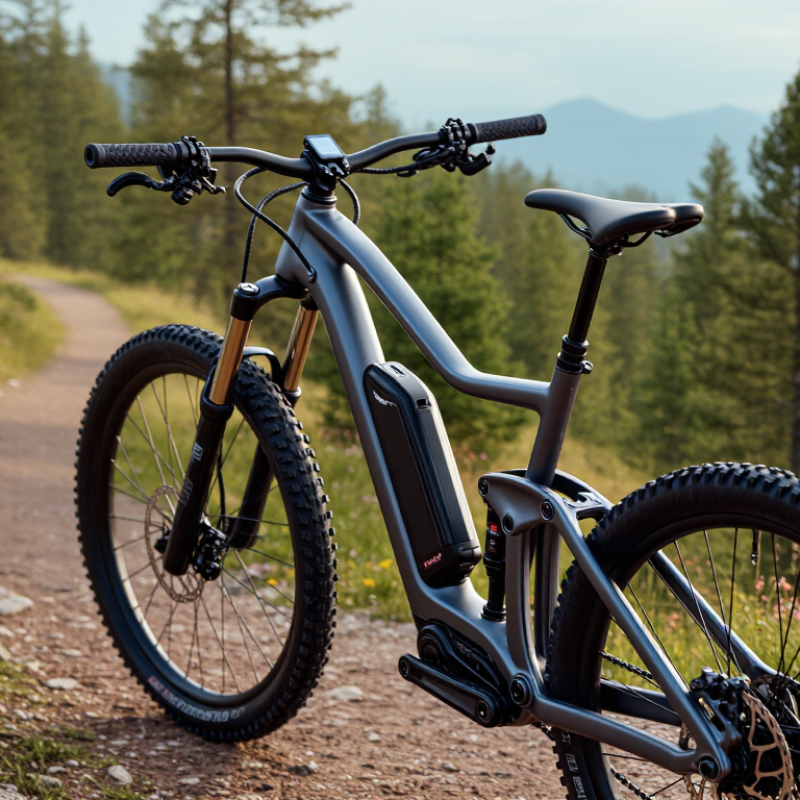
When buying an electric mountain bike in the EU, check its classification before comparing suspension or battery size. An EPAC generally has a maximum continuous rated motor power of 250 W. Assistance must stop when you stop pedaling and cut out before the bike reaches 25 km/h. These limits describe continuous rated power, not necessarily every brief peak shown in advertising. That distinction matters.
Read the technical documents, not just the headline on a product page. A bike listing 600 W peak output may still state 250 W continuous rated power, but confirm this in the manufacturer’s specifications and conformity information. If the details are vague, ask the seller for written clarification. It is easy to get distracted by a bigger number. I would be.
Also check the rules where you plan to ride, since local requirements and classifications can differ. An E-MTB outside the EPAC category may be subject to different requirements, affecting where and how it can be used. Check the motor label, assistance settings, and cut-off behavior during a test ride. Feel how support fades on a climb. Paperwork matters, but so does the ride.

When comparing electric mountain bikes, check exactly where motor assistance ends. An EU EPAC must stop providing assistance at 25 km/h. The bicycle can still travel faster through pedaling or downhill momentum; the cutoff is not a brake or a speed limiter. That distinction matters.
On a test ride, watch the display as you approach the cutoff on a safe, level path. Some systems reduce assistance gradually, while others can feel more noticeable when support fades. Try a steady cadence and note how the bike feels just below 25 km/h. Then consider your usual trails: frequent fast descents may make the cutoff less relevant, while rolling paths can bring you near it often. A brief test cannot predict every ride.
Read the technical specification and owner’s manual, not just the sales description. Confirm that the bike is configured as an EU EPAC, and ask how its display reports speed and assistance status. Assistance can feel surprisingly different between modes. Also remember that tires, battery charge, rider weight, and gradients affect how quickly you reach the cutoff, but they do not change the 25 km/h assistance limit. I would not choose a bike solely for a higher top-speed claim; check what that figure actually describes.
| No. | Buying Tip | What to Check | Why It Matters |
|---|---|---|---|
| 1 | Confirm the EU EPAC cutoff | For an EU EPAC, verify that assistance cuts off when pedaling stops and is progressively reduced and finally cut off before the bicycle reaches 25 km/h. The motor’s maximum continuous rated power must not exceed 250 W. | These are key conditions for the EPAC classification under EU rules. Assistance above the cutoff is not provided, though the rider can continue faster by pedaling or coasting. |
| 2 | Match the bike to your trails | Compare the intended use—cross-country, trail, or technical downhill—with the bike’s geometry, suspension travel, tires, and component specifications. | A setup designed for smoother cross-country routes may feel less suitable on steep, rough, or jump-filled trails. |
| 3 | Check frame fit and reach | Use the maker’s size chart as a starting point, then check standing clearance, reach to the handlebar, and saddle adjustment. If possible, test-ride the bike. | A suitable fit supports control and comfort. A size label alone does not account for every rider’s proportions or preferences. |
| 4 | Compare battery capacity realistically | Check battery capacity in watt-hours (Wh), removable-battery options, charging time, and replacement availability. Treat advertised range as an estimate. | Actual range varies with terrain, rider and cargo weight, assist level, temperature, tire pressure, and riding style; a larger Wh figure does not guarantee a specific distance. |
| 5 | Test motor response on climbs | If possible, try the bike on a climb and assess how smoothly assistance starts and changes. Check the available assist modes and controls. | Smooth, predictable assistance can make technical climbs easier to manage. Motor feel is affected by both the system and the way the rider pedals. |
| 6 | Inspect the brakes | Check brake type, rotor condition and size, lever reach, and the availability of replacement pads. Test braking in a safe area before riding trails. | An electric mountain bike can be heavy, and dependable braking is important for controlling speed on descents and in changing conditions. |
| 7 | Choose suspension for your terrain | Compare fork and rear-suspension travel, adjustment options, and service requirements. A hardtail has front suspension only; a full-suspension bike has front and rear suspension. | Suspension affects comfort, traction, control, maintenance, and price. More travel is not automatically better for every route or rider. |
| 8 | Review total weight and handling | Check the listed bike weight and, if possible, lift and maneuver the bike. Consider how you will transport, store, and carry it up stairs. | The motor and battery add weight compared with many non-electric mountain bikes, which can affect handling when assistance is off and make lifting more difficult. |
| 9 | Check tires, wheels, and clearance | Look at tire width and tread, wheel size, tubeless compatibility, and frame clearance. Confirm that replacement tires and tubes are easy to source. | Tire choice influences grip, rolling feel, and puncture protection. The best tread depends on the surfaces and conditions you usually ride. |
| 10 | Plan for servicing and safe charging | Before buying, check where the electrical system and suspension can be serviced, how the battery is charged, and what the owner’s manual requires for storage and care. | Routine maintenance and following the supplied charging instructions help keep the bike usable and support safe battery handling. |
Compare batteries by watt-hours, not voltage alone. Multiply volts by amp-hours: a 36 V, 14 Ah pack stores 504 Wh. The European Cyclists’ Federation’s electric-bicycle briefing discusses common battery capacities in the 300–500 Wh range, useful context when comparing listings. But capacity is not distance. A 400 Wh pack using 10 Wh per kilometre could cover about 40 km; at 15 Wh per kilometre, about 27 km, before reserve. Numbers need context.
Ask how each range estimate was tested. SAE J2982 provides a performance-test procedure for electric bicycles, but a test result still depends on rider load, assist setting, hills, tyre pressure, and temperature. Compare estimates only when those conditions are similar. For a practical check, calculate Wh per kilometre from a documented test, then apply it to your usual route. A long, steep commute with frequent stops will draw more energy than a flat, steady ride. I would question the neatest advertised figure; it may describe ideal conditions, not your wet, windy Tuesday. A larger battery adds weight, too, so the highest Wh number is not automatically the best fit.
A trail’s shape should guide the bike’s geometry. On steep, fast descents, a slacker head angle and longer wheelbase can help the bike feel calmer. Tight switchbacks and narrow woodland paths often reward a shorter wheelbase and manageable reach. Stand over the bike and check that you can shift your weight without feeling stretched. Fit matters. A stable bike can still feel awkward if its cockpit is too long.
Suspension travel should suit the bumps you actually ride, not the biggest drop you might encounter once. Around 120–140 mm can work well on flowing trails with roots and small rock steps. Rougher terrain may call for more travel, but extra suspension can add weight and soften the bike’s response. Check the fork and shock setup, too. Correct sag helps the wheels track the ground; travel alone does not guarantee comfort. Not always.
Tires connect those choices to real trail conditions. Closely spaced knobs can roll efficiently on packed dirt, while wider, more open tread can find grip in loose soil. Electric mountain bikes are relatively heavy, so a sturdy casing may help resist pinch damage on sharp rocks. Tire pressure depends on rider weight, tire construction, and terrain. Too much pressure can make roots feel harsh; too little can cause vague cornering. Test small changes on a familiar section and note what improves control. A pressure gauge is useful, though my first setting is often wrong.
Before paying, ask for the battery’s UN 38.3 test summary, not just a “tested” label. The UN Manual of Tests and Criteria, Revision 8 (2023), specifies eight tests, including vibration, thermal cycling, and external short circuit. These assess transport safety; they do not prove a battery is risk-free during daily riding. Check that the battery model matches the document. A tidy certificate can still leave gaps.
Brake details matter on wet paths and steep descents. Compare rotor diameter, pad type, and whether the brakes are hydraulic or mechanical. Ask for stopping-distance test results at the bike’s maximum permitted load, and inspect the lever reach with gloved hands. UL 2849 addresses e-bike electrical systems, not brake performance, so don’t treat electrical certification as a complete safety check. Small distinction. Important one.
Tips: Get warranty terms in writing: battery coverage, capacity limits, labor, and exclusions. Ask who handles repairs, how quickly common pads and chargers are available, and whether service requires shipping the whole bike. Check the warranty period against expected use, not just the headline. I’d also confirm what happens after a diagnostic fault; support promises can sound better than the actual process.
UN 38.3 battery test sequence — the eight test types used in lithium-battery transport testing.
Use this sequence as a battery-documentation check, not as a performance score. When comparing e-MTBs, also check brake rotor dimensions and replacement-part availability, warranty coverage and exclusions, and access to qualified service. Confirm that the battery’s test documentation applies to the exact battery model.